This Anti-AI Evangelist Gaining Momentum: A Challenge for Trump
A Shift from Concert Lighting to AI Warnings
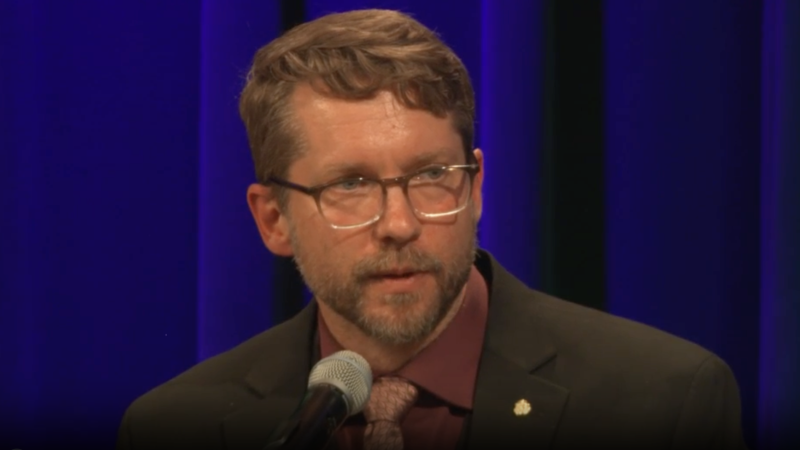
Sandego.net – When the pandemic shuttered live events across the nation, Joe Allen abandoned his role as a concert technician and embraced a new path. Once a “concert rigger” responsible for setting up intricate lighting and sound systems, Allen found himself navigating a landscape where traditional jobs were scarce. In response, he transformed his skills into a platform for critiquing emerging technologies, particularly artificial intelligence. His journey led him to write for conservative outlets like The Federalist and eventually to appear on Steve Bannon’s “War Room” podcast, where he began to articulate concerns about AI’s societal impact.
From Niche Skepticism to Mainstream Influence
Allen’s apprehension toward AI was once a specialized viewpoint. However, his message has resonated with a broader audience as public anxiety over technological advancements intensifies. A recent Pew Research Center survey highlighted this shift, revealing that more Americans now believe AI will be detrimental than beneficial to society. The findings underscore a growing unease about AI’s role in job displacement, rising electricity costs, mental health challenges, and environmental degradation.
With a background in religion and science from Boston University and a self-identified status as a tech-Luddite, Allen’s arguments have gained traction in conservative circles. His February feature in Time magazine marked a turning point, cementing his position as a prominent voice in the anti-AI movement. “I sound less crazy now,” Allen remarked before addressing a crowd at Dallas’ First Baptist Church, one of the nation’s most influential religious institutions. This statement reflects his belief that his concerns, once dismissed, are now being taken seriously by a wider audience.
The Shoggoth Metaphor and Cultural Resentment
Allen’s rhetoric often draws on vivid imagery to convey his message. During a speech at First Baptist Church, he depicted AI as a “god” that surpasses human judgment, with a slide illustrating the faces of AI executives superimposed onto the tentacles of a fictional monster known as the Shoggoth. This creature, originating from H.P. Lovecraft’s 1936 novella *At the Mountains of Madness*, has become a symbol of AI’s unsettling unpredictability. Allen warned that technology, “masked by the innocence of a screen,” exploits children and manipulates adults, fostering a sense of vulnerability among his listeners.
Bannon, who helped amplify Allen’s voice through his podcast, recognized the potential of his message early on. “He’s perfect for that audience,” Bannon told CNN, citing Allen’s theological background, Southern charm, and ability to connect with diverse crowds. Bannon emphasized that Allen’s blend of faith and skepticism resonates with working-class and lower-middle-class Americans, who feel increasingly alienated by rapid technological change. This alignment has positioned Allen as a key figure in the American right’s evolving stance on AI.
Public Backlash and Political Implications
Across the country, Allen’s views are fueling a growing divide over AI’s role in society. College students, wary of their future job prospects, have booed AI during commencement ceremonies. Communities are rallying against AI data centers, fearing they will disrupt local environments with pollution and noise. Meanwhile, families are taking legal action against tech companies, alleging that AI chatbots have influenced harmful behaviors. These movements reflect a cultural matrix of resentment toward technology, which Allen skillfully channels into a critique of its unchecked growth.
Allen’s influence is particularly notable within the political sphere. The First Baptist Church, where he delivered his speech, operates from a sprawling 270,000-square-foot complex in downtown Dallas, serving over 16,000 congregants. Its leader, Robert Jeffries, has long been a staunch ally of President Donald Trump, and many members are loyal supporters of the former administration. Yet, even within this stronghold of Trump’s base, some are questioning the administration’s hands-off approach to AI regulation. Allen’s advocacy highlights this tension, as his followers grow more critical of policies that prioritize technological progress over societal well-being.
AI as a Threat to Human Values
Allen’s perspective diverges from that of tech industry leaders, who argue that AI will enhance productivity and create new opportunities. Companies like those in the AI sector claim to address concerns by reducing energy consumption, investing in sustainable infrastructure, and implementing safeguards to control AI models. However, Allen contends that these measures are insufficient. “The tech elite aim to replace God with the religion of AI,” he stated, framing AI as an existential force that undermines human autonomy and moral judgment.
His sermons often blend religious symbolism with contemporary anxieties, painting AI as a modern-day tempter. The Shoggoth metaphor, for instance, encapsulates the fear that AI’s inner workings remain opaque, threatening to engulf society in an irreversible transformation. Allen’s message is not just about technology; it’s about preserving human values in an era of rapid innovation. “If you’re skeptical of this, if you don’t want to live this way, you are not alone,” he said, appealing to a collective sense of resistance against AI’s dominance.
Rising Concerns for Midterm Elections
As midterm elections approach, Allen’s growing influence could challenge Republican strategies. While Trump has consistently supported deregulation to allow AI companies to compete with China, some of his supporters are growing uneasy with this stance. They argue that the administration’s lack of oversight risks exacerbating the very issues Allen warns about, from job insecurity to environmental harm. This internal debate within the GOP could shape the party’s messaging in the coming months, as it seeks to balance technological optimism with public apprehension.
Allen’s rise exemplifies a broader trend in American politics: the intersection of faith, technology, and cultural identity. His ability to articulate fears in a relatable way has given him a platform to influence not only religious congregations but also political discourse. As his audience expands, so too does the potential for his views to reshape the Republican Party’s approach to AI and its impact on everyday life. For Trump, this could mean a more complex landscape in which his administration’s tech-friendly policies face mounting criticism from a base that once seemed united in its support.
A Legacy of Skepticism and Influence
Allen’s journey from a live event technician to a national anti-AI voice underscores the power of narrative in shaping public opinion. His speeches, articles, and media appearances have not only raised awareness but also mobilized a grassroots movement wary of AI’s unchecked proliferation. As the debate over AI’s role in society continues to intensify, Allen’s message serves as a reminder that technology’s future is deeply tied to how it is perceived—and how it is resisted.
Whether this growing movement will challenge Trump’s political standing remains to be seen. But one thing is clear: the skepticism toward AI is no longer confined to fringe groups. It has become a central theme in the American right’s discourse, with figures like Allen leading the charge. His influence, rooted in both theology and a personal transformation, highlights a new dimension of political engagement—one that may redefine the future of technology’s relationship with society.