Democrats See Opportunity in Traditionally Republican Senate Terrain
Sandego.net – Republicans entering the fall campaign face pressure from more than President Donald Trump’s weakening approval ratings. Democratic candidates with distinct political styles are competing in Senate contests that, in past cycles, would have been considered secure Republican territory.
The party needs a net gain of four Senate seats to take control of the chamber. At the same time, Democrats are increasingly well positioned to capture the House majority next month. Yet their broader political challenge remains substantial: public views of the party and its congressional leadership are still far from strong.
That makes candidate quality especially important. In several states, Democrats are trying to rebuild trust with voters who had drifted away from the party, including working-class and rural voters who became central to Trump’s political coalition.
A More Competitive Map
North Carolina offers one of the clearest examples. Former two-term Gov. Roy Cooper is drawing support from independents and has shown enough appeal in rural areas to threaten Republican advantages there. His statewide recognition gives Democrats a credible path in a contest where Republican Michael Whatley, a former chair of the Republican National Committee, has struggled to achieve comparable familiarity with voters.
Iowa has emerged as a more unexpected battleground. State legislator Josh Turek describes himself as a “common sense prairie populist,” and his campaign is making the Senate race competitive despite Trump carrying the state by 13 points just two years ago.
Republican Rep. Ashley Hinson would ordinarily appear well positioned to win the seat expected to be vacated by Sen. Joni Ernst. A former television anchor, Hinson is a polished communicator with a profile rooted in Iowa issues. But economic conditions are complicating the political landscape. Farmers are being hit by Trump’s tariffs, while high fuel prices have added to voter anxiety.
In Ohio, former Sen. Sherrod Brown is again leaning on the blue-collar populism that has long defined his political identity. That message may have fresh resonance as Trump, who won Ohio decisively in 2024, is seen as increasingly distant from the economic concerns of ordinary voters while maintaining close ties with billionaires.
Different Democratic Messages, Shared Goals
Several Democratic contenders are seeking to demonstrate that opposition to Trump alone is not enough. Their campaigns are also attempts to reshape how the party speaks about the economy, culture and everyday life.
Texas state Rep. James Talarico is blending economic populism with Christian faith as he tests whether Democrats can finally break through statewide in Texas. The party has not won statewide there in 30 years, but Talarico’s approach reflects an effort to reach voters who may not identify with traditional national Democratic messaging.
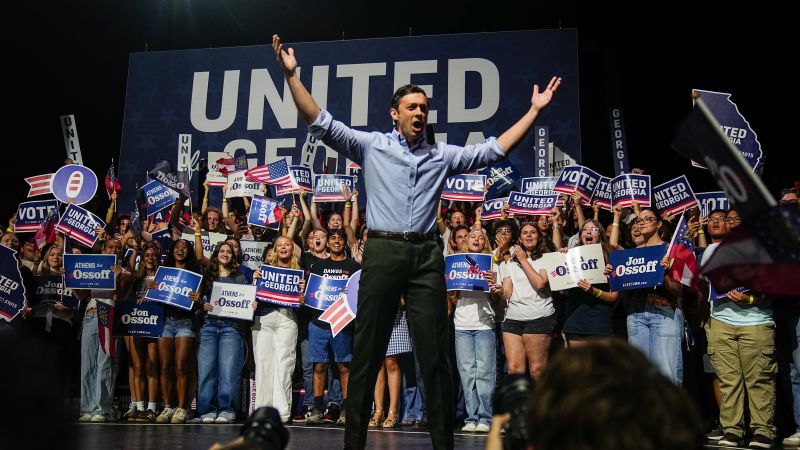
Georgia Sen. Jon Ossoff has built a high-profile political identity around sharp criticism of Trump. His performance in a key swing state, paired with his growing national visibility, has prompted discussion about whether he could become a major figure in the party’s potential 2028 presidential field.
These candidates differ in ideology and presentation, but they share a practical objective: make Democrats feel culturally and economically relevant in places where the party has struggled. Their efforts come after years in which Democrats lost ground with important parts of their former coalition and often failed to communicate a compelling alternative to Trump’s appeal.
Republican Weaknesses Add to the Risk
Candidate problems on the Republican side could further widen the playing field. In Georgia, Trump-backed Rep. Mike Collins has become a prominent MAGA figure. In Texas, Attorney General Ken Paxton carries the burden of scandal and was also supported by Trump despite concerns from segments of the Republican establishment.
Such contests illustrate how national conditions and local candidate strengths can interact. A difficult environment for a party does not guarantee defeat, but it can make mistakes, controversies and poor campaign discipline more consequential.
Democrats still face their own limits. A late-July CNN/SSRS survey found voters favored Democrats by 8 points for the fall elections, but both parties’ congressional wings remained similarly unpopular. The polling also reflected limited optimism about what a potential Democratic majority could accomplish. In other words, voters may be willing to punish Republicans without fully embracing Democrats.
Michigan Could Define the Stakes
Michigan may produce the cycle’s most revealing Senate result. Democrat Abdul El-Sayed, a 41-year-old epidemiologist, is a high-risk choice in a race of major importance. A victory over former Republican Rep. Mike Rogers would elevate El-Sayed as a leading figure of a younger political generation and of the progressive movement.
A loss, however, would likely fuel criticism from Democrats who favored the more moderate Rep. Haley Stevens. If Rogers wins, party divisions over the nomination could be blamed for losing not just a Senate seat, but potentially control of the chamber.
The Michigan contest underscores a larger truth about a closely divided Senate: recruitment, ideological fit and campaign execution can matter as much as national mood. Candidates who can communicate clearly, remain disciplined and appeal beyond their party’s core voters are unusually valuable.
Timing May Matter as Much as Talent
Political success is rarely explained by skill alone. Strong candidates also need favorable circumstances, and this year’s conditions may give Democrats openings that did not appear likely earlier in the cycle.
Maine Republican Sen. Susan Collins, long regarded as one of the Senate’s most durable incumbents, is confronting what may be her most difficult reelection campaign. The turbulence of the Trump era has complicated her effort to maintain a reputation for independence. Decisions that force her to balance Republican voters with more moderate constituents have become harder to navigate in a national climate that is increasingly unfavorable to her party.
For Democrats, the fall elections will test whether this newer collection of candidates can convert dissatisfaction with Trump and economic unease into a durable coalition. Winning in states that have recently leaned Republican would not simply change the Senate map. It could offer the party a clearer blueprint for reconnecting with voters it has struggled to reach.
Related Reading
Frequently Asked Questions
What is With a new breed of candidate?
With a new breed of candidate is the main topic of this guide. The article explains the context, practical details, and next steps readers should understand.
Why does With a new breed of candidate matter?
With a new breed of candidate matters because readers are looking for a useful answer, not just a short summary. Good content should match search intent and help them decide what to do next.