Why Trump Left NATO Summit on Positive Note
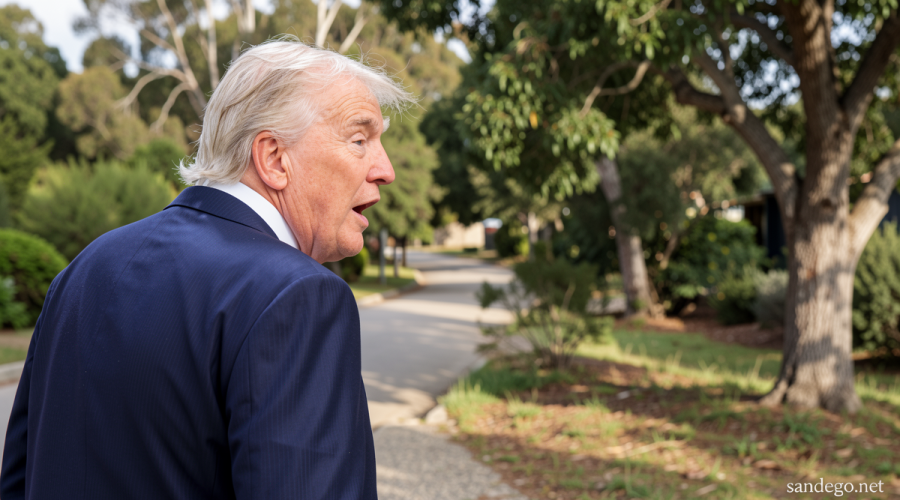
Sandego.net – European leaders entered Wednesday’s gathering with considerable apprehension. President Donald Trump had positioned himself just beyond the conference hall entrance, openly voicing his accumulated frustrations with the transatlantic alliance. His complaints ranged from the alliance’s refusal to transfer Greenland to American control to Spain’s decision to deny its military bases for operations in the Iran conflict—a confrontation Trump had previously threatened to reignite.
Word of Trump’s public tirade spread quickly among his counterparts. Many anticipated a harsh confrontation during the meeting, though they had hoped to sidestep such drama. Their anxiety intensified when concerns emerged that the president might announce a complete withdrawal from the organization. However, observers noted that his private demeanor proved considerably more measured than his public performance.
Behind Closed Doors: A Different Trump
According to sources familiar with the proceedings, Trump refrained from mentioning either Greenland or Spain during the closed-door discussions. Instead, he expressed disappointment that conference participants had not provided sufficient support regarding Iran. He also criticized the status of the agreement he had signed with Tehran just three weeks earlier, declaring the accord effectively collapsed following Iranian attacks on multiple vessels in the Strait of Hormuz.
Notably, Trump avoided threatening to remove the United States from the alliance entirely—a move technically impossible without congressional approval but still concerning to European officials. He appeared genuinely impressed when leaders described their efforts to increase defense spending, a development NATO Secretary General Mark Rutte consistently credited to Trump’s persistent demands over many years.
“They like the job I’m doing,” Trump recounted as the day was ending. “They said, ‘We love, sir, we love you.’ These are grown people saying that. Isn’t that nice?”
Trump’s characterization of European leaders’ sentiments may have been somewhat embellished. Demonstrating notable self-awareness, he acknowledged that the leaders might have been attempting to flatter him. “Maybe they were trying to get to me,” he shrugged. “And, in a way, they did.”
Diplomatic Success Despite Tensions
Under Rutte’s guidance—described as a skilled Trump admirer—the European leaders’ generous praise appeared to achieve its intended effect, even though many officials privately felt Europe’s dignity had suffered as a result. Hours later, when Trump sat beside Ukrainian President Volodymyr Zelensky, he revealed he was preparing to permit Kyiv to produce its own Patriot missile interceptors—a significant concession for a leader who had faced Trump’s public criticism in the Oval Office just sixteen months prior.
“I just want to say there was tremendous love in that room,” Trump said before departing the summit.
The durability of these positive feelings remains uncertain. Trump had spent a Group of Seven summit in France merely three weeks earlier praising the very Iran agreement he now declared dead, suggesting that diplomatic goodwill often proves temporary. Nevertheless, even if the favorable atmosphere persists long enough for Trump to reconsider his threats—including his private proposal to reduce American military presence in Europe by one-third—the outcome could represent a victory.
This result aligned with what Rutte had hoped to achieve, despite the gathering’s rocky beginning. It also represented the culmination of efforts spanning the past year, beginning when Trump left the 2025 summit in the Netherlands with unusually warm words about the alliance.
Rutte found an unexpected ally in Turkish President Recep Tayyip Erdoğan, whose leadership has created complications for the organization throughout the years. Trump regards Erdoğan as a close friend and repeatedly emphasized that he attended the gathering primarily because the Turkish president was hosting it. The president’s reluctant participation did not guarantee a particularly warm meeting, nor did the ongoing disputes he had cultivated over recent weeks—including his feud with Italian Prime Minister Giorgia Meloni, whose photograph he shared on social media with the caption “RESTRAINING ORDER NEEDED.”
The tension between Trump and Meloni had not fully dissipated by the time they sat together at a Tuesday evening dinner, sampling Turkish specialties such as pide flatbreads and manti dumplings. Whether they found an opportunity to reconcile remains unclear. “Cordial” was how the Italian leader characterized her relationship with Trump as she returned to her hotel following the meal. Erdoğan, an authoritarian leader who has suppressed opposition and whose previous actions have tested alliance unity, seemed to bridge gaps between the two leaders during the evening.