
Republicans Target Border to Save House Majority
Sandego.net – Why Republicans think they can save their House majority hinges on a bold strategy centered around the U.S.-Mexico border. With national polls showing declining support for the current administration and rising economic concerns, the GOP is pinning its hopes on flipping key border districts in November. The National Republican Congressional Committee (NRCC) has identified three critical districts as prime targets, while defending at least two others. Their plan relies on combining strong local candidates with the perception that border security and immigration policies will resonate with voters, even amid broader dissatisfaction with Trump’s leadership.
Strategic Focus on Border Districts
Redistricting has created fewer competitive races nationwide, but the six border regions under scrutiny could still decide the House. Republicans argue that their tailored approach—targeting districts with large Hispanic populations—offers a pathway to reclaim control. In Texas, for instance, the GOP redrew boundaries to challenge Democratic representatives in areas where Trump’s 2024 campaign boosted Latino support. This shift reflects a belief that local issues, like immigration and economic conditions, can outweigh national sentiment.
Rep. Richard Hudson, NRCC chairman, underscored this strategy in an interview. “Hispanics are a key voting bloc, and their presence in border districts gives us an edge,” he said. The NRCC’s confidence stems from the idea that policies addressing border concerns could reinvigorate support among Latino voters, despite their growing disillusionment with Trump’s second term. However, this optimism is tempered by the challenge of turning national frustrations into local gains.
Trump’s Impact on Latino Support
Trump’s 2024 re-election campaign saw a surge in Latino voter turnout, with his support rising to 46% from 32% in 2020, according to CNN exit polls. Yet, his approval among this group dropped by 27 points during his second term, as reported by Pew Research Center. This decline is attributed to policies like increased deportations and rising living costs, which have soured some voters despite his early success in border states.
Republicans are banking on the notion that Trump’s influence in these districts remains strong enough to sway the midterm vote. They argue that his focus on border security and immigration, even if it has led to criticism, still appeals to a significant portion of the electorate. Critics, however, counter that the GOP is overestimating the impact of a single candidate’s surname or a leader’s past popularity, suggesting that broader issues will dominate the campaign.
“The GOP thinks they can erase the damage caused by Trump’s policies just by fielding candidates with Hispanic names,” said Bridget Gonzalez of the Democratic Congressional Campaign Committee. “But Latino voters are energized and will deliver the House for Democrats.”
Local Dynamics and Political Shifts
While national trends may be unfavorable, border districts often have unique political dynamics. Rep. Henry Cuellar, a Texas Democrat targeted by Republicans, acknowledged this. “The political environment here is shaped by immediate concerns like immigration and jobs,” he explained. His district, for example, has seen a sharp rise in unauthorized crossings, which he claims could be a decisive issue in the November elections.
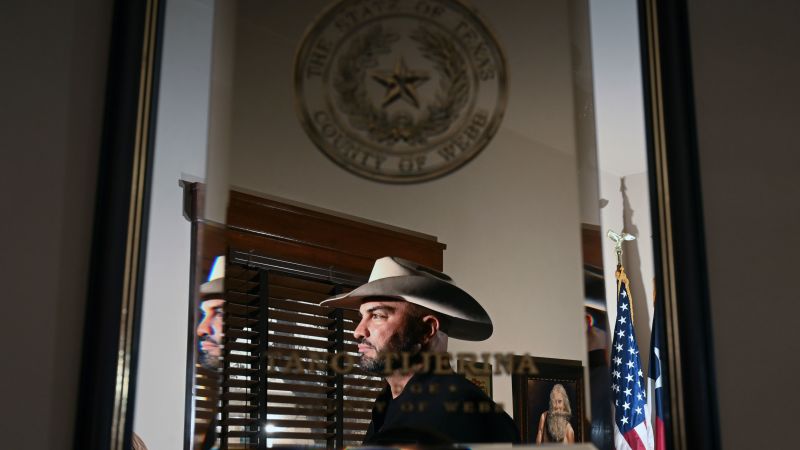
Cuellar’s comments highlight the tension between national narratives and localized priorities. Though the GOP leverages Trump’s past appeal to Hispanic voters, he argues that this strategy risks ignoring the broader challenges voters face. The race in his district pits him against Tano Tijerina, a former Webb County judge who switched parties in late 2024. Tijerina’s support for Trump’s Middle East policies contrasts with his acknowledgment of the war’s unpopularity, illustrating the nuanced positions within the GOP’s border strategy.
Republican Candidates and Voter Concerns
Eric Flores, a former federal prosecutor running in a border district, exemplifies the GOP’s approach. His campaign emphasizes Trump’s immigration policies and economic recovery efforts, positioning him as a bridge between the president’s legacy and current challenges. However, he faces competition from a progressive challenger who highlights Biden’s record on border crossings and the cost of living crisis.
Ultimately, the success of the Republican strategy depends on whether voters in these districts will prioritize local issues over national discontent. With the midterm elections looming, the party’s ability to connect with Latino voters—and address their concerns—will be a key test of its long-term viability. The outcome in these battlegrounds could determine whether they maintain their House majority or face a significant setback.