What Can a Kennedy Teach About Politics? Jack Schlossberg’s Campaign Reveals Much
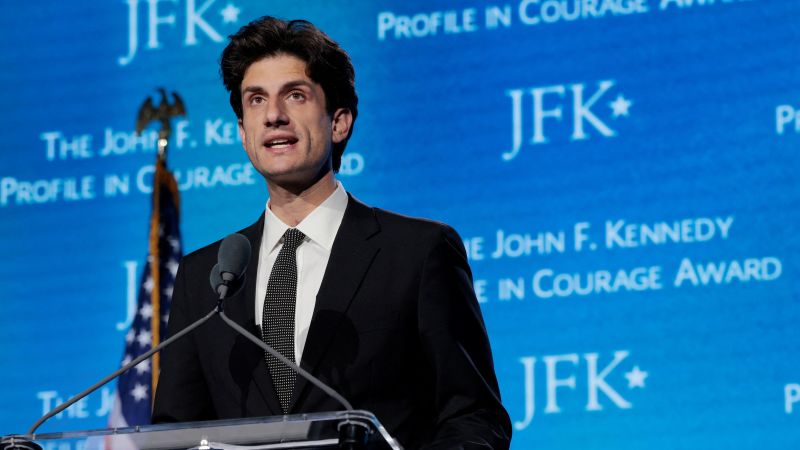
Sandego.net – Jack Kennedy Schlossberg, a 33-year-old candidate for New York’s 12th Congressional District, has found himself in an unexpected position: learning the ropes of political strategy from a family name that has long been synonymous with power and prestige. As his name appears on the Tuesday ballot in the Democratic primary, Schlossberg’s campaign has become a microcosm of the challenges faced by a new generation of politicians trying to carve their own path in a world where legacy often overshadows individual merit. The question of whether a Kennedy can still offer lessons in politics has taken on new relevance in this high-stakes race.
The Struggle of a New Generation
Schlossberg’s campaign hinges on a bold premise: in an era dominated by fleeting attention spans, his ability to leverage his Kennedy lineage into a massive online following could bridge the gap between a disengaged electorate and a once-dominant political brand. The 2024 Democratic National Convention saw him rise as a star, showcasing his charisma and relatability to a younger audience. Yet, as the primary approaches, his journey has exposed the complexities of modern politics—a field where personal connections can open doors, but public perception often determines the outcome.
“Our party is just not good at selling our message—and that’s not everything, but it’s a huge part of it. And everyone says it’s time for a new generation… the Democratic Party has got to learn how to do things differently—until somebody actually tries, and then they don’t want to,” Schlossberg told CNN, sitting at the revived H&H Bagels on Columbus Avenue, his tone tinged with frustration.
His campaign has been shaped by a mix of strategic foresight and unanticipated hurdles. While he anticipated the importance of social media in reaching voters, he underestimated the scrutiny that comes with a Kennedy surname. Critics argue that his reliance on familial prestige has left him vulnerable to attacks that question his credentials. Yet, Schlossberg insists that his campaign is not just about name recognition—it’s about delivering a message that resonates with those who feel politics has lost its purpose.
A Battle for Attention and Trust
Amid the chaos of a crowded primary field, Schlossberg faces an uphill battle. With eight candidates vying for the Democratic nomination, his ability to stand out depends on more than just his heritage. His team has been forced to confront a series of obstacles, from voter skepticism to the unpredictable nature of the media. The press, he says, has not been kind, often highlighting his missteps with a relish that suggests his stumbles are more than just errors—they’re moments of public theater.
Friends and allies describe Schlossberg as both a natural leader and a difficult one to manage. His campaign has been marked by a tendency to prioritize personal authenticity over polished messaging, a trait that has sometimes alienated potential supporters. “He’s got this thing where he wants to be seen as real, not just a brand,” said one campaign insider. “But that realness can be a double-edged sword.”
Schlossberg’s strategy has also involved a direct challenge to his opponents. He accuses them of deploying bot armies to drown out his message online, a claim he has repeatedly made to CNN and others. “They’re creating fake narratives to make me look bad,” he said. “And they’re not just attacking my ideas—they’re attacking who I am.” To counter these tactics, his team has placed “SELLOUTS BEWARE ↑” signs on their rivals’ posters, a subtle but pointed reminder of the stakes involved.
The Weight of Expectations
Despite the chaos, Schlossberg’s campaign has been buoyed by a surprising level of support. His message—focused on rejuvenating the Democratic Party and bringing a fresh perspective to Congress—has struck a chord with voters who feel disconnected from traditional politics. Yet, the same audience that admires his energy may also question his preparedness. Retiring Rep. Jerry Nadler, a vocal critic, dismissed him as “somebody with no credentials and no anything getting into the race.” Nadler’s comments were echoed by others who questioned whether Schlossberg’s sudden entry into politics was well-considered.
Friends and donors acknowledge that Schlossberg’s journey has been anything but smooth. They point to a key moment in late 2025 when he abruptly told aides he needed to go home to sleep. The incident, later detailed in a New York Times article, sparked speculation about his ability to handle pressure. Schlossberg clarified that he was actually meeting his sister, Tatiana Schlossberg, who had not yet revealed her terminal leukemia diagnosis. He trusted his closest circle to keep the secret, a decision that now seems to have influenced the public narrative.
“I feel like people cannot accept the fact that I might be a smart, hardworking person who is just really trying,” Schlossberg told CNN. “Because that’s unacceptable for some reason. And so, I’ve got to be crazy, I’ve got to be completely unable to function and taking naps—because what you see is someone who’s been really effective and taken seriously by the people who support him.”
Tatiana Schlossberg’s essay in The New Yorker, published on November 22, 2025, detailed her diagnosis and the emotional toll of watching her brother navigate the political spotlight. She died on December 30, 2025, leaving her brother to carry the weight of her legacy into the race. For Schlossberg, the loss has been both a personal tragedy and a catalyst for his campaign. “She was the one who kept me grounded,” he said. “Now I’m out here trying to make sure her name doesn’t fade into obscurity.”
The Legacy and the Identity
Schlossberg’s campaign also draws attention to the enduring fascination with his uncle, John F. Kennedy Jr., a figure who remains a cultural icon nearly 27 years after his plane crash in 1999. The Hulu series “Love Story,” which premiered in early 2026, has reignited interest in his uncle’s life, blurring the line between historical legacy and contemporary relevance. For Schlossberg, the shadow of his uncle is both a blessing and a burden. “People still see me as the next in line,” he said. “But I’ve got to prove I’m not just a placeholder.”
As the primary draws near, Schlossberg’s campaign is a testament to the evolving nature of political identity. While the Kennedy name may offer a platform, it is his ability to connect with voters in a meaningful way that will ultimately determine his fate. The race for the 12th District is not just about the next generation of Democrats—it’s about the enduring power of family, the complexities of public perception, and the personal sacrifices required to build a legacy of one’s own. Whether Schlossberg emerges as a symbol of change or a cautionary tale of unfulfilled potential, his journey has already offered valuable insights into the modern political landscape.
With the election just days away, the question remains: can a Kennedy still teach the world about politics, or has the brand become more about the past than the future? For Schlossberg, the answer lies in the next few days as he navigates the final stretch of a campaign that has tested his resilience, his message, and his ability to balance personal history with political ambition.