Trump Pledges Improved Iran Deal, But Details Remain Uncertain
Sandego.net – President Donald Trump has consistently asserted that his proposed agreement with Iran will surpass the terms of the previous accord negotiated under President Barack Obama. While the specifics of the new deal have not yet been disclosed, several key elements of his vision have emerged through public statements and diplomatic insights. These claims, however, are being scrutinized against the backdrop of the Joint Comprehensive Plan of Action (JCPOA), a landmark 2015 agreement that aimed to curtail Iran’s nuclear ambitions in exchange for economic sanctions relief. The debate over which deal is more effective has reignited as Trump seeks to reshape U.S. foreign policy in the Middle East.
Trump’s Ambitious Claims and Strategic Focus
During a recent post on his social media platform, Trump emphasized his commitment to a more robust agreement. “The Obuma Deal was a road to a Nuclear weapon for Iran, cash and all, one of the worst and dumbest (hence Dumocrats!) Deals ever made by the U.S. Our Deal is a WALL against Iran ever having a Nuclear weapon, the complete opposite of Obuma,” he wrote. This rhetoric highlights Trump’s recurring critique of the JCPOA, which he views as a flawed framework that failed to prevent Iran from advancing its nuclear capabilities.
“The Obuma Deal was a road to a Nuclear weapon for Iran, cash and all, one of the worst and dumbest (hence Dumocrats!) Deals ever made by the U.S. Our Deal is a WALL against Iran ever having a Nuclear weapon, the complete opposite of Obuma.”
The misspelling of “Obama” as “Obuma” and the sarcastic label “Dumocrats” are deliberate, reflecting Trump’s tendency to use provocative language in political discourse. His new agreement, described as a “memorandum of understanding,” is expected to be a shorter document compared to the JCPOA’s 18-page complexity. This difference in length underscores a shift in approach, potentially prioritizing speed over comprehensive detail.
Obama’s Perspective: A Similar Path?
President Barack Obama has also been asked to assess the potential differences between his original deal and Trump’s latest proposal. In a recent interview with ABC’s Robin Roberts, Obama expressed skepticism about the extent of change. “It is doubtful that any agreement that arises is going to be significantly different or a significant improvement from the deal that we had in the first place,” he noted. This remark suggests that the new deal may share structural similarities with the JCPOA, despite Trump’s insistence on a transformative approach.
“It is doubtful that any agreement that arises is going to be significantly different or a significant improvement from the deal that we had in the first place.”
Obama further criticized Trump’s assertive foreign policy, arguing that the same objectives could have been achieved through diplomacy. “The notion that we can just bully our way or bomb our way to solutions may sometimes seem appealing, but the fact of the matter is, is that taking the time to explore diplomacy and exhaust the possibilities of coming up with deals that don’t solve 100% of the problem, but solve 80, 90% of the problem, while avoiding the necessity of going to war,” he explained. Obama’s perspective highlights a recurring theme in the debate: the balance between military action and diplomatic engagement.
The Structure and Scope of the New Agreement
The JCPOA, a multilateral accord involving Iran, the U.S., the European Union, China, Russia, France, the United Kingdom, and Germany, was meticulously crafted to limit Iran’s nuclear program. It required Iran to reduce its stockpile of enriched uranium, restrict its enrichment capacity, and allow international inspectors to verify compliance. Trump’s new memorandum of understanding, however, appears to focus on a temporary halt to hostilities and a 60-day negotiation period. This structure suggests a more flexible, short-term strategy compared to the JCPOA’s long-term commitments.
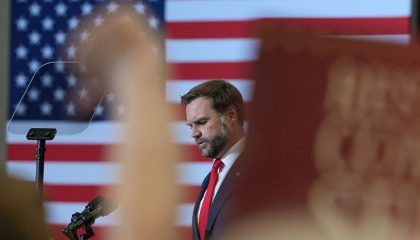
Vice President JD Vance, who has been instrumental in shaping the U.S. approach to the deal, described the new agreement as a streamlined document. “Trump’s agreement, a ‘memorandum of understanding,’ is ‘about a page and a half,’” Vance told CNN’s Jake Tapper. While the brevity of the document may allow for quicker implementation, it also raises questions about the depth of its provisions. The JCPOA’s detailed nature ensured accountability, but the MOU’s simplicity could leave room for ambiguity.
Historical Context and Current Implications
The JCPOA was signed in July 2015, marking a pivotal moment in international diplomacy. At the time, Iran agreed to limit its nuclear activities in exchange for lifting sanctions. The agreement’s verification mechanisms, including regular inspections and transparency measures, were designed to prevent Iran from acquiring a nuclear weapon. However, Trump’s decision to withdraw the U.S. from the JCPOA in 2018 disrupted this balance. Iran followed suit, resuming uranium enrichment and escalating tensions in the region.
Now, with the new deal, the U.S. aims to reverse some of these steps. The agreement reportedly includes provisions to halt the ongoing conflict and reopen the Strait of Hormuz, a critical chokepoint for global oil trade. This move is seen as a pragmatic compromise, addressing immediate concerns about shipping disruptions while setting the stage for further negotiations. The U.S. is expected to ease its blockade of Iranian ports, while Iran will permit tanker traffic through the strait—a shift that could ease economic pressures but may not fully restore the JCPOA’s original terms.
Challenges in Comparing the Deals
Despite Trump’s claims of improvement, the new agreement’s effectiveness remains unclear without a detailed public release. The JCPOA’s comprehensive structure provided a clear framework for nuclear limitations, whereas the MOU’s minimalist form leaves room for interpretation. Additionally, the timing of the deals differs significantly: the JCPOA was negotiated during a period of relative stability, while the current agreement emerges from a landscape of heightened tensions and evolving geopolitical priorities.
Analysts note that the JCPOA’s success depended on sustained international cooperation and Iran’s compliance with its terms. The new deal, by contrast, may rely on bilateral negotiations and a temporary truce. While this could pave the way for a more enduring agreement, it also risks repeating the same pitfalls that led to the JCPOA’s eventual unraveling. As the U.S. and Iran work to finalize terms, the outcome will hinge on whether the new framework addresses the core concerns of both parties without sacrificing long-term stability.
With the details still under wraps, the international community awaits further clarification on how the new deal will compare to its predecessor. Trump’s emphasis on a “wall” against nuclear proliferation signals a renewed focus on containment, but the success of this approach will depend on its implementation and the willingness of all involved parties to uphold its provisions. The next 60 days may offer critical insights into whether this new agreement represents genuine progress or a familiar cycle of promises and compromises.