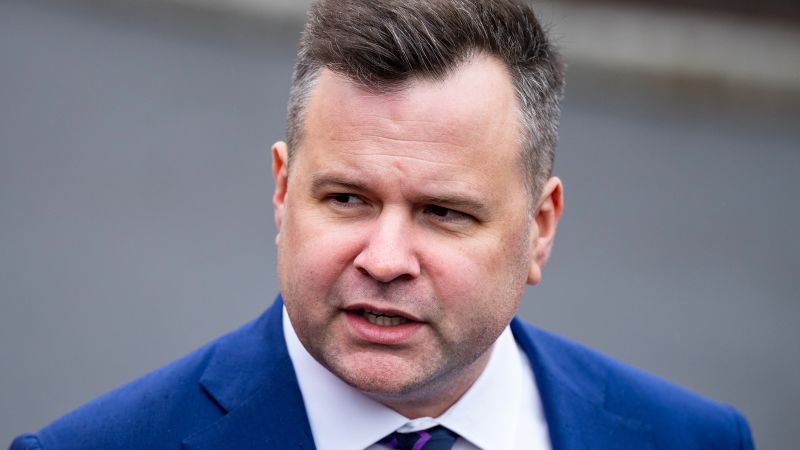
Trump Stands Firm on Pulte Appointment as FISA Lapse Looms
Sandego.net – During a Tuesday meeting, President Donald Trump signaled to House Speaker Mike Johnson that his decision to appoint Bill Pulte as acting director of national intelligence would not be reversed, according to two sources familiar with the discussion. The White House’s resolve to elevate Pulte, a longtime Republican strategist and former housing official, has intensified tensions with Democratic lawmakers who have threatened to block a critical surveillance authority under the Foreign Intelligence Surveillance Act (FISA). Despite the looming risk of the surveillance power expiring without renewal, Trump remains steadfast in his choice, prompting GOP leaders to enter a precarious phase of negotiations.
FISA Extension in Peril
The standoff centers on Section 702 of FISA, a provision that enables the U.S. government to conduct foreign intelligence surveillance with minimal judicial oversight. With the expiration date approaching rapidly, Democrats have leveraged the Pulte appointment as a bargaining chip, refusing to provide the necessary votes for a bill that would extend the program. GOP leaders, including Johnson, are under pressure to find a compromise, but their options appear limited unless Pulte is removed from the role.
Trump’s decision to move forward with Pulte’s elevation has surprised intelligence officials and lawmakers alike. On Tuesday, he announced the transition, effective June 19, which will see Pulte assume leadership of the intelligence community. The White House had previously hinted that Pulte would replace Tulsi Gabbard, the current acting director, once her term concludes at the end of the month. However, the timing of the appointment has raised concerns about the stability of the surveillance program.
Behind closed doors, Trump has argued to allies that Pulte’s tenure as acting director would be brief, serving as a bridge to restructure the intelligence community before a permanent replacement is named. This strategy, he claims, would prevent the incoming director from facing the same political challenges that have plagued the FISA extension efforts. “We can’t let the clock run out on this vital tool,” a White House official said, emphasizing the president’s determination to maintain operational continuity.
Republican Divisions and Pulte’s Loyalists
While Trump is unwavering, some GOP lawmakers have questioned his choice. Internal discussions suggest that Pulte’s lack of demonstrated experience in national security matters has made him a contentious figure. Despite this, Pulte has actively courted support from within the administration, spending time with Trump over the weekend to reinforce his case. His team of MAGA-aligned advisors has been lobbying the president privately, ensuring his position remains secure.
Inside the Capitol, Pulte has faced skepticism from both party factions. Republican members of Congress, including longtime intelligence committee veterans, have expressed confusion over the appointment. “This is a significant move that could undermine our ability to defend key national security interests,” said one senior GOP member, who declined to be named. Meanwhile, Democrats have consistently criticized Pulte’s qualifications, framing his selection as a political maneuver to advance the administration’s agenda.
Republican lawmakers also grapple with the timing of Trump’s decision. With midterm elections just weeks away, the party’s narrow congressional margins have amplified the stakes. Critics argue that elevating Pulte now risks alienating moderate members and emboldening opposition in the final stretch of the campaign. “We’re in a race against time,” noted another GOP representative. “Every delay could cost us support from swing voters and weaken our position on national security issues.”
Political Calculus and Potential Solutions
Amid the growing crisis, Senate Majority Leader John Thune has suggested a possible resolution. In a rare public statement, Thune indicated that the White House is considering a permanent nominee for director of national intelligence to secure FISA’s extension. “The administration is seriously evaluating the need to expedite the nomination process,” Thune told CNN. “This would address the Democrats’ concerns and keep the surveillance program operational.”
However, Thune clarified that the White House is not considering dropping Pulte entirely from the acting role. The senator’s comments hint at a compromise that could satisfy both sides: a temporary extension of FISA while Trump’s team works to finalize a permanent appointment. “We need a solution that doesn’t compromise our national security,” Thune said. “But we also need to show flexibility to keep the process moving.”
“This is the most critical national security tool we have. We cannot go dark, ever. Especially when we have America’s 250 and FIFA coming now, like this week,” GOP Rep. Brian Fitzpatrick, a longtime member of the House Intelligence Committee, told CNN about the mounting FISA risk. “Everyone needs to be a grown-up,” Fitzpatrick added, criticizing Pulte’s qualifications: “I don’t think he ever should have been put in.”
Fitzpatrick’s remarks reflect a growing frustration among Republicans over the potential consequences of allowing FISA to lapse. The provision, which has been in effect since 2008, has been pivotal in monitoring foreign adversaries and protecting U.S. interests abroad. With threats of a government shutdown looming, the stakes have escalated, and the intelligence community is now on edge.
Rep. Kevin Kiley of California, an independent who recently left the GOP, echoed similar concerns. “We need serious people in these roles. These are serious roles, we need serious people,” Kiley said. His comments underscore the bipartisan recognition of FISA’s importance, even as political disagreements cloud the path forward. “Trump’s decision to elevate Pulte was a gamble, and it’s paying off,” Kiley remarked, though he stopped short of endorsing the move outright.
Johnson, who has historically aligned closely with Trump, has been working to mediate the situation. During a private conversation with the president, he emphasized the urgency of preventing FISA from expiring. “The Democrats now have taken a hostage on this, and they’re suggesting they might not advance it,” Johnson stated. “We’re hoping they can get that together. We cannot allow FISA to go dark. It’d be a dangerous prospect, and I think everybody who is reasonable understands that.”
Despite Johnson’s efforts, the divide between Trump’s priorities and the party’s legislative needs persists. The speaker has been careful to avoid direct criticism of Pulte, but his concerns about the Democrats’ tactics are clear. “If we don’t act quickly, the entire intelligence apparatus could be forced to operate under reduced capabilities,” Johnson warned. The pressure on the administration to resolve the impasse is mounting, with lawmakers and officials scrambling to find a way to maintain the surveillance program’s authority.
Meanwhile, the debate over Pulte’s suitability has intensified. While some Republicans support his appointment, others argue that his background in housing and campaign strategy makes him an ill fit for the intelligence role. Critics point to the lack of a clear national security track record, suggesting that the move could erode public confidence in the agency’s effectiveness. “We’re trusting Pulte with the responsibility of safeguarding our country’s intelligence operations,” said one GOP lawmaker. “That’s a big ask, and it’s not without risk.”
As the deadline approaches, the situation remains fluid. Trump’s decision to double down on Pulte has forced GOP leaders to weigh political survival against national security imperatives. With the intelligence community’s future hanging in the balance, the coming days will determine whether the administration can navigate the crisis without sacrificing its key surveillance powers. The outcome could shape the landscape of intelligence operations for years to come, highlighting the intersection of politics and national defense in the final stretch of the Trump presidency.