Japanese City Closes Nearly 100 Schools Amid Rising Bear Activity
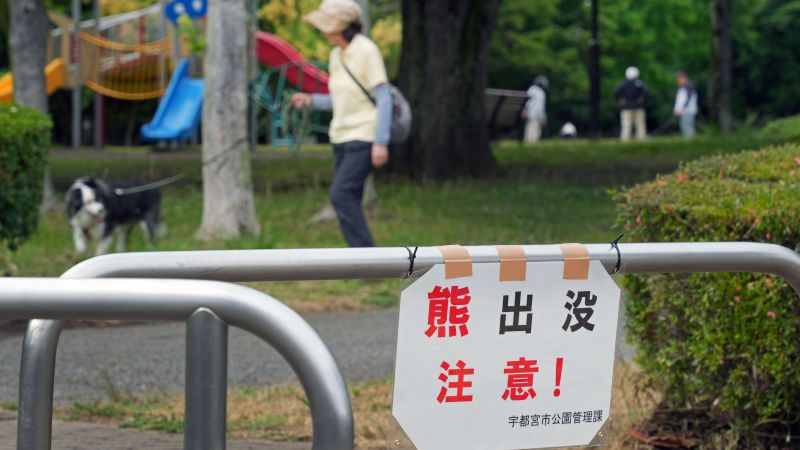
Sandego.net – Following a series of recent bear sightings, Utsunomiya City, located approximately 170 kilometers north of Tokyo, has taken drastic measures to ensure public safety by shutting down nearly 100 elementary and junior high schools. The decision came after officials confirmed the presence of bears in urban areas, sparking heightened concerns about the increasing threat these animals pose to residents. This marks a significant shift in the city’s approach to wildlife management, as authorities scramble to address the surge in post-hibernation bear encounters.
According to the city’s Wildlife Management Group, the first bear sighting of the year occurred on Saturday, setting off a chain of events that led to the closure of educational institutions. The next day, a junior high school reported a bear on its grounds, and by the following evening, security cameras captured footage of the animal roaming through a downtown shopping district. These incidents have left the community on edge, prompting officials to intensify their efforts to monitor and mitigate potential risks.
Since the initial sightings, bears have been spotted in various parts of the city, with police officers confirming the presence of at least one animal on Monday night. As a result, the city’s education board announced the closure of all public elementary and junior high schools starting Tuesday, leaving the future of their reopening uncertain. The closures disrupted daily routines, with parents and students adapting to new safety protocols. Meanwhile, wildlife specialists and local hunters have been deployed to patrol the city, aiming to locate and relocate the bears before they can cause further harm.
On Tuesday, a coordinated effort between law enforcement and the hunting association led to the successful capture of a bear. Video clips from the scene, shared by Reuters, show hunters using dart guns to tranquilize the animal before loading it onto a truck for transport. This operation highlights the proactive steps being taken to address the situation, but it also underscores the growing challenge of managing urban bear populations. Officials have urged residents to take precautions, such as locking their doors and windows at night and securing trash bins to prevent bears from accessing food sources.
Japan’s Ongoing Battle with Bear Attacks
Japan has long grappled with the issue of bear attacks, but the situation has escalated dramatically in recent months. Last autumn, the country recorded a record number of incidents, prompting authorities to declare a national emergency. In response, military troops were dispatched to areas most affected by the attacks, while international governments issued travel advisories warning visitors about the risks in certain regions. The crisis has sparked a nationwide effort to combat the growing threat, with communities adjusting their habits and infrastructure to protect against bear encounters.
‘On bear patrol’: Inside Japan’s fightback against a surge of deadly bear attacks
Japan’s bear population has surged due to a combination of factors, including a decline in hunting activities and the effects of climate change. With fewer people living in rural areas, bears have increasingly ventured into human-inhabited zones, where they now find abundant food sources. The decline in hunting, driven by stricter regulations and conservation efforts, has contributed to the bears’ population growth, making them more likely to roam closer to populated areas. As a result, the number of attacks has risen, with some incidents occurring in unexpected locations such as supermarkets and school premises.
During hibernation season, the frequency of attacks decreased as bears retreated to their natural habitats. However, with the arrival of summer and warmer temperatures, the animals have emerged from their dens and returned to urban environments. This pattern has led to a noticeable uptick in bear activity, with officials warning that the situation could worsen if preventive measures are not reinforced. The recent closure of schools in Utsunomiya is a clear example of how local governments are responding to the growing