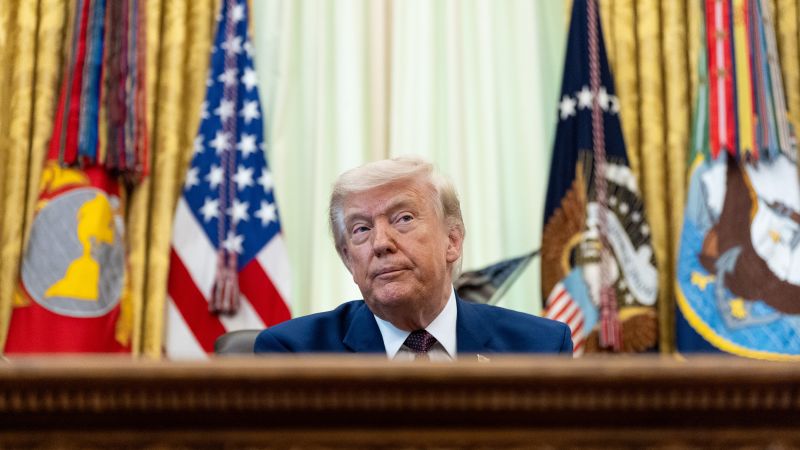
‘Trump has surrendered to Iran’: Some prominent GOP hawks fear Trump just caved
Sandego.net – As the Trump administration advances a potential agreement with Iran, concerns are mounting among key Republican figures about the president’s shifting stance. What was once a bold war strategy against Iran has now become a point of contention within the party, with critics arguing that Trump’s efforts to broker peace may undermine his hardline image. These fears have intensified as details of the deal take shape, prompting debates over whether the president has compromised too much in the pursuit of ending hostilities.
Shifting Loyalties in the GOP Base
When Trump initiated military action against Iran in February, he risked alienating a segment of his political base that had long championed a restrained foreign policy. This group, which includes prominent conservative strategists and military leaders, had supported Trump’s campaign promises to reduce U.S. involvement in overseas conflicts. Now, as the administration seeks to withdraw from the war, they worry that the move might embolden the party’s more interventionist factions. The tension highlights a growing divide within the Republican Party, with some members fearing that Trump’s concessions could weaken America’s global standing.
While the specifics of the memorandum of understanding remain unclear, the deal has already sparked alarm among hardline critics. These individuals, including Senate leaders and military analysts, argue that Trump’s willingness to negotiate may signal a retreat from his earlier confrontational approach. The MOU, they claim, could resemble the Iran nuclear deal signed under President Barack Obama in 2015—a pact Trump had consistently criticized as too lenient for over a decade. If the current agreement mirrors that approach, it might be seen as a symbolic defeat for the administration’s tough rhetoric.
Reactions from Key GOP Voices
Senator Lindsey Graham of South Carolina emerged as a vocal critic of the deal, though his comments carried a tone of measured concern. In a post on X, he praised the progress toward peace but expressed unease about discrepancies between Iran’s version of the terms and the U.S. administration’s. “Somewhat concerned” he said, highlighting the need for transparency and congressional oversight. Graham emphasized that the agreement must be reviewed by lawmakers, a point that underscores the growing skepticism within the Republican Party.
“Somewhat concerned that Iran’s version of the details doesn’t match the Trump administration’s.”
Meanwhile, Fox News host Mark Levin has been a consistent advocate for the war, but his recent comments suggest a shift in perspective. After Trump criticized Israel for targeting Hezbollah during peace talks, Levin questioned the administration’s lack of transparency. “I’ve asked for days, why can’t we, the people, see the damn MOU?” he said, adding that the delay in releasing the text was unprecedented. Levin’s frustration reflects a broader sentiment among some conservatives who believe the deal lacks clarity and may not deliver the promised outcomes.
The editors of the conservative National Review echoed these concerns, calling the deal “discouraging.” They pointed to specific provisions, such as Iran’s continued ability to enrich uranium for non-military purposes, as evidence of a lenient approach. The publication also criticized the agreement for failing to address Iran’s ballistic missile program, a key issue in the previous administration’s negotiations. “There is the possibility that Trump would return the U.S. to Obama’s failed Iran deal,” the editors wrote, “which would have all the makings of a humiliation after all of the president’s tough talk.”
Blame Shifting and Strategic Concerns
Some Trump allies, who had previously supported the war, are now attributing criticism to the president’s advisors. Vice President Kamala Harris and her team, including Jake Sullivan, have been central to the peace talks, and critics are questioning their decisions. For example, when Vance, the architect of the deal, suggested that Iranian leaders had expressed regret over their 47 years of hostility toward the U.S., conservative commentator Erick Erickson responded with sharp sarcasm. “FFS,” he said, a phrase meaning “for f*ck’s sake,” before adding: “Trump has surrendered to Iran. Those who kill Americans love this deal.”
“FFS. Trump has surrendered to Iran. Those who kill Americans love this deal.”
Others, like former Trump aide Marc Thiessen, have raised alarms about the deal’s resemblance to Obama’s framework. Thiessen, who has been a key advisor to the current administration, warned on Fox News that the emerging agreement could mirror the previous one. “I’m anxious to see what the details of the deal are,” he said, “but I’m concerned that it might not be as strong as it appears.” Thiessen’s remarks highlight the fear that Trump’s approach could be perceived as a compromise, even if it achieves temporary stability.
Despite these criticisms, some within the GOP remain cautiously optimistic. Former Secretary of State Mike Pompeo, who had been a staunch critic of the peace talks, expressed a more tempered view on Monday. “I pray that any settlement preserves those sacrifices and secures the interests of the American people,” he said on X. Pompeo’s statement suggests that while he remains skeptical, he acknowledges the need for a strategic pause in the conflict.
The debate over the Iran deal is also revealing the administration’s internal tensions. On Monday, White House officials indicated the MOU would be released within 24-48 hours, but Trump himself claimed it would be published only after its final signing on Friday. This conflicting timeline has fueled further speculation about the deal’s contents and the administration’s commitment to transparency. Some analysts argue that the delay is intentional, designed to build momentum for the agreement before public scrutiny peaks.
Implications for U.S. Foreign Policy
As the details of the deal take form, the implications for U.S. foreign policy are becoming clearer. The agreement appears to prioritize short-term peace over long-term geopolitical leverage, a shift that has drawn mixed reactions. For supporters, the deal offers a chance to reduce tensions and stabilize the region. For detractors, it signals a departure from Trump’s hardline stance, which had been a defining element of his presidency.
However, the agreement’s success will depend on its ability to address core concerns. If Iran’s nuclear program is limited and its missile activities are curtailed, the deal could be seen as a win for diplomacy. Yet, if the terms allow Iran to maintain significant influence, the criticism will likely persist. The debate underscores the challenges of balancing immediate results with long-term strategic goals, a dilemma that has plagued U.S. foreign policy for decades.
With the clock ticking, the Republican Party faces a critical moment in its history. The tension between Trump’s bold rhetoric and the pragmatic steps taken to reach peace has exposed fractures within the party, raising questions about the future of U.S. foreign policy. Whether the deal is viewed as a triumph or a betrayal will ultimately shape the narrative around Trump’s legacy and the direction of the GOP in the coming years.