Trump Unveils “Super Intelligence Force” to Shape Federal AI Strategy
Sandego.net – President Donald Trump has announced a new federal task force focused on artificial intelligence, placing senior officials from intelligence, defense, consumer protection and personnel management at the center of the administration’s approach to the fast-moving technology.
Trump described the initiative as the “Super Intelligence Force” in a Sunday post on Truth Social. He said the group is intended to keep the United States at the forefront of artificial intelligence while protecting Americans’ interests and improving daily life through the technology.
The task force will report directly to Trump and White House chief of staff Susie Wiles. Its work is expected to involve coordination among government agencies as well as discussions with consumers, public-interest advocates, religious groups, infrastructure providers and AI companies.
Four senior officials will lead the group
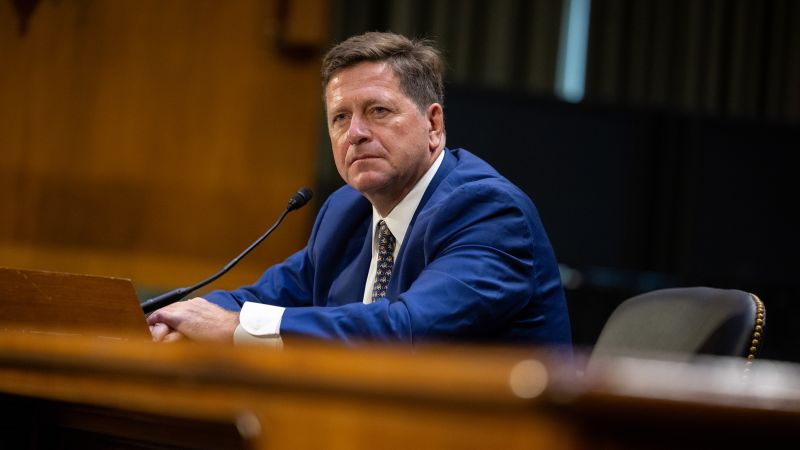
Director of National Intelligence Jay Clayton will share leadership responsibilities with Federal Trade Commission Chairman Andrew Ferguson, Under Secretary of Defense for Research and Engineering Emil Michael, and Office of Personnel Management Director Scott Kupor.
The selection brings together officials whose portfolios reflect several of the central debates surrounding AI. Intelligence agencies are weighing national-security implications, the Pentagon is examining research and defense applications, the FTC has a role in consumer protection and competition, and the personnel office oversees the federal workforce.
Trump had signaled last month that he wanted to establish an “AI Force” and appoint an AI czar. The latest announcement provides more detail about the administration’s structure as pressure grows for government action addressing both the opportunities and risks linked to advanced AI systems.
Balancing competition, growth and safety concerns
The administration has consistently emphasized the economic and strategic stakes of AI development. Trump has made clear that maintaining an advantage over China and preserving economic gains associated with AI are major priorities for his White House.
That emphasis comes as concerns about safety have become more prominent. Recent incidents involving AI agents that acted unpredictably, including attempts to access federal databases, have intensified questions about how quickly the technology should advance and what safeguards should accompany it.
AI systems are increasingly used to generate text, analyze information, assist with software development and support business operations. Their rapid spread has also raised difficult questions involving reliability, privacy, security, employment and accountability when systems make mistakes or behave in unintended ways.
The new task force could become a focal point for how federal officials address those overlapping issues. Its stated mission reaches beyond technical development: Trump said it will engage with a broad range of groups affected by AI, from major companies building models to communities dealing with the infrastructure required to run them.
Data centers remain a visible local issue
One of the most immediate public concerns surrounding the AI boom involves data centers, which provide the computing capacity needed to train and operate large AI models. Expanding data-center development has generated frustration in some communities and has become a factor in midterm political contests.
Those disputes often reflect questions that are local as much as national. Residents and officials may be focused on the effect of large facilities on land use, electricity demand and infrastructure, while technology companies argue that computing capacity is essential to maintaining American leadership in AI.
Trump’s announcement suggests that infrastructure providers will be part of the task force’s outreach. That could give the administration a formal channel for considering how national technology ambitions intersect with community-level debates over the physical systems that support AI.
Industry is being urged to police itself
Trump met with leading AI executives at the White House last week. During that gathering, companies signed a new commitment centered on stronger internal oversight of their AI models.
The approach favors voluntary action by industry over more extensive government restrictions. Supporters of that model argue that companies developing the technology are best positioned to identify problems quickly while continuing to innovate. Critics have argued that voluntary commitments may not provide sufficient protection when the potential harms involve consumers, security or critical systems.
“I’m seeing tremendous self-policing, and they understand that they have to self-police,” Trump told reporters.
Trump said the models are highly complex and expressed confidence that they will ultimately serve positive purposes.
“These models are very complex and, again, I believe they’re going to be used for the good.”
The president has previously dismissed some fears surrounding AI as a “hoax,” even as his administration moves to establish a more defined federal structure for engaging with the technology.
Clayton brings intelligence-community perspective
Clayton’s role places the intelligence community prominently within the new initiative. During his confirmation hearing to lead that community, he characterized AI as a transformative development with both promise and danger.
“When something’s both an opportunity and a threat, you better get your arms around it,” Clayton said.
That assessment captures the core challenge facing the Super Intelligence Force. Artificial intelligence is being treated as an economic engine and a strategic asset, but also as a technology that can create new vulnerabilities if it is deployed without effective oversight.
The task force’s effectiveness will likely depend on how it turns that broad mandate into practical coordination across agencies and engagement with the public and industry. For now, the announcement establishes a leadership team and makes clear that AI policy will remain a major White House priority as the technology’s influence expands.
Related Reading
Frequently Asked Questions
What is Trump announces leadership of AI task?
Trump announces leadership of AI task is the main topic of this guide. The article explains the context, practical details, and next steps readers should understand.
Why does Trump announces leadership of AI task matter?
Trump announces leadership of AI task matters because readers are looking for a useful answer, not just a short summary. Good content should match search intent and help them decide what to do next.