Russian strikes on U.S.-linked companies raise fresh concerns in Ukraine
Sandego.net – Russian drone and missile attacks have damaged facilities connected to major American brands in Ukraine, intensifying concern among business leaders and Ukrainian officials while drawing limited public reaction from the Trump administration.
The attacks have affected operations associated with Coca-Cola, PepsiCo, McDonald’s and Oreo in recent months. They come as President Donald Trump’s administration has urged Ukraine to avoid attacks on Russian refineries, arguing that disruptions to Russian energy infrastructure can affect American consumers and investments.
For companies still operating in Ukraine, the damage underscores the risks of maintaining commercial activity during a war in which civilian infrastructure, logistics networks and industrial sites remain vulnerable.
American commercial interests under pressure
Andy Hunder, president of the American Chamber of Commerce in Ukraine, said the recent pace and nature of the attacks stand apart from earlier pressure faced by foreign companies in the country. He described repeated strikes involving drones and missiles against sites tied to recognizable U.S. businesses.
“This is a direct hit with drones and missiles, and they keep hitting them.”
Hunder said the pattern appeared intended to send a message about American business interests in Ukraine. He also voiced frustration that the White House had not publicly responded more forcefully.
“We need this to stop because these are American interests, American money, American investors that are being hit and are being targeted.”
Not every company affected has wanted to speak publicly. A former senior State Department official said there is no unified position among U.S. businesses operating in Ukraine, with some reluctant to disclose that they have been struck more than once. Hunder said some companies want the issue raised, while others are proceeding with caution.
Coca-Cola, McDonald’s and PepsiCo sites damaged
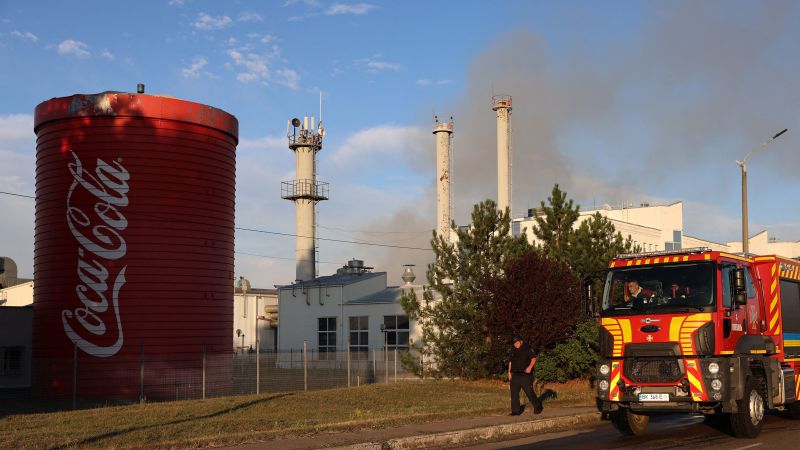
A Russian drone hit a Coca-Cola factory outside Kyiv in early September. Ukrainian President Volodymyr Zelensky portrayed the strike as a signal directed at the United States, stressing that the facility was part of an American enterprise.
“Today, the Russians struck a Coca-Cola plant with a drone.”
In his September 3 nightly address, Zelensky said Russia was using Shahed drones, which he described as Iranian-designed, against the plant. He argued that Moscow could not reasonably be unaware of the company’s U.S. ties.
“This is a clear signal from Russia to America.”
Later in September, a drone destroyed a warehouse used by McDonald’s. The company’s Ukraine operation said a logistics partner’s warehouse in the Kyiv region was damaged in a September 25 drone attack. The disruption led McDonald’s restaurants in the country to operate with a smaller menu.
Zelensky called attention to the nature of the target, saying food products had been struck. He linked the warehouse attack to a broader campaign against ordinary civilian life, including businesses, data centers and internet providers.
PepsiCo said in late August that a production site in the Mykolaiv region had also been damaged. The company said there were no casualties in that incident.
Calls for stronger protection
Several Democratic members of Congress have publicly urged the White House to take further action to protect American commercial interests in Ukraine and to condemn Moscow’s attacks. Ukrainian officials have pointed to the strikes as another argument for stronger air-defense support, saying better protection is needed for companies, workers and communities operating near potential targets.
The American Chamber of Commerce meets visiting lawmakers from both political parties when they travel to Kyiv. Hunder said its representatives have asked those lawmakers to raise the matter directly with the White House.
Trump has previously reacted publicly to an attack on a U.S.-linked facility. After a Russian strike on an American electronics factory in August 2025, he said he had told Russian President Vladimir Putin that he was unhappy about the attack.
A White House official said Trump wants the war to end so that the killing stops and maintained that the administration remains committed to helping pursue a peace agreement between Russia and Ukraine. The official argued that the United States is uniquely positioned to engage with both sides.
A contrast in the administration’s public messaging
The limited public condemnation of strikes on American-linked businesses differs from the administration’s warnings to Kyiv over Ukrainian attacks on Russian energy facilities. In February, the administration warned Ukraine that a late-2025 strike on a Russian Black Sea oil facility had affected U.S. investments in Kazakhstan.
In more recent weeks, Trump has blamed Ukrainian attacks on Russian diesel facilities for higher fuel prices. The contrast has become a point of contention for those who believe attacks on U.S.-connected companies in Ukraine should prompt a clearer response.
The immediate effect is practical as well as political. Damage to factories, warehouses and distribution systems can interrupt supplies, limit restaurant offerings and increase uncertainty for companies trying to serve Ukrainian customers. More broadly, the incidents highlight how foreign investment and civilian commerce remain exposed to a conflict that continues to reach far beyond military positions.
Related Reading
Frequently Asked Questions
What is Trump admin silent as Russia hits?
Trump admin silent as Russia hits is the main topic of this guide. The article explains the context, practical details, and next steps readers should understand.
Why does Trump admin silent as Russia hits matter?
Trump admin silent as Russia hits matters because readers are looking for a useful answer, not just a short summary. Good content should match search intent and help them decide what to do next.