SC Republicans Split Over Graham’s Debate
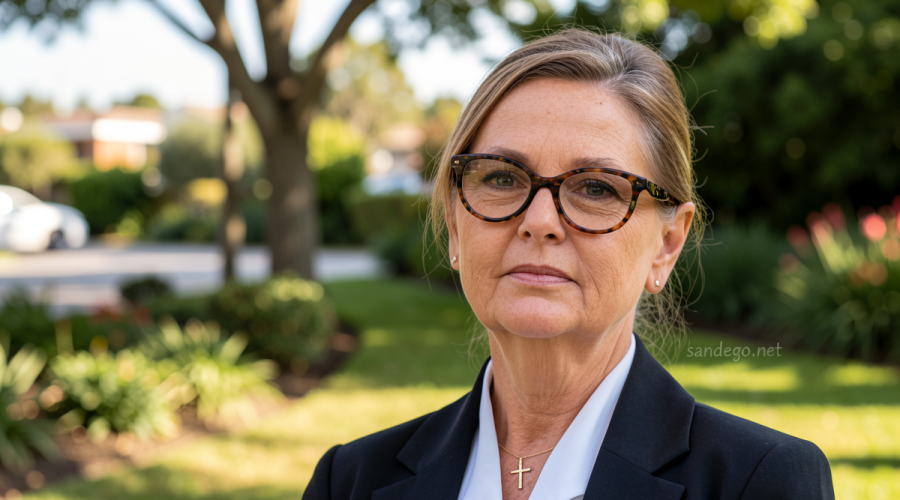
Sandego.net – South Carolina Republicans split over Darline Graham’s debate performance after President Donald Trump’s latest endorsement put him at odds with a vocal bloc of conservative voters in the Palmetto State. The flashpoint is the Tuesday runoff for the Senate seat left vacant by the death of Sen. Lindsey Graham. Graham, the candidate Trump selected to fill that vacancy, drew sharp criticism following a televised exchange in which she admitted limited familiarity with national-security topics — a stumble many in the state’s conservative establishment deem disqualifying for an upper-chamber seat.
The Debate Moment and Immediate Backlash
The controversy ignited during a televised debate moderated by veteran journalist Greta Van Susteren, who pressed Graham on whether Taiwan and the South China Sea posed national-security threats to the United States. Struggling to formulate a response, Graham acknowledged she was “not that informed about national security” on those particular questions. The clip spread rapidly across social platforms and became the defining image of a campaign already rattled by the optics of filling her late brother’s seat.
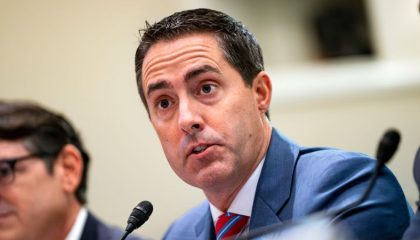
Former state Rep. Adam Morgan, who has thrown his support behind Rep. Ralph Norman in the runoff, told reporters the flub should have served as a “serious gut check” for Trump and his political operation. Morgan took care to use Graham’s full surname, Darline Graham Nordone, a naming convention some critics employ to distance her from the late senator’s far more recognizable name.
“The entire world is laughing at South Carolina right now and laughing at Darline Graham Nordone.”
Morgan’s remarks capture the tone of a faction that views the endorsement not as a gift but as an imposition from Washington onto a state that, in their telling, wants a legislator with a track record rather than a placeholder. South Carolina Republicans split over whether a single debate answer can outweigh decades of institutional loyalty to the president’s pick.
Endorsement Fallout and the Runoff Landscape
The president moved quickly after the August 11 primary, in which Graham placed first but fell short of the threshold needed to avoid a runoff. According to sources familiar with the conversations, Trump personally telephoned at least two of her remaining opponents that evening — Rep. Russell Fry and former Gov. Mark Sanford — and asked each to endorse her. The outcomes diverged sharply.
Fry did not commit immediately. He waited roughly three days, and at least one additional call from the White House, before publicly backing Graham. During their exchanges, the pair discussed the possibility of Trump traveling to South Carolina to stump for the runoff, and Fry proposed the Myrtle Beach area, within his own district, as a suitable venue. That suggestion appears to have borne fruit: Trump is scheduled to hold a rally Friday night in Myrtle Beach alongside Graham.
Sanford, who mounted a long-shot bid against Trump in the 2020 presidential primary, went the other direction. On Friday he posted on X endorsing Norman, praising his “experience in legislative circles, matched by a conservative voting record and conservative stands.” Businessman Mark Lynch, who had challenged Lindsey Graham in the June primary, likewise backed Norman within hours of his own primary defeat, framing the choice in terms of local autonomy.
“South Carolinians do not want ‘Queen Darline’ appointed as their senator by D.C. special interests and Democrat PACs.”
The White House Stands Firm
Despite the visible fractures, the administration has shown no inclination to soften its position or issue a split endorsement of the kind Trump deployed in the South Carolina governor’s runoff after his initial pick failed to win the primary outright. White House spokeswoman Allison Schuster issued a statement that left little room for ambiguity.
“President Trump’s endorsement is the most powerful endorsement in the history of American politics. Anyone claiming otherwise is a complete and utter fool.”
Governor Henry McMaster, a fellow Republican, added his own endorsement, writing on X that Graham had “stood for the values that South Carolinians live by, continued Lindsey Graham’s work, and stood firmly with President Trump to advance his America First agenda.” The governor’s backing carries weight in a state where the executive branch wields considerable influence over primary voters.
Graham has attempted to reframe the debate moment rather than apologize for it. Speaking to reporters after the exchange, she dismissed the question’s relevance to ordinary voters, saying South Carolinians are “worried about groceries, gas prices, and jobs” rather than abstract geopolitical flashpoints. Whether that reframing will quiet the revolt among South Carolina Republicans split over her candidacy remains the central question heading into the runoff.
Frequently Asked Questions
When is the South Carolina Senate runoff? The runoff is scheduled for Tuesday following the August 11 primary, in which no candidate cleared the threshold to win outright. Voters will choose between Darline Graham and Rep. Ralph Norman.
Why did Trump endorse Darline Graham? Graham is the daughter of the late Sen. Lindsey Graham, whose seat became vacant upon his death. Trump selected her to fill the vacancy and has publicly stated his endorsement is final and non-negotiable.
Who else is running in the runoff? Rep. Ralph Norman, backed by former state Rep. Adam Morgan, former Gov. Mark Sanford, and businessman Mark Lynch, is Graham’s primary opponent in the two-candidate runoff.
Will Trump campaign in South Carolina for the runoff? Yes. Trump is scheduled to hold a rally Friday night in Myrtle Beach alongside Graham, a venue proposed by Rep. Russell Fry during their endorsement negotiations.