See Trump’s shifting blame game on the Russia-Ukraine war
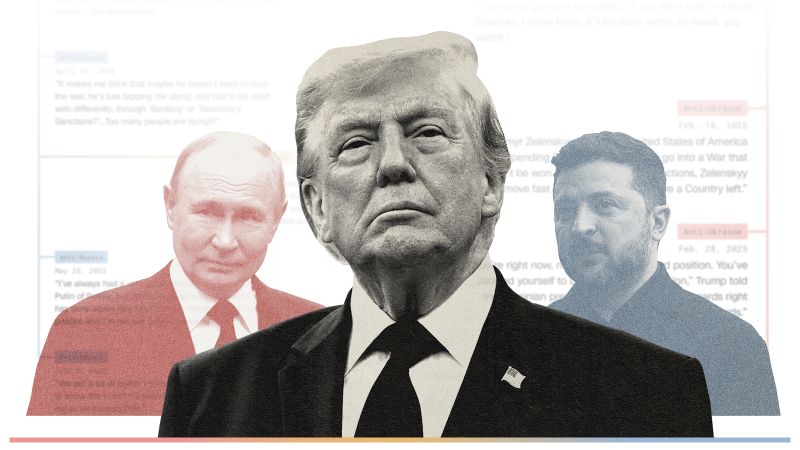
Sandego.net – Throughout his second term in office, President Donald Trump has found himself entangled in a complex web of frustrations over the ongoing Russia-Ukraine conflict. Initially, he had promised to resolve the war swiftly, claiming it would end the day he assumed the presidency. However, more than a year later, the situation remains unresolved, and Trump’s frustration has only grown. His rhetoric has evolved, with his focus on assigning blame oscillating between Ukrainian President Volodomyr Zelensky and Russian President Vladimir Putin, depending on the context and timing of his remarks.
From Confidence to Frustration
When Trump first entered the White House, he boasted of his ability to broker peace in Ukraine, framing it as a personal victory. But as the war dragged on, his confidence began to wane. European officials, accustomed to his mercurial style, have noted the president’s increasing impatience. “It’s as if he’s trying to keep the conflict alive just to have a target for his criticism,” one diplomat remarked. This shifting focus has created a dynamic where Trump’s allegiance to either side seems to hinge on recent interactions rather than a consistent policy stance.
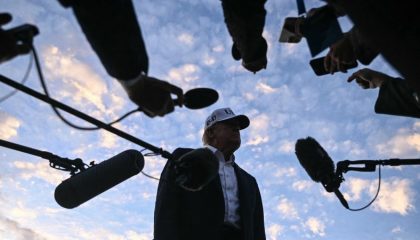
The president’s approach to the war has often been described as a “blame game,” with his critiques of Zelensky and Putin alternating unpredictably. At times, he has painted Zelensky as a leader who lacks gratitude, accusing him of not doing enough to secure U.S. support. “He’s acting like a child, refusing to budge even when we offer him everything,” Trump recently said, referring to Zelensky during a press briefing. Other moments, however, have seen him direct his ire at Putin, questioning his commitment to peace and highlighting their once-close rapport as a point of contention.
European officials, who have worked tirelessly to maintain Trump’s support for Ukraine, have struggled to keep pace with his shifting priorities. “We’ve had to play a constant game of catch-up, trying to align his focus with our strategic goals,” said a spokesperson from the European Union delegation. This has led to a situation where Trump’s statements sometimes echo Russian narratives, casting doubt on his reliability as a U.S. ally in the region. His tendency to reverse positions has left allies questioning whether his words are driven by genuine concern or political calculation.
A Tale of Two Meetings
Recent developments highlight Trump’s erratic approach to the conflict. Just days ago, he engaged in a lengthy conversation with Putin, discussing potential diplomatic pathways to de-escalate the war. During the call, Trump emphasized the shared interests between the U.S. and Russia, suggesting that cooperation was still possible despite their current rivalry. “We’ve got a lot in common, and I think we could find a way to talk, even now,” he stated, according to a transcript from his Truth Social account.
In contrast, Trump is set to meet Zelensky at a NATO summit in Turkey, where he will reportedly push for further military aid to Ukraine. This face-to-face encounter marks a pivotal moment in their relationship, with Trump’s agenda likely centered on bolstering Zelensky’s position while subtly reiterating his desire for a negotiated end to the war. “Zelensky’s leadership has been crucial, but we need to make sure he’s willing to listen,” Trump said in a pre-summit interview, underscoring the personal nature of his diplomacy.
The contrast between these two meetings underscores the inconsistency in Trump’s strategy. While he spent over an hour on the phone with Putin, he has also been vocal in his support for Ukraine, even as he sometimes questions the country’s ability to manage its own affairs. “It’s not that I don’t believe in Zelensky, but I’ve seen how he handles things in the past,” Trump said in a recent statement, a sentiment that has been repeated in multiple contexts. This duality has left analysts puzzled, with many wondering whether Trump’s focus is on rekindling a partnership with Russia or ensuring Ukraine’s survival.
European officials, who have long served as intermediaries in Trump’s political maneuvering, have found themselves in a challenging position. They have had to navigate Trump’s fluctuating priorities while maintaining a unified front in their support for Ukraine. “It’s like trying to steer a ship with no rudder,” one official noted. Despite this, the EU and NATO have continued to advocate for Ukraine, recognizing that Trump’s influence, however unpredictable, remains a critical factor in the country’s international standing.
Trump’s shifting stance has also affected the tone of U.S. foreign policy. In the past, he has criticized the Biden administration for its handling of the conflict, suggesting that a more aggressive approach would have been better. “I knew how to handle this, and I could have ended it faster,” he claimed during a televised address. However, with his own policies in flux, the U.S. has been left to manage the fallout of his inconsistent messaging. “It’s hard to maintain momentum when the president keeps changing his mind,” said a State Department analyst.
The war’s timeline has become a case study in Trump’s political style. His ability to pivot between accusing Zelensky of ingratitude and praising Putin’s potential for compromise has created a narrative of unpredictability. “It’s not about who’s right or wrong, it’s about who’s convenient,” said a political strategist tracking Trump’s statements. This approach has occasionally led to contradictions, such as when he simultaneously praised Zelensky’s resilience while questioning his willingness to compromise. “He’s a good leader, but he’s not flexible enough,” Trump said in a recent tweet, a statement that has since been retracted in favor of a more favorable remark.
As the conflict enters its second year, Trump’s shifting blame game continues to shape the political landscape. His interactions with both leaders have raised questions about the long-term stability of U.S. support for Ukraine and the potential for Russia to gain leverage. “The more Trump talks, the more the war seems to stretch on,” said a Ukrainian diplomat. Despite these challenges, the president remains a key player in the region, with his words carrying significant weight even as they fluctuate between praise and criticism.
Data sources: CNN reporting, NBC News, Truth Social (@realDonaldTrump), Rev transcripts, Roll Call transcripts. Photo credits: Jeff Swensen/Getty Images; Jim Lo Scalzo/EPA/Bloomberg via Getty Images; Mandel Ngan/AFP via Getty Images; Donald Trump/Truth Social; Aaron Schwartz/CNP/Bloomberg via Getty Images; Al Drago/Bloomberg via Getty Images; Chip Somodevilla/Getty Images; Jim Watson/AFP via Getty Images; Andrew Caballero-Reynolds/AFP via Getty Images; Aaron Schwartz/AFP via Getty Images.