Exclusive: Netanyahu Opposes F-35 Sale to Turkey, Reiterates U.S.-Israel Alliance
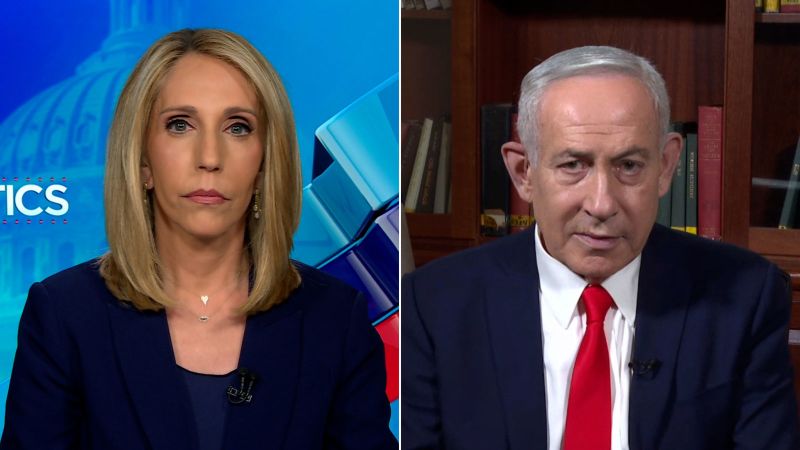
Sandego.net – Israeli Prime Minister Benjamin Netanyahu expressed strong opposition to the U.S. decision to sell F-35 stealth jets to Turkey during a recent CNN interview. The move, announced just hours before the discussion, has intensified concerns about the security implications for Israel, as Netanyahu emphasized that the deal could jeopardize U.S. backing for Israeli interests in the region. Despite acknowledging differences with President Trump, he maintained that their strategic partnership remains vital, with both leaders sharing core objectives on international affairs.
Exclusive: Strategic Tensions with Turkey
Exclusive: Netanyahu warned that the F-35 sale would strengthen Turkey’s military position and possibly tilt its allegiance away from the U.S. “This deal doesn’t make Turkey a friendly state,” he said, citing Ankara’s recent threats against Israel as evidence. His comments come amid growing friction with Turkish President Recep Tayyip Erdogan, whom Netanyahu described as “a leader aligned with the Muslim Brotherhood, which views the U.S. as an adversary.” The leader’s frustration with Trump’s shift in policy reflects a broader ideological rift between the two allies.
“The F-35 is a game-changer,” Netanyahu stated, arguing that equipping Turkey with advanced jets would empower its military ambitions. He accused Trump of prioritizing short-term political gains over long-term stability, a criticism that echoes his earlier concerns about the president’s handling of the Middle East. “The U.S. needs to be firm in its support for Israel,” Netanyahu stressed, framing the sale as a step toward diminishing American influence in the region.
Exclusive: Trump’s Foreign Policy Shifts
Exclusive: Trump’s endorsement of Turkey as an “extraordinary ally” during the NATO summit in Turkey stood in contrast to Netanyahu’s stance. The president’s decision to reverse a previous ban on F-35 sales has sparked debate, with Netanyahu claiming it would destabilize the delicate balance of power in the Middle East. “The U.S. and Israel must act in unison,” he asserted, emphasizing that even when disagreements arise, the shared goal of regional security should prevail.
While Netanyahu acknowledged Trump’s authority as U.S. president, he highlighted the personal tensions that have emerged. “He said I know who the boss is,” Netanyahu remarked, noting that Trump’s remarks have deepened the rift. However, he maintained that their priorities align, stating, “Most of the time, the U.S. interest and Israel’s interest are the same.” This sentiment underscores his strategic approach to preserving the alliance despite political disagreements.
Exclusive: Netanyahu’s Cautious Stance on U.S.-Iran Ceasefire
Exclusive: Netanyahu’s comments on the U.S.-Iran ceasefire agreement reveal his cautious optimism. While the deal lifted sanctions on Iran’s oil exports and opened the Strait of Hormuz to shipping, he criticized its failure to address Iran’s nuclear program or its support for militant groups. “The agreement is a step forward, but it’s not a solution,” he said, indicating that he remains wary of Iran’s long-term intentions.
“It’s too early to say what will happen,” Netanyahu added, expressing skepticism about the pact’s durability. Although he praised Trump’s diplomatic efforts, he stopped short of fully endorsing the agreement, highlighting his focus on immediate security threats. This stance reflects a broader strategy of balancing pragmatic cooperation with unwavering defense of Israeli interests, a theme that has defined his political career.
Exclusive: Settler Violence and Judicial Concerns
Exclusive: Netanyahu addressed recent settler violence in the West Bank, criticizing Israel’s courts for allegedly enabling attacks on Palestinian territories. He argued that judicial decisions favoring settlers have weakened the government’s ability to act decisively. “The courts are not neutral—they’re allowing aggression,” he said, framing the issue as a test of Israeli sovereignty. This critique has drawn attention to the internal political dynamics within Israel, where legal and security priorities often clash.
Netanyahu’s remarks on settler violence also underscored his broader geopolitical strategy. By linking the issue to the U.S. sale to Turkey, he sought to position the F-35 deal as part of a larger threat to Israel’s security. “The U.S. must understand that our survival depends on strong allies,” he emphasized, reiterating that the sale could have far-reaching consequences beyond immediate military gains. His message aimed to rally support for the alliance while highlighting the urgency of the situation.