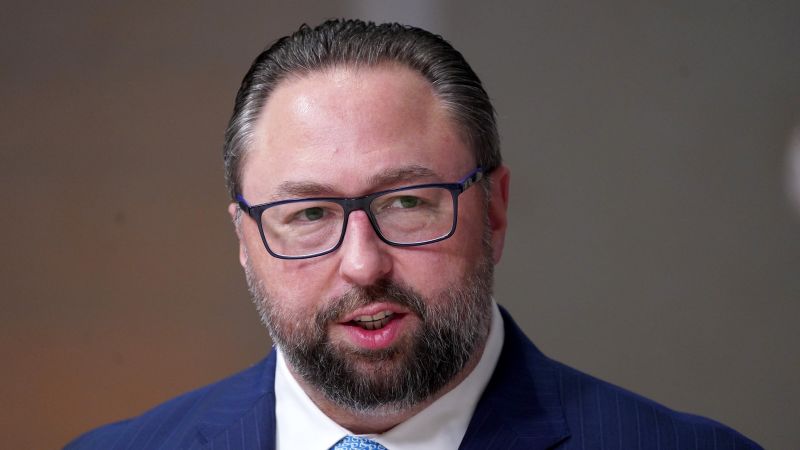
Jason Miller Set to Return to White House with Focus on Messaging Strategy
Sandego.net – President Donald Trump’s former senior advisor and campaign spokesperson, Jason Miller, is anticipated to rejoin the White House, according to three informed sources. While the details of his appointment remain under review, the individual is expected to take on a specialized position aimed at refining the administration’s communication efforts. This role would center on shaping narratives that highlight Trump’s achievements, as one source explained. The decision reflects the administration’s need for a trusted figure to align messaging with current political priorities.
Strategies to Reinforce Key Political Themes
Miller’s return is seen as a strategic move to address recent challenges in maintaining a consistent message. Over the past year, Trump has faced criticism for diverting focus from economic concerns to other topics, such as his stance on Iran. The administration’s inability to keep the conversation centered on affordability and economic growth has prompted calls for a more disciplined approach. Miller, known for his role in crafting Trump’s earlier messaging, is expected to help refocus the narrative, particularly on the party’s central message: portraying Democrats as the primary threat to American values.
“Jason is a hand that is trusted by the president, he respects him, and he’s been around a long time,” said a source briefed on the discussions. “Having people around him reinforcing correct political advice is always a good thing.”
Miller’s influence dates back to 2015, when he first joined the Trump campaign. His ability to connect with the president’s vision and distill complex ideas into compelling narratives has made him a key figure in the Republican strategy. With Trump’s recent shift toward labeling Democrats as communists, the administration is seeking to leverage Miller’s expertise in framing political opposition. This tactic has gained traction following a series of primary wins by democratic socialist candidates, which has intensified calls for a unified Republican message.
DeStefano Joins White House as Key Adviser
Alongside Miller, Johnny DeStefano is also expected to return to the White House, according to two additional sources. DeStefano, a close ally of White House chief of staff Susie Wiles and Senate Majority Leader John Thune, served as an assistant to the president during his first term. His deep ties across the House, Senate, and executive branch position him as a valuable asset in shaping policy and political narratives.
“He is incredibly influential and has deep relationships that span the House, Senate, and White House — he will be a huge asset,” said a source familiar with the decision.
DeStefano’s return is likely to bolster the administration’s efforts in both legislative and public communication. His experience in navigating the complexities of government operations and his familiarity with key figures in the GOP leadership could prove instrumental in advancing the party’s midterm goals. Together, Miller and DeStefano are expected to play a critical role in ensuring the president’s message remains cohesive and aligned with the broader Republican agenda.
Challenges in Staying On Message
Trump’s recent efforts to maintain a unified message have encountered obstacles. His decision to reject a landmark bipartisan bill aimed at reducing housing costs last week sparked backlash, as the legislation was seen as a potential economic stimulus. The president’s abrupt refusal, coupled with his criticism of the bill as “a yawn,” has raised questions about his commitment to economic issues. However, his focus has since shifted to a more partisan angle, emphasizing the ideological divide between Democrats and Republicans.
The Republican Party’s desire to center its message on affordability and economic growth has been undermined by Trump’s emphasis on Democratic socialism. By framing opponents as communists, the administration aims to tap into voter anxieties about leftist policies. This strategy aligns with the GOP’s broader goal of positioning itself as the defender of traditional American values, a theme that has been central to political operations under Trump’s leadership.
Political Operations and Messaging Alignment
James Blair, who oversees Trump’s political strategy, has underscored the importance of this messaging shift. According to private discussions, the GOP’s focus on Democrats as the worst option is a deliberate effort to strengthen its position ahead of the midterm elections. By highlighting perceived threats from the left, the party hopes to mobilize its base and appeal to independent voters concerned about economic policies.
Miller’s role in this strategy is expected to involve guiding the president on which issues to prioritize. This includes not only shaping public narratives but also ensuring that the administration’s actions reflect a consistent message. His presence could help bridge gaps between the president’s public statements and the broader political strategy, particularly as the White House navigates a complex landscape of domestic and international challenges.
Media and Political Context
The Washington Post was the first to report on the anticipated staffing changes, which include the reappointment of Miller and DeStefano. These moves come as the White House seeks to consolidate its messaging team and reinforce its ideological stance. CNN has since reached out to both Miller and DeStefano for their perspectives on the decisions. Their responses, if released, could provide further insight into the administration’s plans and how they aim to address recent political setbacks.
As the midterm elections approach, the administration’s ability to project a clear and consistent message will be crucial. Miller’s return and DeStefano’s inclusion signal a renewed emphasis on leveraging trusted advisors to guide the president’s public persona. The combination of their expertise is expected to help stabilize the narrative, ensuring that key political themes remain at the forefront of the national conversation.
While the specifics of Miller’s role are still being finalized, his influence on Trump’s communication strategy is well established. His ability to articulate the president’s vision and counter opposing arguments has been a hallmark of his career. With the GOP’s midterm strategy increasingly focused on ideological contrasts, his presence in the White House is likely to shape how the administration presents its case to voters. DeStefano’s return further solidifies this effort, as his experience in both legislative and campaign settings provides a well-rounded perspective on how to advance the party’s message.
These staffing decisions also reflect a broader trend of reinforcing the president’s inner circle with individuals who have a proven track record of aligning with his goals. As the White House grapples with internal and external challenges, the addition of Miller and DeStefano is seen as a strategic investment in maintaining a cohesive political narrative. Their combined efforts could help the administration navigate the upcoming elections with greater precision and impact.