A Severe Heatwave Grips the Eastern United States, Foreshadowing a Future of Intensifying Summer Conditions
Sandego.net – As summer officially begins in the Northern Hemisphere, the eastern United States is already grappling with a scorching heatwave that mirrors the extreme conditions expected on a warming planet. This crisis, which has drawn attention across the region, is part of a broader pattern of unprecedented weather events. Meanwhile, Europe is experiencing its own wave of dangerous heat, with two devastating heatwaves in recent weeks and a third imminent. The situation underscores the growing frequency and severity of extreme heat, a direct consequence of climate change.
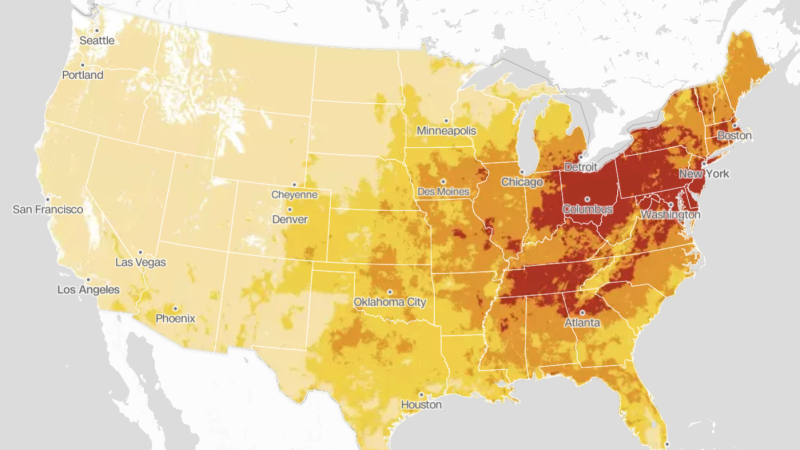
Across the eastern half of the country, approximately 150 million individuals are under heat alerts, representing nearly half of the American population. The Mid-Atlantic and Northeast regions are particularly vulnerable, with temperatures surging to alarming levels. In Washington, D.C., the Fourth of July is projected to surpass historical records, reaching 101 degrees Fahrenheit. This would break the previous benchmark of 100 degrees set in 1919, marking a significant departure from past summers. The coming three days could also set a new standard for heat in the nation’s capital, with temperatures consistently hitting the lower triple digits.
Elsewhere in the region, New York City is forecast to breach the 100-degree threshold for the first time in ten years on Thursday. Philadelphia, too, faces a challenge as it is set to tie its July monthly record with a high of 104 degrees on Friday. Boston, further north, is expected to set daily temperature records starting today, with readings consistently near or exceeding 100 degrees through Friday. These events highlight the escalating intensity of heatwaves, a trend that climate experts attribute to the combined effects of global warming and natural climate phenomena like El Niño.
Climate Scientists Explain the Drivers
Heatwaves in the region are fueled by intense heat domes—persistent areas of high atmospheric pressure that trap hot air and prevent it from dissipating. These patterns, experts say, are being supercharged by rising global temperatures. “Record sea surface temperatures, driven by both El Niño and long-term human-induced warming, are amplifying the risk of extreme weather,” explained Michael Mann, a climate scientist at the University of Pennsylvania. He emphasized that warmer oceans contribute to a more humid atmosphere, which intensifies storm systems and can lead to heavy rainfall, even as temperatures soar.
“Make no mistake, the primary driver for the uptick in deadly heatwaves across the world is the burning of fossil fuels,” said Kim Cobb, a climate scientist at Brown University. “A modest baseline warming drives an exponential increase in extreme heat, making events like these more frequent and severe.”
El Niño, a climate phenomenon characterized by warmer-than-average sea surface temperatures in the Pacific, is also playing a role. While it is known to elevate global average surface temperatures, its effects on summer weather patterns are more nuanced. According to Michael Tippett, a Columbia University climate scientist, El Niño typically exerts a stronger influence on fall and winter conditions rather than summer. However, this year’s El Niño is unusual in its timing and intensity, potentially contributing to the current heat extremes.
Heatwave Impacts and Adaptation Measures
As the heat intensifies, cities in the Northeast and Mid-Atlantic are implementing emergency cooling strategies. Public spaces such as cooling centers, pools, libraries, and spray parks are being opened or extended to provide relief. Additionally, outreach programs are targeting at-risk populations, including the homeless, elderly residents, and outdoor workers, to ensure they have access to resources during the crisis.
Major Fourth of July festivities, such as the “Great American State Fair” on the National Mall in Washington, D.C., are also adapting to the heat. These events are incorporating water stations, cooling tents, and misting areas to keep attendees safe. In New York City, mobile medical units are being deployed to monitor heat-related illnesses, while cooling-center locations are highlighted on LinkNYC kiosks. Businesses are also receiving reminders about implementing heat protections for their employees, reflecting a broader societal effort to mitigate the dangers.
The link between climate change and heatwaves is now more evident than ever. A recent analysis of Europe’s latest heatwave revealed that it not only broke records but also would have been “virtually impossible” just a few decades ago, when global warming had not yet reached its current levels. This underscores the clear connection between human activity and the escalating frequency of extreme weather events.
El Niño’s Role in Warming Trends
While El Niño is expected to contribute to record-breaking temperatures in 2027, its influence this year has already been felt. The ongoing El Niño, which was declared on June 11, is part of a natural cycle that has intensified global temperatures. However, scientists note that its impact is often delayed, with effects on marine and land heatwaves typically emerging a few months after the phenomenon reaches full strength.
Despite its role, El Niño is not the sole factor driving the current heatwave. Kim Cobb highlighted that the combination of human-caused warming and natural climate variability has created a perfect storm of conditions. “Even without El Niño, the baseline warming from greenhouse gas emissions would have made these events more likely,” she said. “But when El Niño adds its heat, the result is more extreme and widespread.”
As the planet continues to warm, the frequency of such events is expected to rise. Extreme heat is becoming more common, longer-lasting, and more intense, with consequences that extend beyond mere discomfort. From the scorching streets of Washington to the bustling urban centers of New York, the effects of climate change are now a tangible reality, demanding urgent and sustained action to adapt to the new normal.