Ripple Effects of the Iran Conflict Escalate Global Hunger Crisis, Says WFP Acting Director
Sandego.net – The ongoing conflict in Iran is creating cascading consequences that are intensifying the threat of severe food insecurity for millions of people worldwide, according to Carl Skau, the acting Executive Director of the World Food Programme (WFP). Speaking to CNN, Skau emphasized that the war has disrupted global supply chains, forcing the organization to confront unprecedented challenges in delivering aid to the most vulnerable populations. With fuel prices soaring due to the strait of Hormuz being blocked, the WFP’s operational costs have skyrocketed, compounding existing financial strains. This situation is not just a local problem—it’s a global one, with far-reaching impacts on food availability and affordability.
Strait of Hormuz Closure: A Catalyst for Rising Costs
The blockage of the Strait of Hormuz has become a critical factor in the rising costs of energy and food. This vital waterway, through which a significant portion of the world’s oil flows, has seen its traffic severely restricted, leading to exponential increases in fuel prices. As a result, the WFP faces a dual challenge: higher transportation expenses and diminished access to essential resources like fertilizers, which are crucial for agricultural production in regions such as Sudan. Skau highlighted that these combined pressures have created a “devastating mix” for the organization, which is already operating under severe budget constraints.
“In many places, we’re already taking from the hungry to give to the starving,” Skau said during an interview in Washington, DC. “The price of food going up 20-30% means they eat 20-30% less, and that’s not just a statistic—it’s a reality for millions.”
Skau’s comments underscore the severity of the situation. The WFP, which relies heavily on donor support, has seen a dramatic reduction in funding over the past two years. For instance, the United States, the organization’s largest contributor, has slashed its 2026 allocation to $731 million from $4 billion in 2024. This decline in financial backing has left the WFP struggling to meet growing demands, particularly as food prices continue to climb globally.
Global Food Insecurity: A Growing Concern
Recent assessments reveal that the conflict’s ripple effects are pushing an additional 45 million people toward acute hunger by July, according to a March warning from the WFP. The organization’s ability to respond to this crisis has been further hampered by the continued closure of the Strait of Hormuz, which has disrupted the flow of critical goods and resources. Skau noted that even if the strait were to reopen, the economic damage caused by the prolonged disruption would persist for years.
Food insecurity is not a new phenomenon, but the current crisis has reached alarming proportions. In Sudan, 20 million people are already struggling to access adequate nutrition, while in Lebanon, hundreds of thousands have been displaced, exacerbating existing humanitarian challenges. The war in Ukraine has also created long-term obstacles, with over 20 incidents in the past two years damaging WFP infrastructure, including warehouses, distribution points, and partner assets. A recent missile strike on a WFP warehouse in Dnipro, Ukraine, in late May has compounded these difficulties, highlighting the fragility of aid operations in conflict zones.
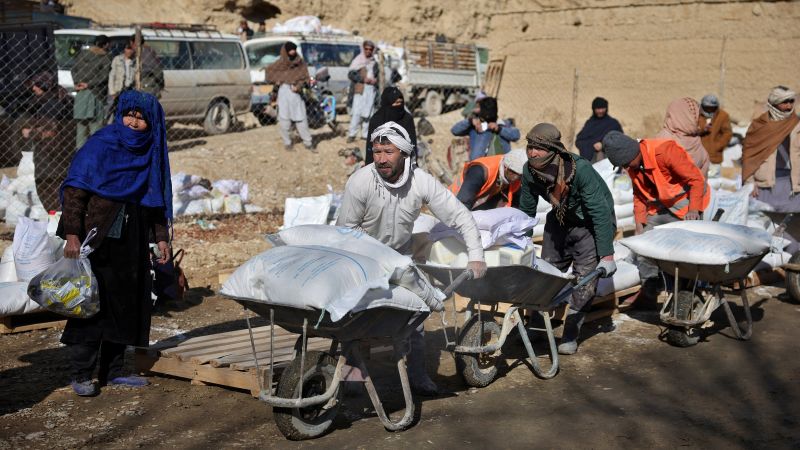
“We don’t have resources to help all the women-headed households with children in this province. So, what do we do? Do we say, ‘Okay, women-headed households with more than five children?’ Well, that means those with four are not getting assistance, and we know that will have massive impacts,” Skau explained, describing the difficult choices his team is making in Afghanistan.
Funding Cuts and Prioritization Dilemmas
Skau’s concerns extend beyond immediate logistical issues to the broader financial landscape of the WFP. He pointed out that unlike past crises, such as the Ukraine war or the pandemic, there has been no significant surge in donations to offset the growing needs. In fact, the organization has experienced a 40% drop in annual funding, a trend that has left it with limited capacity to respond effectively. “We’re not just dealing with a shortage of resources—we’re dealing with a shrinking ability to reach those who need it most,” he said.
The WFP’s reliance on international donations means that any decline in funding directly affects its ability to provide food aid. Skau, who took over as acting head of the organization last week after Cindy McCain’s departure, has been vocal about the need for richer nations to step up their commitments. “It’s going to take time to recover,” he told CNN. “We hope this conflict goes away, and the strait opens tomorrow. But I think it’s clear that we need rich countries to take more responsibility.”
Despite these challenges, Skau expressed gratitude for the United States’ continued support, though he acknowledged that more is needed. “We are thankful for the US contribution, but we always want to push the envelope,” he said. “It’s in their interest to fight global hunger because a hungry world is an unstable world.” Skau added that there is widespread agreement among Americans and beyond that children should not go to bed hungry, and that preventing starvation is a shared priority.
South Sudan and the Fragile Aid System
Skau also highlighted the dire situation in South Sudan, where a specific region is on the brink of famine. However, the only viable way to reach that area is through air transport, which is both expensive and resource-intensive. “If we continue that air bridge, it burns a lot of resources, to the point where we can’t address other parts of the country facing emergency food insecurity,” he said. This underscores the tough trade-offs the WFP must make when resources are stretched thin.
The organization’s current strategy involves prioritizing aid distribution based on immediate needs, often at the expense of long-term solutions. Skau described how these decisions are now more frequent than in previous years, reflecting the growing pressure on the WFP’s budget. “Those kinds of choices we haven’t really faced before,” he said, emphasizing the urgency of the situation. The combination of rising costs, funding shortages, and ongoing conflicts has created a perfect storm, threatening to deepen the global food crisis.
As the WFP navigates these challenges, it continues to advocate for increased support from governments and international partners. Skau’s recent visit to Afghanistan provided a glimpse into the difficult decisions being made on the ground, where aid workers are forced to prioritize certain groups over others. This approach, while necessary, highlights the systemic strain on the organization and the need for more sustainable funding solutions. With the world’s poorest countries bearing the brunt of the crisis, the WFP is working tirelessly to mitigate the impact, but the pressure is mounting at an alarming rate.
Looking Ahead: A Call for Global Solidarity
Skau’s remarks serve as a reminder of the interconnected nature of global crises. The closure of the Strait of Hormuz, the ongoing conflicts in Ukraine and Iran, and the financial constraints on the WFP all contribute to a broader pattern of systemic vulnerability. “We hope this conflict goes away, and the strait opens tomorrow,” Skau reiterated, but he also stressed that the WFP cannot wait for these conditions to improve. “We need to step up and try to mitigate the hit on the most vulnerable,” he said, calling for a renewed commitment to humanitarian aid.
With food prices expected to remain high for the foreseeable future and the WFP’s funding still in decline, the stakes have never been higher. The organization is now in a race against time to distribute resources before the situation worsens further. Skau’s leadership during this critical period has been marked by a clear message: without increased support, the humanitarian fallout of the Iran war could be irreversible. The world must recognize that global hunger is not just a regional issue—it’s a global emergency that requires collective action and sustained investment.