Drones and Lone Wolf Attacks Fuel FBI’s World Cup Security Strategy
Sandego.net – As the 2026 FIFA World Cup kicks off, the United States faces a unique security challenge: safeguarding 11 major cities where the tournament will be held, while mitigating emerging threats like drones and unpredictable lone wolf attacks. With 78 matches scheduled across the nation and thousands of international fans anticipated to flock to the event, federal and local authorities have ramped up preparations to ensure the games are not only successful but also safe. The Department of Homeland Security (DHS) has framed this mission as a “zero-fail” operation, emphasizing the stakes involved in protecting the country’s largest sporting event to date.
Rising Threats and Technological Advancements
The FBI, alongside the DHS, is at the forefront of addressing risks that have grown more sophisticated in recent years. Drones, once simple flying devices, are now capable of carrying lethal payloads, making them a versatile tool for both surveillance and sabotage. Meanwhile, the proliferation of artificial intelligence has amplified concerns about automated threats that could target infrastructure or crowds with minimal human intervention. Lone wolf attacks, characterized by individuals acting independently without direct ties to larger organizations, remain a persistent danger, particularly in the wake of recent incidents that have shaken the nation.
Andrew Giuliani, the White House task force lead for the World Cup, reassured the public that no known threat has been identified to the games. “This will be the largest sporting event the world has ever hosted,” Giuliani stated during a security briefing in New York, underscoring the event’s global significance. However, security officials acknowledge that the threat landscape is evolving rapidly. “The scale of this event means we must remain vigilant against both traditional and emerging risks,” said a DHS spokesperson, highlighting the need for a multifaceted approach to safety.
FBI Training and Counter-Drone Tactics
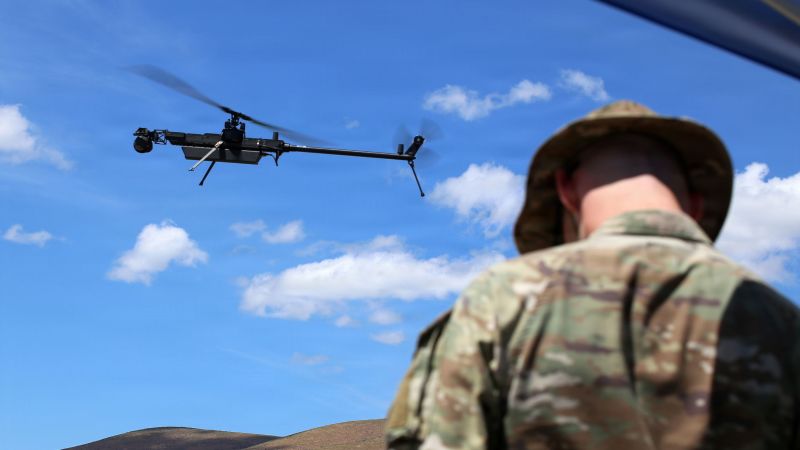
To combat the drone menace, the FBI has launched an intensive counter-drone initiative. At its training center in the Redstone Arsenal military base in Alabama, the agency has trained 60 officers from cities across the U.S. in advanced techniques for detecting and neutralizing unauthorized drones. These methods include remote shutdown capabilities, which allow officers to disable drones mid-flight, as well as intercept strategies for more resilient models that evade radio-frequency jamming. The training emphasizes adaptability, given the rapid pace of drone technology development.
Michael Torphy, assistant section chief of the Critical Incident Response Group, explained the FBI’s proactive stance during a recent demonstration. “Our security posture is largely invisible to the public,” he said, noting that the agency has successfully protected events like the Super Bowl since 2019. Torphy added that the team has honed its skills over years of practice, ensuring readiness for the World Cup. “We’ve done this before. We’re going to do it again,” he emphasized, reflecting confidence in the agency’s capabilities.
Global Implications and Drones in Conflict
While drones are a growing concern in the U.S., their role in international conflicts has pushed technological boundaries. Ukraine, for instance, has become a leader in drone innovation, developing systems both for attacking enemy positions and defending against them. Similarly, Iran and its affiliated groups have demonstrated the effectiveness of drones in targeting US and Israeli assets, particularly in the Strait of Hormuz, where they have disrupted maritime traffic. These examples illustrate how the same technology used in warfare is now being adapted for domestic security purposes.
“The global use of drones as weapons has accelerated their development,” observed John Villasenor, a senior fellow at the Brookings Institute, when discussing the broader implications. He pointed out that even basic technology can be weaponized with alarming efficiency. “Unfortunately, people can do a lot of damage with some pretty basic technology,” Villasenor said, highlighting the dual-edged nature of drone capabilities. Despite this, he noted that the threat remains manageable, as the number of individuals willing to deploy such systems is relatively small. “It’s not zero, that’s the challenge,” he admitted, acknowledging the inherent risk.
Coordination and Local Efforts
Security for the World Cup will rely on a decentralized, bottom-up strategy, with local law enforcement playing a critical role in on-the-ground operations. The DHS will oversee the broader coordination, while the FBI will lead specific counter-drone efforts in three of the 11 host cities. This collaboration ensures that resources are tailored to each location’s unique needs, from high-traffic stadiums to quieter fan zones.
Local agencies are also investing heavily in their own counter-drone technology. The New York Police Department (NYPD), for example, has allocated $6.5 million to purchase specialized equipment, signaling a commitment to modernizing security infrastructure. NYPD Commissioner Jessica Tisch highlighted the importance of global lessons in her May press conference, stating, “It would be a mistake to ignore the technology as it exists and how it’s being used across the world.” She emphasized that drones have already proven their value in conflicts like those in Ukraine and Iran, and that their integration into domestic security is inevitable.
Despite the challenges, officials maintain that the US is well-prepared. The FBI’s training programs, combined with the DHS’s strategic oversight, aim to create a robust defense against both predictable and unforeseen threats. However, the possibility of lone wolf attacks underscores the need for continuous vigilance. “The key is to remain flexible and ready for any scenario,” said Torphy, who stressed that the FBI’s counter-drone tactics are designed to address a wide range of potential dangers.
As the World Cup approaches, the focus remains on preventing disruptions that could mar the event’s success. Whether through advanced drone technology or the unpredictable actions of individuals, the security plan is built on a foundation of preparedness. With millions of fans expected to travel across the country, the partnership between federal and local agencies will be tested, but the lessons learned from recent conflicts and the lessons of the past provide a solid framework for action. The mission is clear: protect the games, safeguard the public, and ensure that the US continues to host world-class events without incident.
Meanwhile, the global drone arms race serves as a reminder of the ever-evolving nature of security threats. As Ukraine and Iran refine their strategies for deploying and countering these devices, the US must stay ahead of the curve. The FBI’s training in Alabama is just one part of a larger effort to integrate cutting-edge technology into law enforcement operations, ensuring that the World Cup is not only a celebration of sport but also a demonstration of the nation’s ability to adapt to new challenges.