California, and the dangerous sudden resurgence of GOP voter fraud fever
Sandego.net – As the 2024 election cycle heats up, a familiar political refrain has resurfaced on the Republican side: the belief that California’s electoral process is being manipulated to favor Democrats. This revival of voter fraud skepticism, which had largely subsided after the 2020 election, is gaining traction once again, fueled by a mix of political strategy, media narratives, and social media momentum. At the center of this renewed focus is former GOP Rep. Adam Kinzinger, whose comments about President Donald Trump’s allegations have sparked a cascade of doubt among some Republicans.
A Shifting Narrative on Fox Business
On a seemingly routine Sunday, Charles Gasparino of Fox Business Network made a notable statement on X, criticizing the president’s repeated claims of a “stolen election.” Yet just hours later, the same commentator appeared to endorse the very idea he had initially dismissed. This abrupt pivot highlights the fluid nature of political discourse in the post-2020 era, where skepticism of election integrity has become a rallying point for certain factions. Gasparino’s shift from outright dismissal to cautious consideration underscores how easily narratives can evolve when amplified by digital platforms and partisan motivations.
“I hate the ‘stolen election’ stuff from the president …” declared Gasparino, only to later concede, “Maybe it is.”
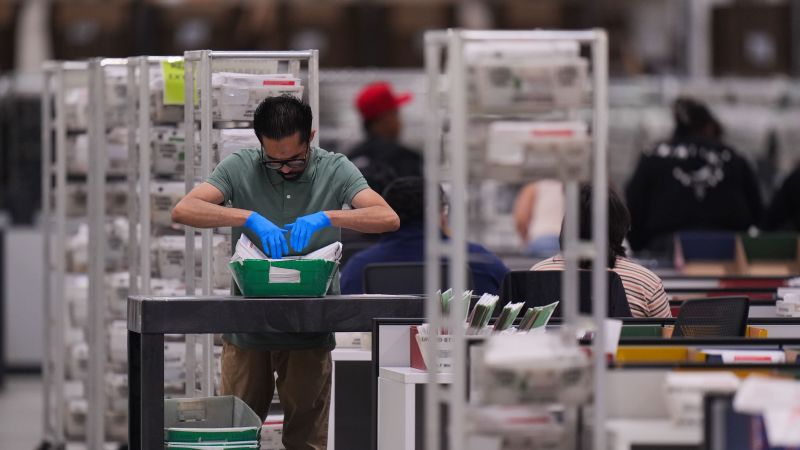
While there is no concrete evidence to support claims of widespread fraud in California, the state’s unique electoral system has long been a target of such theories. California’s lengthy ballot-counting procedures, often criticized for their thoroughness, have led to late-arriving mail ballots that typically benefit Democratic candidates. This dynamic, however, has been exacerbated by Trump’s efforts to rally Republican voters against voting by mail—a strategy that has inadvertently created a perception of bias, even as the system remains largely impartial.
From Conspiracy to Acceptance
Five years after the 2020 election, the GOP’s enthusiasm for voter fraud allegations had waned. But the recent surge in California-specific claims has reignited interest in this narrative. The state, long considered a Democratic stronghold, has now become a focal point for Republicans who previously treated such accusations with skepticism. This shift is particularly alarming given the role similar rhetoric played in the events of January 6, 2021, when election denialism led to violence at the Capitol.
Florida Governor Ron DeSantis, once a moderate voice in the Republican Party, exemplifies this trend. Though he had previously dismissed Trump’s claims of a stolen election, DeSantis now questions the integrity of California’s voting process. In a recent interview, he remarked, “New batches of votes in California always seem to go one way,” suggesting an unspoken belief that these late ballots are systematically advantageous to Democrats. His comments, though cautious, align with a broader pattern of suspicion that has taken root among some Republicans.
The DOJ and a New Wave of Investigations
Amid this growing unease, federal prosecutors have also entered the fray. The U.S. attorney’s office in Los Angeles recently announced “multiple election fraud investigations,” citing “serious structural vulnerabilities” in the state’s voting system. This move, while not conclusive, has lent credibility to the narrative that California’s elections may be vulnerable to manipulation. Meanwhile, the Southern District of New York’s Jay Clayton, a prominent figure in the Justice Department, echoed these concerns during a CNBC segment.
“California has created the opportunity for fraud,” Clayton said, though he clarified he wasn’t asserting that fraud had occurred.
Clayton’s remarks are significant because they come from a prosecutor known for their evidence-based approach. By framing California’s system as inherently flawed, he has helped normalize the idea that fraudulent activity could be occurring. This is especially troubling given that the Los Angeles office had already debunked claims about unexplained votes in the mayoral race, which were attributed to the Republican candidate Spencer Pratt. Despite this, the persistence of the narrative suggests a willingness to accept theory over verified data.
Social Media and the Spread of Doubt
Social media has played a pivotal role in spreading these theories, creating echo chambers that amplify skepticism. Conservative figures, such as Meghan McCain, have noted the rapid shift in attitudes. “For whatever it’s worth, people in my life who have never ever spoken about stolen elections in any capacity are now saying this about California,” McCain remarked, highlighting how the conversation has broadened beyond the usual suspects.
While the majority of Republicans have not joined this chorus, the influence of platforms like X and TikTok has made it easier for fringe ideas to gain traction. California’s deep-blue reputation, combined with the recent high-profile races—such as the governor’s and mayoral contests—has made it a convenient target for those seeking to challenge the status quo. Trump himself has capitalized on this, declaring on Truth Social that “it was not possible” for Republican candidate Spencer Pratt to fall behind after a strong primary lead. His insistence on this narrative reinforces the perception that the election was unfairly tilted in favor of Democrats.
Political Calculus and Electoral Afterthoughts
California’s electoral significance has often been overshadowed by more politically charged states, but its recent prominence in the 2024 cycle has changed that. The state’s large electorate and diverse demographics make it a critical battleground, and the GOP’s focus on it reflects a broader strategy to reclaim political ground. However, this renewed interest in California’s elections has also introduced a level of doubt that may not be warranted by the facts.
While the Trump administration’s Justice Department initially resisted claims of fraud, the current leadership seems more receptive. This shift is evident in the recent investigations, which have taken on a tone of urgency. Yet, these efforts risk overshadowing the actual data that demonstrates the integrity of California’s system. The state’s mail ballot process, though slow, is not without its challenges, but the allegations of systemic bias lack substantial proof. Even so, the political climate has made it easier for these claims to dominate public discourse.
As the debate over election integrity continues, the question remains: is this a genuine concern, or is it a political tool being used to stoke division? The resurgence of voter fraud fever in California highlights the fragility of public trust in electoral systems, particularly when fueled by partisan agendas and social media’s power to shape perception. While the facts may not yet support the claims, the narrative has taken on a life of its own, threatening to undermine the very democracy it seeks to protect.