US Military Campaign Against Drug Trafficking Vessels Claims at Least 227 Lives
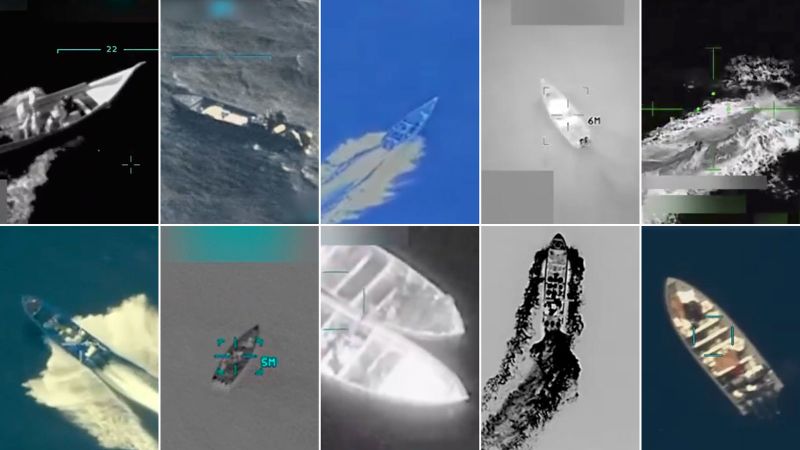
Sandego.net – A sweeping naval campaign across the Caribbean Sea and eastern Pacific Ocean has resulted in the deaths of at least 227 individuals aboard 75 vessels, according to official military announcements and an independent analysis of search-and-rescue operations. The operation, launched under the Trump administration, is framed by Washington as a direct effort to choke off the pipeline of narcotics flowing into American communities. Yet the scale of casualties, the legal justifications invoked, and the absence of publicly released evidence have drawn sharp scrutiny from lawmakers, rights organizations, and international observers.
The Toll and the Survivors
Of those aboard the struck vessels, at least 26 have been confirmed alive. Three of those survivors were temporarily detained by US forces before being handed back to their respective home nations. An additional 23 individuals remain unaccounted for after exhaustive water searches failed to locate them, and they are now presumed dead. The US Coast Guard initiated rescue sweeps following several of the attacks, while naval authorities in other countries were notified and asked to assist after separate incidents in their waters.
The most recent engagement took place on September 7, when US forces destroyed an alleged refueling vessel operating in support of drug-trafficking networks in the eastern Pacific. No fatalities were reported from that strike. It marked the fifth time a boat identified as a refueling platform had been targeted in the campaign.
Operational Mechanics
US Southern Command has stated that crew members were removed from vessels before the boats were sunk, and that those personnel would be transferred to Ecuador. The sequencing — extraction followed by destruction — suggests a deliberate tactical choice to minimize loss of life while still eliminating the vessels themselves. The Coast Guard’s parallel search-and-rescue missions underscored that, despite the extraction protocol, some individuals were nonetheless left in the water or otherwise unaccounted for in the immediate aftermath.
The “Armed Conflict” Designation
In communications with Congress, the Trump administration declared that the United States is now engaged in an “armed conflict” against drug cartels, a status dating from the first strike on September 2, 2025. Under that framing, those killed aboard the vessels are classified as “unlawful combatants.” The administration further asserted the authority to carry out lethal strikes without prior judicial review, citing a classified finding issued by the Department of Justice.
“The US is now in an ‘armed conflict’ against drug cartels,” the administration told Congress, labeling those killed “unlawful combatants” and claiming the ability to engage in lethal strikes without judicial review.
That legal posture represents a dramatic departure from prior practice. Before President Donald Trump assumed office, US interdiction operations in the Caribbean and Pacific typically operated under a framework in which suspected traffickers were apprehended, brought before courts, and prosecuted under federal drug statutes. The shift from prosecution to kinetic engagement — justified by a classified opinion rather than a congressional declaration of war or a specific statutory authorization — has prompted pointed questions in both chambers of Congress.
Questions of Evidence and Accountability
Several members of Congress, along with a range of human rights organizations, have challenged the Justice Department’s classified finding. Their central argument is straightforward: individuals suspected of drug trafficking should be subject to criminal prosecution, not summary lethal force. They contend that the prior interdiction-and-prosecution model offered a tested, constitutionally grounded pathway that the current administration has abandoned without adequate public justification.
Compounding the debate, the administration has not released public evidence demonstrating that narcotics were present aboard any of the 75 vessels struck, nor has it provided documentation linking those boats to specific cartel organizations. Military officials have confirmed that no US service members were injured or killed in any of the strikes, but the absence of corroborating material on the boats themselves leaves a gap between the stated rationale for the campaign and the verifiable record available to the public.
Broader Context
The Caribbean and eastern Pacific corridors have long served as primary arteries for cocaine and other narcotics moving from South America toward US ports. Decades of US Navy and Coast Guard patrols in those waters produced thousands of interdictions annually, with suspects routinely processed through federal courts. The current campaign’s scale — 75 vessels destroyed in roughly a month — and its casualty toll place it well beyond the tempo of earlier interdiction operations.
The designation of an “armed conflict” against non-state actors operating small commercial or semi-commercial vessels raises questions under both domestic constitutional law and international humanitarian law. Historically, the US has invoked armed-conflict status in contexts such as the post-2001 global campaign against al-Qaeda and its affiliates, where combatants operated within defined theaters of war. Applying that label to boat strikes in international waters, where the targets are alleged traffickers rather than organized military forces, stretches the concept in ways that legal scholars and congressional critics have flagged.
As the campaign continues, the central tension remains unresolved: whether lethal force against suspected drug traffickers on the high seas can be sustained under a classified executive-branch finding, or whether Congress and the courts retain the authority — and the obligation — to demand that those individuals be brought to justice through the ordinary machinery of criminal law.
Related Reading
Frequently Asked Questions
What is A timeline of US strikes on boats?
A timeline of US strikes on boats is the main topic of this guide. The article explains the context, practical details, and next steps readers should understand.
Why does A timeline of US strikes on boats matter?
A timeline of US strikes on boats matters because readers are looking for a useful answer, not just a short summary. Good content should match search intent and help them decide what to do next.