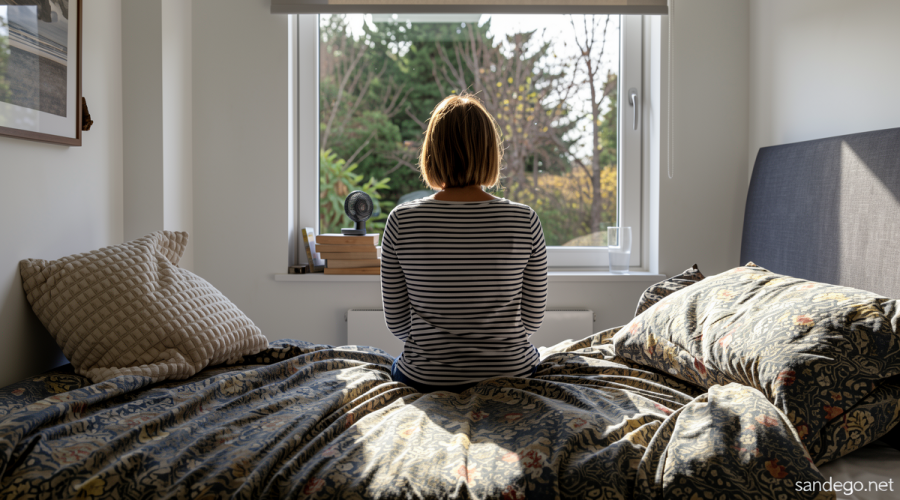
Loneliness Influencers: No Friends, But They Say They’re Happy
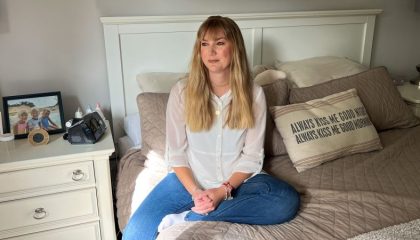
Sandego.net – Loneliness influencers have no friends, yet they post daily videos telling millions of viewers that solitude suits them just fine. In a small studio flat in Windsor, England, a woman in her 40s boils water for instant coffee, rides her bike to a client’s house for a cleaning shift, then pedals home to a television set and a cat asleep at her feet. Phone calls between Friday and Monday: zero. WhatsApp pings: none. Friends: none. And still, she tells her audience she is content. Sarah-Jane Hoadley, a professional cleaner who went viral under the handle @dramafreediaries on TikTok and Instagram, has pulled in roughly 100 million views and 500,000 followers since her first post landed in January. Her unvarnished documentation of a friendless, solitary routine has given rise to an entire social-media subgenre now shorthanded as the “loneliness influencer” format.
What the Format Looks Like and Who Drives It
The template is almost always a woman who reframes an independent, socially sparse existence as something worth celebrating rather than pitying. Hoadley’s clips capture the hush of a single-person life: the commute, a meal plated for one, the particular silence of an empty room after dark. Lana Isa, another creator who launched a “solo vlog” series last summer, filmed how her Friday and Saturday evenings unfolded entirely alone in her apartment. That series set off a cascade of imitators across TikTok and Instagram, each centering their content on the aesthetics and micro-routines of living without companionship. What started as personal documentation metastasized into a full-blown online phenomenon, dragging public debate back to mental health, autonomy, and where solitude ends and isolation begins.
Hoadley is explicit that her posting is not aspirational. She does not want viewers to replicate her circumstances. Her loneliness, in her own framing, is simply the texture of her present life, documented without editorializing or a hidden pitch.
Criticism, Expert Nuance, and the Viewer’s Own Story
Not everyone finds the trend comforting. Phil Lane, a psychotherapist practicing in Pennington, New Jersey, argues that these creators project a sanitized, almost romanticized portrait of being alone.
“These so-called loneliness influencers give a very romantic image of what it’s like to be alone.”
The concern gains urgency from timing. The World Health Organization has elevated loneliness to a global health priority, and surveys indicate that nearly one in four adults now report feeling lonely. Critics worry that digital natives — particularly members of Generation Z, frequently dubbed the “loneliest generation” — may absorb the content and read it as permission to retreat further from human connection, cultivating what commentators call “hyper-independence.”
Dr. Lauren Cook, a clinical psychologist based in San Marino, California, and founder of Heartship Psychological Services, offers a more layered reading. She notes that women may be more inclined to share content about navigating life alone because they encounter less stigma around mental-health topics than men do. For Cook, the critical variable is not the content itself but the viewer’s internal state.
“What matters most is that the person feels like they’re living in alignment with their personal values — and not necessarily for us to say if that lifestyle is right or wrong.”
She draws a line between watching such material from a place of seeking peace, solace, and restoration — which she considers genuinely beneficial — and watching it from a place of avoidance, where the viewer uses the content to justify dodging vulnerability, dating, or new relationships.
“But if it’s coming from a place of avoidance or not wanting to be vulnerable, putting ourselves out there with dating or new relationships … then that’s something I think where we have to get curious about if anxiety is maybe dictating the narrative at that point.”
Dr. Julianne Holt-Lunstad, a professor of psychology and neuroscience at Brigham Young University in Provo, Utah, suggests that creators who adopt the label may be doing something psychologically protective. By naming their experience publicly and attaching it to a recognizable identity, they reduce the stigma and shame attached to feeling alone.
“This may be a way to reduce the stigma and shame around their experience, and to help normalize that.”
In other words, the very framing critics find troubling could function as a small act of self-advocacy, turning a private ache into a shared, discussable reality.
Practical Questions About the Trend
Is watching solo-lifestyle content harmful? Not inherently. As Dr. Cook notes, the effect depends on the viewer’s starting point. If the content offers solace and a sense of alignment with your own values, it can be restorative. If it becomes a script for avoiding vulnerability or new relationships, it may be reinforcing anxiety rather than easing it.
Does posting about solitude make someone a “loneliness influencer”? The label is informal and self-applied. What unites the creators is the decision to document a friendless, solitary routine without apology and to frame it as a valid way of living rather than a deficit to be corrected.
What does the WHO say about loneliness? The organization has elevated loneliness to a global health priority, citing evidence that chronic social isolation carries risks comparable to other major health factors. Surveys in several countries now show that close to one in four adults report feeling lonely regularly.
Can solitude and isolation be distinguished? Clinicians generally treat solitude as chosen and restorative, while isolation is experienced as imposed and depleting. The line between them is subjective and shifts with context, which is why experts like Cook emphasize the viewer’s (or creator’s) internal narrative over any external checklist.
Related Reading
Frequently Asked Questions
What is Loneliness influencers have no friends but they?
Loneliness influencers have no friends but they is the main topic of this guide. The article explains the context, practical details, and next steps readers should understand.
Why does Loneliness influencers have no friends but they matter?
Loneliness influencers have no friends but they matters because readers are looking for a useful answer, not just a short summary. Good content should match search intent and help them decide what to do next.