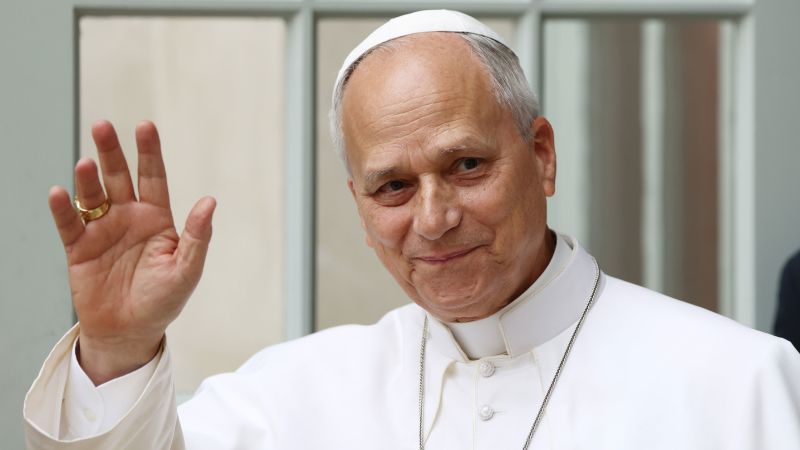
Pope Leo XIV’s Early-Stage Lung Cancer Diagnosis: What the Surgery Means
Sandego.net – Pope Leo XIV underwent surgery Tuesday in Rome after doctors identified a cancerous lung nodule at an early stage. Surgeons at Agostino Gemelli University Policlinic removed the growth and the lower lobe of the pope’s right lung, a procedure intended to eliminate the tumor and give him the strongest chance of recovery.
The Vatican said the nodule was pulmonary adenocarcinoma, the most common form of lung cancer. The diagnosis has raised questions about the illness, what follows a lobectomy and how the pope’s health could affect his upcoming public commitments, including a proposed Latin America visit next month.
What is pulmonary adenocarcinoma?
Pulmonary adenocarcinoma belongs to the group of cancers known as non-small cell lung cancers. It represents roughly 40% of all lung cancer cases. Compared with small cell lung cancer, it commonly develops and spreads at a slower pace, although every case has its own biology and course.
The disease can be difficult to detect because early lung tumors may cause few noticeable symptoms. That contributes to adenocarcinoma’s high toll as a cause of cancer deaths: many patients learn they have it only after it has reached a more advanced stage.
In Pope Leo’s case, he told a crowd Sunday that doctors had found the lung growth “at a very early stage.” That timing is important. Dr. Juanita Mora, national medical spokesperson for the American Lung Association, said the available details point to factors that are favorable for his outlook.
“The fact that Pope Leo had a localized case of adenocarcinoma with an early-stage detection works in his favor,” Mora said. “Especially after surgical removal.”
Why doctors removed part of the right lung
Surgery is often the initial treatment when adenocarcinoma appears localized and a patient can safely undergo an operation. The goal is to remove both the tumor and enough nearby lung tissue to reduce the chance that cancer remains behind.
The right lung contains three lobes, while the left lung has two. Pope Leo had the lower lobe of the right lung removed, an operation called a lobectomy. Removing the lobe where a tumor is located is a standard approach for eligible patients because it can offer the possibility of a cure.
Living with one less lobe generally involves an adjustment period rather than a complete loss of normal activity. Remaining lung tissue and the opposite lung can adapt over time. The degree of recovery differs from person to person and can depend on overall health, fitness, other lung conditions and postoperative healing.
Mora said the pope may initially find breathing more difficult while his body adapts.
“Initially, it will be a little harder for him to breathe until the left lung starts to compensate for it,” Mora said.
His age, 71, does not alone determine the outcome. Mora noted that he is a nonsmoker, is otherwise healthy and plays tennis, all factors that may support rehabilitation and lung conditioning. Respiratory therapy exercises are expected to be part of recovery.
Smoking is not the only risk factor
Smoking can substantially increase a person’s risk of lung cancer, but pulmonary adenocarcinoma is frequently diagnosed in people who have never smoked. It is seen more often among women, younger patients and people of East Asian ancestry.
Radon gas is the leading cause of lung cancer after smoking. Particle pollution is another recognized risk factor. In many cases, however, doctors cannot identify a single clear reason that a particular person developed this cancer.
That uncertainty can make lung cancer especially unsettling for patients and families. It also underscores why early evaluation of concerning respiratory changes and appropriate screening for people at elevated risk can be consequential. Early detection can broaden treatment options, including surgery.
What doctors will examine next
Although the cancerous area has been removed, pathology testing will help determine whether surgery is the only treatment Pope Leo needs. Physicians will examine the lung tissue and samples from lymph nodes near the lungs. Cancer cells in those nodes, or evidence that disease has moved beyond the original site, would affect the stage and shape decisions about further care.
Depending on those findings, treatment after surgery could include chemotherapy, radiation or other approaches. Doctors also plan genetic and biomarker testing, which can identify features of a tumor that may guide future treatment. Such testing can help clinicians determine whether targeted medicines or immunotherapy would be appropriate if additional treatment becomes necessary.
Mora said biomarker testing has transformed lung cancer care, while noting that insurance coverage remains uneven in the United States. Only 15 states require health insurers to cover the testing even for patients with lung cancer.
“We’re hoping, though, that it’s just an isolated cancer where he’s one and done, in which now we see a survival rate of 80% to 98% when it comes to surgical removal,” Mora said of Leo. “But now we will have to wait for these tests.”
Recovery, hospitalization and travel
People recovering from a lobectomy commonly remain in the hospital for several days while their oxygen levels, breathing and other vital signs stabilize. Recovery then continues at home, and pain can be expected after an operation of this kind.
Protecting against respiratory infections will also be important during the recovery period. An infection can be more difficult when a person has less lung capacity following surgery.
Whether Pope Leo can make his anticipated Latin America trip next month will depend in part on the results of the upcoming tests and the speed of his recovery. The immediate focus will be healing from surgery, restoring comfortable breathing and learning whether the cancer was fully contained.
The Vatican’s history includes another example of life after lung surgery. Pope Francis had a right-sided lobectomy when he was young after a serious tuberculosis infection. Mora said that experience illustrates that many people can maintain full function and active lives after losing a lung lobe.
“So obviously, a lot of people live and can fully do everything in terms of function and capacity, even with a lobectomy.”
Related Reading
Frequently Asked Questions
What is What to know about Pope Leo s?
What to know about Pope Leo s is the main topic of this guide. The article explains the context, practical details, and next steps readers should understand.
Why does What to know about Pope Leo s matter?
What to know about Pope Leo s matters because readers are looking for a useful answer, not just a short summary. Good content should match search intent and help them decide what to do next.