Trump Accounts Launch as New Financial Tool for Children’s Futures
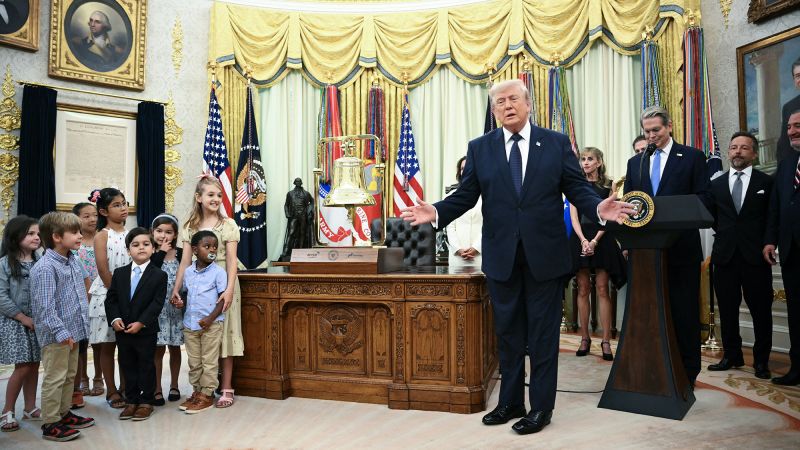
Sandego.net – On Saturday, July 4, 2026, the Trump Accounts officially began operations, marking the debut of a novel savings and investment program designed to support the financial growth of children. The initiative, which had been enacted into law the previous year, was celebrated with a symbolic gesture by President Donald Trump, who rang the opening bell at both the Nasdaq and the New York Stock Exchange from the White House on Monday. This event underscored the significance of the program as a step toward fostering long-term financial security for American families.
A New Era for Child-Focused Investing
The Trump Accounts are part of a broader effort to create accessible financial instruments that benefit children, joining the ranks of established options like custodial Roth IRAs and 529 plans. These accounts aim to simplify the process of saving and investing for minors, though they do not eliminate the need for careful consideration of rules, limits, and benefits unique to each type of account. Despite the complexity, the program has sparked renewed interest in early childhood financial planning, emphasizing the importance of starting investments from birth.
According to the Treasury Department, over 6 million Trump Accounts have been established for children under 18 since their launch. Of these, 1.4 million will receive a $1,000 federal pilot contribution, a feature intended to encourage broader participation. However, the number of accounts opened so far remains a small fraction of the potential eligible population—tens of millions of children under 18 could benefit from this initiative. The Treasury highlighted that the program is still in its early stages, with opportunities for expansion as more families become aware of its advantages.
Program Structure and Investment Options
The Trump Accounts are structured to provide flexibility for families, allowing investments in mutual funds or exchange-traded funds (ETFs) that track the S&P 500 index or other equity-focused indices. A key limitation is the cap on annual fees, which cannot exceed 0.1% of the child’s assets in the fund. This translates to a maximum of $1 for every $1,000 invested, ensuring affordability for most households.
Initially, the default investment for all accounts is the State Street SPDR Portfolio S&P 500 ETF (SPYM), which mirrors the performance of the S&P 500. However, the Treasury has indicated that parents and guardians will soon have the option to choose from four additional ETFs, expanding the range of choices for investors. This flexibility is designed to cater to diverse financial goals while maintaining the program’s core focus on growth and accessibility.
The program also introduces a unique feature for philanthropy: the acceptance of publicly traded stocks as contributions. This allows individuals to donate shares they already own, further diversifying the funding sources for Trump Accounts. Notably, SpaceX President Gwynne Shotwell announced her intention to donate shares of the company to more than two million accounts, demonstrating the program’s appeal to high-profile supporters.
Support and Endorsement
During the launch event, President Trump was accompanied by executives from the New York Stock Exchange and Nasdaq, White House officials, and Republican Senator Ted Cruz, who played a pivotal role in advancing the legislation. Treasury Secretary Scott Bessent praised the program, stating it would become “one of the president’s most enduring legacies.” The initiative is expected to have lasting benefits for future generations, as it aims to create a foundation for long-term financial stability.
Michael and Susan Dell, who pledged a $6.25 billion donation to support the program in December, also addressed the audience. Their contribution highlights the role of private philanthropy in supplementing government efforts to ensure children have access to investment opportunities. Brad Gerstner, CEO of Altimeter Capital, who spearheaded the campaign to establish the Trump Accounts, emphasized the program’s potential to revolutionize how families approach financial planning for their children.
Tracking Investments with Digital Tools
To help parents and guardians monitor their child’s investments, the Treasury has partnered with Robinhood, a commission-free trading platform, and the Bank of New York to develop a user-friendly app. This application, available for download on Apple and Google app stores or through TrumpAccounts.gov, provides real-time insights into account performance, contributions, and growth. The tool is intended to make managing these accounts more intuitive for families, especially those new to investment strategies.
Eligibility for the Trump Accounts is open to children under 18, with specific criteria for the federal pilot contribution. To qualify for the $1,000 federal grant, a child must be a U.S. citizen with a valid Social Security number and born between January 1, 2025, and December 31, 2028. Parents or legal guardians can apply for the contribution by completing Form 4547 and submitting it to the IRS. This process is designed to be straightforward, though the program’s eligibility requirements reflect a targeted approach to ensuring the most vulnerable families benefit first.
Impact and Future Prospects
Experts suggest that the Trump Accounts could reshape the landscape of child-focused investing. While they do not replace traditional options like 529 plans, they offer a distinct avenue for third-party contributions, broadening the sources of funding for a child’s future. The program also addresses a critical gap by providing federal seed money for newborns, ensuring even those with limited resources can participate.
As the program gains traction, its influence on financial education and family planning is expected to grow. The Treasury Department emphasized that the default investment option, SPYM, is a well-established benchmark, offering a balance between risk and return. However, the introduction of additional ETFs in the coming months will allow for greater customization, empowering families to tailor their strategies based on personal financial goals and risk tolerance.
Parents and guardians are encouraged to explore the Trump Accounts as a viable option for their children’s financial future. The program’s tax advantages and low fees make it an attractive alternative to other savings vehicles, though its success will depend on continued public engagement and support. With the backing of prominent figures and a clear roadmap for expansion, the Trump Accounts are poised to become a significant part of the financial ecosystem for American families.
The Treasury Department’s announcement of the program’s launch also included plans for ongoing improvements. For instance, the acceptance of large philanthropic contributions in the form of publicly available stocks was highlighted as a way to incentivize donations and further enrich the program. This feature not only diversifies the funding pool but also allows for more strategic investments, such as donating shares of high-performing companies to generate long-term growth for children’s accounts.
As the Trump Accounts enter their operational phase, the focus shifts to ensuring widespread adoption. The Treasury has made efforts to simplify the process for families, providing resources and guidance to navigate the program’s requirements. With the initial phase focused on setting up accounts and managing contributions, the next steps will involve expanding access and refining the investment options to better meet the needs of participants.
The program’s success will ultimately depend on its ability to maintain relevance and adapt to the evolving financial landscape. While the federal pilot contribution is a powerful incentive, the long-term viability of the Trump Accounts will hinge on their ability to sustain growth and support children’s financial development over time. The partnership with Robinhood and the Bank of New York signals a commitment to leveraging technology and institutional expertise to achieve these objectives.
In conclusion, the Trump Accounts represent a bold step in the effort to secure children’s financial futures. By combining government support, private philanthropy, and digital innovation, the program aims to create a lasting impact on future generations. As more families open accounts and contribute to the initiative, the potential for positive change in the realm of early childhood investing continues to grow. With the first day of trading now behind them, the Trump Accounts are set to make their mark in the years