Hamas Declares Intent to Dissolve Gaza Government Amid Ceasefire Stalemate
Sandego.net – On Monday, Hamas declared its intention to dismantle the Gaza administration, a decision that has drawn attention to the stalled progress of the US-backed ceasefire plan. The move, according to analysts, shifts the focus of the agreement back onto Israel, as the militant group seeks to pressure the Israeli government into accepting the terms of the deal. Ismail al-Thwabta, head of Hamas’ Government Media Office (GMO), stated that the organization is prepared to cede governance to a Palestinian technocratic committee, which was designated to oversee Gaza under the agreement. This declaration comes as international efforts to broker peace have faced significant hurdles, with the latest developments raising questions about the viability of the proposed framework.
Symbolic Gesture and Key Requirements
Hamas’ announcement highlights its readiness to transition authority to the technocratic committee, though it omitted any mention of disarmament—a critical component of the second phase of the ceasefire deal. The group has consistently refused to dismantle its armed forces, a stance that has been a point of contention in negotiations. Despite the symbolic nature of the handover, experts note that Hamas continues to hold substantial control over Gaza’s governance and security sectors, ensuring its influence remains intact. The technocratic committee, however, is expected to serve as a bridge to international recognition, offering a more neutral and administrative leadership structure.
“We call on all concerned and relevant parties to immediately accelerate the steps for the National Committee for the Administration of Gaza (NCAG) to enter quickly and assume its national and administrative duties and responsibilities, in order to strengthen the steadfastness of our noble Palestinian people and heal their wounds,” al-Thwabta said in a statement at Al-Aqsa Martyr’s Hospital in Gaza City.
The Board of Peace, established to advance the ceasefire agreement, acknowledged Hamas’ announcement but emphasized the need for tangible actions rather than mere promises. In a statement on X, the board reiterated its demand for Hamas to disarm, stating, “The core principle remains one authority, one law and one weapon.” This insistence on unity underscores the fragile balance required to implement the agreement, which hinges on Hamas’ compliance with the conditions set forth by the US-brokered plan.
International Reactions and Strategic Moves
Analysts suggest that Hamas’ declaration is not just a tactical maneuver but a calculated attempt to leverage international support. Muhammad Shehada, a Gaza expert at the European Council on Foreign Relations, described the move as a “savvy strategy” aimed at pushing the agreement forward by appealing to both mediators and global leaders. “Hamas has clearly said that the move was intended to pave the way for a breakthrough,” Milshtein, head of the Palestinian Studies Forum at Tel Aviv University, told CNN. “Instead of sticking to their current position, they’re trying to change the formula to make the deal more palatable to the international community.”
Shehada added that the statement serves to address Israeli concerns about Hamas retaining power. “The Israelis are saying that Hamas is refusing to leave government and particularly security, so what they tried to emphasize in this statement is that they’re willing to give up everything vis-à-vis governance from A to Z,” he explained. The technocratic committee, he noted, represents a viable path to a government recognized by the international community, free from the constraints of Hamas’ militant rule. However, he warned that the timing of the move may be too late to secure Israel’s cooperation.
Despite the symbolic shift, the NCAG’s ability to govern Gaza remains uncertain. The committee, which was envisioned in October as part of the US-brokered ceasefire plan, has yet to enter the territory. Al-Thwabta asserted that Hamas has “made all administrative and legal preparations and arrangements” for the transition, including designating its current employees as state workers under the new structure. With approximately 60,000 government staff, this arrangement could provide continuity while symbolizing a handover of authority. Yet, the timeline for such a transfer remains unclear, as both sides grapple with conflicting priorities.
Progress and Setbacks in the Ceasefire Efforts
The Board of Peace, which convened meetings in Cyprus last week, claimed they were “highly productive” but stopped short of outlining specific conditions for the NCAG’s activation. The board’s statement highlighted the ongoing struggle to advance the deal, with Hamas and its allies striving to meet the demands of key stakeholders, including the United States. President Donald Trump has been a central figure in these efforts, urging Israeli Prime Minister Benjamin Netanyahu to adopt the plan’s elements, such as the establishment of pilot areas under the technocratic committee’s oversight.
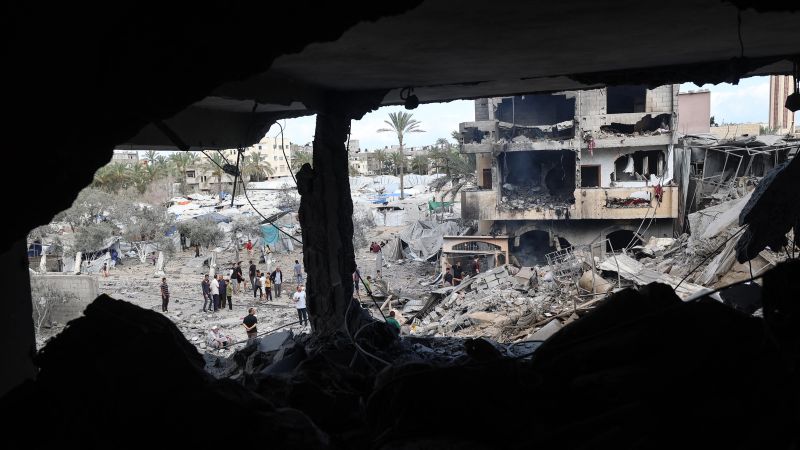
However, the stalemate persists. While the 20-point ceasefire plan was launched in October, its implementation has faltered due to disagreements over Hamas’ role and the pace of progress. The situation in Gaza has become increasingly dire, with reports of bodies lying unclaimed and rats roaming freely through the enclave. These conditions, exacerbated by the prolonged conflict, have fueled frustrations among the population and raised concerns about the humanitarian impact of the stalled agreement.
Michael Milshtein, from Tel Aviv University, pointed out that Hamas’ decision was predictable, reflecting a broader strategy to align with international expectations. “Hamas and the mediators are trying to create a narrative that the deal is moving forward, even as the realities on the ground remain unchanged,” he said. The involvement of Qatar, Turkey, and Egypt as key mediators is seen as a way to present a unified front to Trump, who has been instrumental in pushing the plan. The hope is that sustained US pressure will encourage Israel to embrace the next stages of the agreement, though the committee’s ability to govern effectively remains in doubt.
A Fragile Path to Peace
While the handover to the NCAG could mark a significant step toward a more neutral administration, it does not address the underlying tensions. Hamas’ insistence on retaining its security apparatus has been a sticking point, with Israel wary of ceding control to a group that has long been a target of its military operations. The technocratic committee, though a compromise, lacks the capacity to enforce authority without support from the Israeli government. This dynamic has left the ceasefire plan vulnerable to setbacks, as the parties continue to negotiate over the distribution of power and responsibilities.
As the situation in Gaza remains unresolved, the focus of the ceasefire agreement has shifted to Israel. The militant group’s symbolic move is designed to put pressure on the Israeli leadership, which is seen as the primary obstacle to the deal’s success. Trump’s role in this process is critical, with his influence potentially tipping the scales in favor of the technocratic committee. However, the ultimate success of the plan depends on Israel’s willingness to accept the terms, a challenge that has yet to be fully resolved. The NCAG’s entry into Gaza is no longer a matter of debate but of execution, with the international community closely watching the next developments.
With the ceasefire plan in limbo, the people of Gaza continue to bear the brunt of the conflict. The delayed implementation of the agreement has left them in a state of uncertainty, with daily life disrupted by the ongoing military presence and the lack of progress in governance. The symbolic dissolution of the Hamas government is a step toward stability, but it remains to be seen whether it will translate into real change. As negotiations continue, the focus will likely remain on Israel’s response, with the technocratic committee serving as a potential bridge to a more unified Palestinian leadership.