Trade War With Canada Escalates as Tariff Threats Multiply
Sandego.net – The commercial relationship between the United States and its northern neighbor has entered a period of acute instability. After a final round of negotiations broke down on Friday, President Donald Trump moved swiftly to impose 50 percent duties on approximately $20 billion in Canadian imports, with the measures taking effect in the early hours of Saturday. By Monday, the president had pushed further, warning that duties on Canadian automobiles and auto components would be doubled to 50 percent effective January 1.
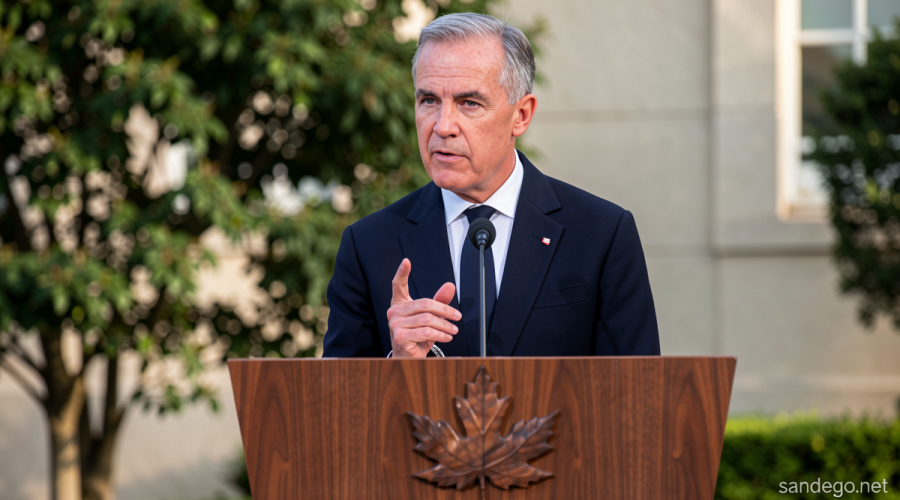
Prime Minister Mark Carney responded over the weekend by announcing that Ottawa would deploy retaliatory tariffs on a “dollar-for-dollar” basis beginning September 8, signaling that Canada intends to match American levies item by item rather than negotiate from a position of weakness.
The Escalation Timeline
The sequence of events compressed into a single weekend. Friday brought the collapse of what had been described as last-ditch diplomatic efforts to salvage a bilateral trade arrangement. Saturday dawned with the new 50 percent tariff schedule already in force across roughly $20 billion of Canadian-origin goods. Monday saw Trump extend the pressure specifically onto the automotive sector, a category that carries enormous symbolic weight given the deeply integrated supply chains linking Detroit, Windsor, and the broader Great Lakes manufacturing corridor.
In a Truth Social message, the president framed the dispute in blunt terms:
“Canada has been ripping off the United States of America for years. Not sustainable, and NOT ANYMORE!”
The same post referenced a threatened increase in steel duties to 50 percent starting January 1. That figure, however, already represents the prevailing tariff rate on those products, meaning the announcement added rhetorical heat without altering the actual duty schedule for steel.
What Businesses Face
For American firms that rely on Canadian inputs, the immediate calculus is stark. Three paths exist: halt imports of the affected goods until existing inventory is exhausted, absorb the steep tariff as a cost of doing business, or redirect procurement to alternative suppliers. Each option carries friction. Many Canadian products were sourced in the first place because of geographic proximity, established logistics infrastructure, or price advantages that cannot be replicated overnight in Mexico, Asia, or elsewhere in North America. Companies that attempt to reroute supply chains may discover that the replacement costs exceed the tariff itself.
Compounding the pressure, the ongoing conflict in Iran has already pushed energy prices and freight rates higher across North American trade lanes. With transportation and fuel budgets already stretched, firms have diminished capacity to internalize an additional tariff shock. The most probable outcome is that at least a portion of the added cost migrates downstream into retail prices, landing squarely on American households.
Where Shelves Will Feel the Impact
The tariff schedule touches hundreds of product categories, but three clusters stand out for their visibility to everyday consumers.
Paper, Packaging, and Plywood
The new levies sweep across an extensive range of paper-based goods: parchment paper, disposable cups, plates, and a category called kraftliner, which is a heavy-duty paperboard forming the outer shell of corrugated cardboard boxes. Approximately three dozen varieties of plywood also appear on the affected list. Together, these items sit within broader import categories that represented roughly $1.5 billion in Canadian-origin purchases by American buyers in the prior year, per US trade statistics.
Wine, Beer, and Spirits
Alcohol products from Canada—wine, beer, whiskey, vodka, gin, and other distilled spirits—are all subject to the duties. American importers brought in about $1.5 billion worth of these beverages last year. The category has become a particular flashpoint in bilateral talks. Last year, several Canadian provinces removed American alcohol brands from retail shelves in direct response to earlier US tariff actions. Those provincial bans have largely persisted. As recently as last week, amid ongoing negotiations, Carney urged provincial premiers to reconsider shelving US-made alcohol, hoping the gesture would help unlock a deal. That deal, of course, never materialized.
Dairy Products
Milk, cheeses, butter, and whey from Canadian processors are likewise caught in the tariff crossfire. The United States purchased approximately $780 million in Canadian dairy goods last year. Trump has repeatedly alleged that Canada discriminates against American dairy producers by restricting their market access south of the border, a claim Ottawa disputes. The dairy dispute, layered atop the alcohol and automotive grievances, gives the administration multiple rhetorical hooks for justifying continued escalation.
The Broader Stakes
Canada ranks as America’s second-largest trading partner by volume. A sustained tit-for-tat exchange between the two economies would ripple through supply chains that have been built over decades of continental integration. If Ottawa’s September 8 retaliatory schedule takes effect and Washington responds in kind, both sides face the prospect of a prolonged, mutually costly standoff. For consumers, the most tangible consequence is a gradual upward drift in prices across grocery aisles, hardware stores, and liquor shops—costs that no amount of diplomatic posturing will reverse quickly.
Related Reading
Frequently Asked Questions
What is Trump is threatening 50 tariffs on Canadian?
Trump is threatening 50 tariffs on Canadian is the main topic of this guide. The article explains the context, practical details, and next steps readers should understand.
Why does Trump is threatening 50 tariffs on Canadian matter?
Trump is threatening 50 tariffs on Canadian matters because readers are looking for a useful answer, not just a short summary. Good content should match search intent and help them decide what to do next.