
Talks raise hopes of progress in strike at America’s busiest commuter railroad
Talks Raise Hopes of Progress in Strike at America’s Busiest Commuter Railroad
Talks raise hopes of progress in strike – Monday brought significant challenges for New Yorkers as the Long Island Rail Road (LIRR), the country’s largest commuter railroad system, continued to operate without service due to a historic strike. Despite the disruption, there is growing optimism that the standoff may resolve quickly. James Louis, a senior representative from the Brotherhood of Locomotive Engineers, noted to CNN that the situation has “improved considerably” since the previous day, signaling a shift in the negotiations. The strike, which began late Saturday, has paralyzed rail travel across the region, leaving thousands stranded and forcing them to seek alternative transportation methods.
Union and MTA Talks Resume After Weekend Delay
The strike was triggered after last-minute efforts to prevent it collapsed, leaving the MTA with no choice but to halt operations. Talks between the railroad’s management and the five unions involved resumed on Sunday afternoon, continuing through the early hours of Monday. The unions, which include representatives for engineers, signalmen, and machinists, are demanding better wages and improved working conditions. James Louis, who spoke to CNN on Monday, emphasized that the discussions have become more constructive, stating, “There’s a stronger sense of collaboration now.”
Meanwhile, Janno Lieber, the CEO of the MTA, expressed cautious optimism about the prospects of a resolution. In an interview with WABC-7, he remarked, “The talks yesterday were productive. Everyone is working diligently. We are moving in the right direction, but we still need to finalize the agreement.” The MTA has been under pressure to address the workers’ concerns, particularly as the strike has disrupted one of the most critical transportation networks in the nation.
Shuttle Buses Offer Temporary Relief
To mitigate the impact of the strike, the MTA has announced the deployment of shuttle buses from Long Island into the city starting at 4:30 a.m. Monday. New York Governor Kathy Hochul confirmed this plan, stating on X, “We have a strategy to assist essential workers and reduce disruptions as much as we can.” However, the buses are expected to carry only 13,000 passengers each morning and another 13,000 in the afternoon, which is a small fraction of the usual ridership. This limited capacity may lead to crowded conditions and delays for those relying on the buses.
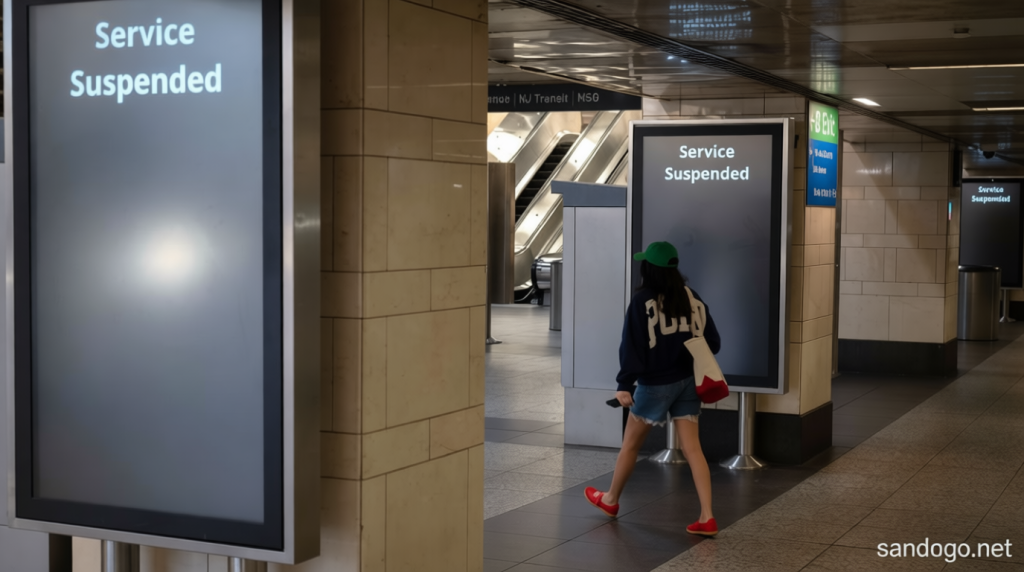
Mayor Zohran Mamdani of New York City echoed Hochul’s concerns, urging residents to prepare for increased traffic and longer commutes. In a late Sunday X post, he warned, “New Yorkers should plan for heavier-than-usual traffic and additional travel time.” The city’s transportation infrastructure is already strained, and the strike could exacerbate existing issues, particularly during peak hours. The MTA’s latest service alert confirms that all LIRR branches remain suspended, leaving commuters with little choice but to adjust their schedules or work remotely.
Historical Context and Worker Demands
The strike marks the first major disruption in the LIRR since 1994, highlighting the long-standing tensions between the unions and the MTA. Workers have been seeking a raise of 4 to 5% for the first time since 2022, a period that has seen steep increases in the cost of living in one of the country’s most expensive regions. The unions argue that the MTA has been unwilling to accept proposals backed by two federal panels that analyzed the bargaining positions of both sides. “The MTA didn’t take the outline of a deal seriously,” said Hochul, who has criticized the strike as “reckless.”
The strike has not only affected daily commutes but also raised questions about the economic consequences for the region. With over 250,000 passengers relying on the LIRR each weekday, the halt in service has created a ripple effect across local businesses, schools, and public services. The MTA’s failure to reach a compromise has left the workers in a difficult position, as they are now considering the impact of prolonged disruption on their livelihoods and the broader community.
Union Stance and Potential for Early Resolution
Union representatives have stated that they are prepared to return to work before the strike officially ends, provided a deal is reached. This flexibility could allow the LIRR to resume operations earlier than anticipated, potentially before Tuesday’s rush hour. However, the unions have also warned that a vote against any proposed agreement could lead to a quick resumption of the strike. The standoff has tested the patience of both labor and management, with neither side showing signs of significant concession.
The National Mediation Board, the federal agency overseeing labor disputes in the railroad and airline industries, has played a key role in facilitating talks. Louis, speaking to CNN, explained that the board had called for a Sunday evening meeting that extended into the early hours of Monday. “The process is ongoing, and the representatives have been engaged in discussions for over 13 hours,” he said. The board’s involvement adds a layer of authority to the negotiations, but the outcome still hinges on whether both parties can bridge their differences in the coming hours.
As the MTA and unions continue their talks, the stakes have never been higher. The LIRR is not just a mode of transportation but a vital lifeline for Long Island, connecting millions of residents to jobs, healthcare, and other essential services. Hochul’s remarks underscore the importance of the railroad, calling it “the lifeblood of Long Island” and stressing the need for a swift resolution. “Hundreds of thousands of riders depend on it every day,” she said. “This strike is causing harm to both the people who use the service and the workers who maintain it.”
The unions, however, remain firm in their demands, citing the MTA’s resistance to the proposed deal as the primary cause of the disruption. With the strike already impacting thousands of commuters, the pressure to resolve the dispute is mounting. The MTA’s service alert highlights the severity of the situation, as all 947 trains that typically run across the region are now grounded. The challenge for both sides is to find a middle ground that satisfies the workers’ financial needs while ensuring the continued operation of the railroad.
As the negotiations progress, the outcome will determine whether the strike becomes a prolonged crisis or a brief interruption. The MTA has urged all parties to remain committed, while the unions continue to push for tangible improvements in working conditions. With the city’s transportation system under strain and commuters scrambling to adapt, the resolution of this dispute will have far-reaching implications for the region’s economy and daily life.
According to CNN’s Gloria Pazmino, the situation remains fluid as both sides work to finalize a resolution. The strike has become a focal point for discussions on labor rights and the balance between worker demands and operational efficiency. As the clock ticks down, the hope is that the talks will yield a deal that prevents further disruption and restores normalcy to the region’s transit system.
