Trump Predicts Iran Conflict Will Ease After Midterms as Fuel Costs Remain Elevated
Sandego.net – President Donald Trump said Wednesday that he believes Iran could end its war effort soon after the US midterm elections, while acknowledging that American drivers may not see lower gasoline prices before November.
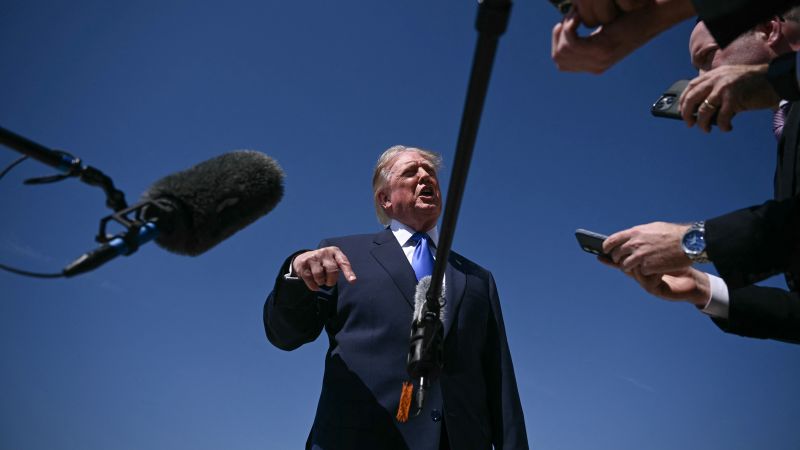
Speaking with reporters while traveling to the Republican midterm convention in Dallas, Trump argued that Tehran has an incentive to prolong the conflict through the election season. He framed the continued fighting as an attempt to weaken him politically and influence the outcome of the midterms.
“I think it’s going to take a little bit longer than the midterm,” Trump said of gas prices coming down.
His comments came as oil markets faced renewed pressure from intensified fighting in Iran. The global benchmark price for crude has risen above $100 per barrel again, reflecting concerns that the conflict could further threaten oil shipments through the Strait of Hormuz, one of the world’s most consequential transit routes for seaborne crude.
Oil prices and household pressure
Higher crude prices do not always move directly or immediately into prices at American fuel pumps, but sustained increases can raise the cost of gasoline and other petroleum products. That dynamic has turned fuel expenses into a prominent economic concern for voters approaching the midterm elections.
Trump said Iran’s leaders were seeking an electoral advantage by extending the war, suggesting they hoped to see US officials replaced by people who would take a less confrontational position on Tehran’s nuclear ambitions.
“They’re desperate to try and affect the election so that we can get a nice weak group of people in there and leave them alone and let them have their nuclear weapon.”
The president nevertheless projected confidence that Iran was nearing the limits of its ability to continue the conflict. He said he expected the country to seek a rapid conclusion once voting had passed, a development he believes would drive oil costs downward.
“They can’t hold out any longer,” he said.
Trump’s prediction links two issues that have become closely watched during the campaign period: the military confrontation with Iran and the cost of energy for US consumers. His argument is that a settlement or end to the war would remove a major source of risk from global oil markets, allowing prices to retreat.
The Strait of Hormuz remains central
The Strait of Hormuz is particularly important because it serves as a narrow passage connecting the Persian Gulf with wider international shipping routes. Any threat to the safe movement of crude through the waterway can unsettle markets, even when supplies have not been fully interrupted. Traders often respond to the possibility of disruption by pricing in additional risk.
The recent rise above $100 per barrel underscores how quickly developments in the conflict can affect energy markets. For households, the most visible effect may be gasoline prices, although oil also plays a role in transportation, manufacturing, agriculture and the cost of moving goods through the economy.
Trump has repeatedly maintained that the political case for the broader offensive against Iran can be made directly to the public. He dismissed concerns that high fuel prices could significantly erode support if voters view the military campaign as necessary to prevent Iran from obtaining a nuclear weapon.
“I think it’s very easy to explain to America, all you have to do is say: ‘Will you let Iran have a nuclear weapon?’ And the answer is no,” Trump said.
Election timing and an uncertain outlook
The president did not offer a detailed timetable for a possible end to the war beyond his expectation that Iran would move quickly after the election. Nor did he identify a specific level at which oil prices might settle if the conflict ends. His remarks instead emphasized the political timing he sees behind Iran’s strategy and the possibility of a post-election market reaction.
For voters, the immediate issue is likely to remain whether fuel costs continue rising in the months before November. Gasoline prices can vary by region because of taxes, refinery operations, supply conditions and distribution costs, meaning the impact of higher global crude prices may not look identical across the country.
Trump’s comments in Dallas placed the conflict at the center of the midterm economic debate. He argued that the war’s effect on oil and gasoline prices is temporary, while portraying the military campaign as essential to blocking Iran’s nuclear ambitions. Whether energy markets fall as he predicts will depend heavily on how the fighting develops and whether the threat to oil flows through the Strait of Hormuz recedes.
Related Reading
Frequently Asked Questions
What is Trump says Iran war will end after?
Trump says Iran war will end after is the main topic of this guide. The article explains the context, practical details, and next steps readers should understand.
Why does Trump says Iran war will end after matter?
Trump says Iran war will end after matters because readers are looking for a useful answer, not just a short summary. Good content should match search intent and help them decide what to do next.