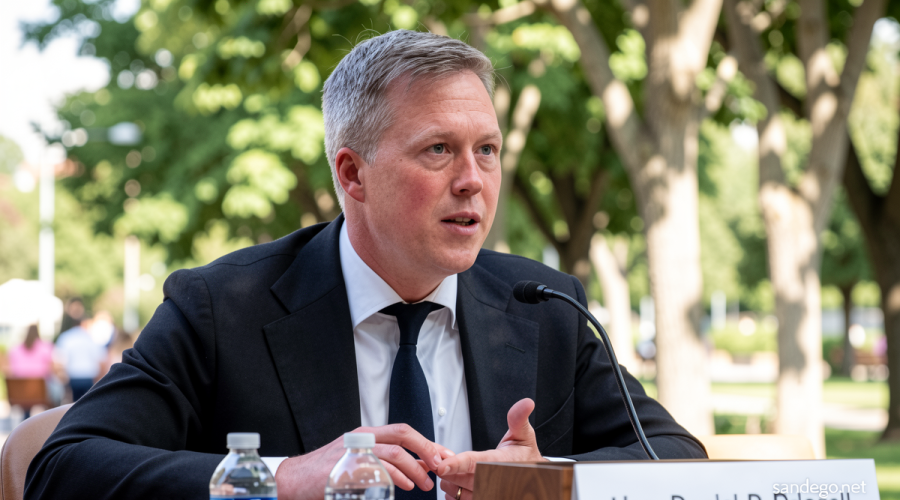
Army Secretary Dan Driscoll Steps Down Amid Deepening Rift With Defense Chief
Sandego.net – With the Iran war now six months old and showing no visible path toward de-escalation, the Pentagon lost another senior civilian leader on Monday. Army Secretary Dan Driscoll, a decorated veteran and close personal ally of Vice President JD Vance, formally submitted his resignation to President Donald Trump. Multiple people familiar with the decision confirmed the move, describing it as the culmination of months of escalating friction between Driscoll and Secretary of Defense Pete Hegseth over how the Army should be restructured, equipped, and led.
The departure lands at a particularly volatile moment. The United States remains engaged in active combat operations against Iran, and the Army’s readiness posture is under sustained scrutiny from Congress, the public, and allied governments. Losing the civilian head of the service’s largest branch in the middle of that conflict raises immediate questions about institutional continuity and whether the remaining leadership can sustain the tempo of operations without a full transition period.
What Driscoll Raised in His Resignation
According to a source familiar with the contents of the letter, Driscoll did not simply tender his resignation in routine fashion. He laid out specific grievances about the administration’s handling of Army transformation and readiness, singling out Hegseth for what the source described as actively blocking modernization efforts by removing the generals tasked with carrying them out. In other words, Driscoll framed his departure not as a personal falling-out but as a principled objection to a strategy he believed was undermining the force structure the Army needed for the wars it was already fighting.
An Army official confirmed the basic sequence of events: Driscoll spoke directly with the president about the current condition of the service and then handed over his resignation. The timing of that conversation was not disclosed, nor was a date set for his final day in the role.
A Friction Rooted in Loyalty and Access
The antagonism between the two men did not emerge overnight. Beginning almost immediately after Hegseth assumed the defense secretary’s office, multiple sources described a pattern of deep distrust toward both civilian and military subordinates, coupled with persistent suspicion about where their true loyalties lay. Driscoll became the most visible casualty of that climate, largely because of his relationship with the vice president.
Driscoll and Vance attended Yale Law School together and have maintained a close friendship since. That bond gave Driscoll a direct line to the White House that Hegseth, by all accounts, resented. The secretary reportedly interpreted Driscoll’s access as an attempt to route around him in policy decisions. The tension was compounded when Trump personally tapped Driscoll last year to help persuade Ukraine to return to the negotiating table with Russia — a role that placed the Army secretary in a diplomatic lane Hegseth considered his own.
Where Hegseth’s tenure has been defined publicly by aggressive stances on what critics call culture-war issues inside the military, Driscoll and his former chief of staff appeared focused on a different agenda: modernizing force structure, fielding new equipment, and integrating drone technology at scale. Trump himself took to calling Driscoll the “drone guy,” a nickname that reflected the secretary’s extensive work on unmanned systems and their integration into conventional operations.
The General Firings and a Public Defense
Earlier this year, Hegseth removed Army Chief of Staff Gen. Randy George along with two other senior generals. George and Driscoll had worked closely together on transformation initiatives, and the firing drew bipartisan criticism on the Hill. Lawmakers from both parties pressed Hegseth on the decision and voiced their admiration for George’s career.
In April, Driscoll went before Congress and joined that chorus of defense. His words that day have since become a touchstone of the feud:
“No person that has more respect for Gen. George and his 42 years of service, his Purple Heart, his wife Patty, their grandkids, their kids. I adore them. And he was an amazing, transformational leader.”
The publicness of that endorsement made a quiet reconciliation between the two offices unlikely. It also gave congressional critics a concrete example of what they argued was a secretary punishing loyalty to the institution rather than rewarding it.
A Broader Pattern of Leadership Turnover
George’s removal was not an isolated event. Hegseth, who served nearly two decades in the Army National Guard before entering politics, has taken a particular interest in the Army’s senior leadership and has fired or forced out a string of key officers. The list includes former Vice Chief of Staff Gen. James Mingus, Gen. David Hodne who headed Army Transformation and Training Command, Chief of Chaplains Maj. Gen. William Green Jr., and Joint Staff Director Lt. Gen. Douglas Sims.
Most recently, Gen. Christopher Donahue, the widely respected commander of US Army Europe and Africa, stepped down from his post. Hegseth had not yet nominated him for a new assignment. Multiple sources indicated tension between the two offices, though not necessarily between the two men personally. Donahue retired officially last week, adding another senior vacancy to a roster already strained by the ongoing war.
White House Response and the Transition Ahead
The White House issued a statement praising Driscoll’s tenure. Spokesperson Anna Kelly called him “highly effective in advancing President Trump’s agenda to Make America Strong Again at the Department of the Army,” citing his leadership during what she described as historic military operations, his work restoring emphasis on readiness and lethality, and his assistance with Russia-Ukraine negotiations.
In the interim, the under secretary of the Army would typically assume the acting secretary role. That position is currently held by Mike Obadal, a retired Army colonel and special operations aviator. How quickly a permanent replacement is named — and whether the administration will select someone aligned with Hegseth’s vision or with the transformation agenda Driscoll championed — will be one of the defining personnel decisions of the coming months, particularly while operations against Iran continue without a clear end date.
Related Reading
Frequently Asked Questions
What is Army Secretary Dan Driscoll submits resignation?
Army Secretary Dan Driscoll submits resignation is the main topic of this guide. The article explains the context, practical details, and next steps readers should understand.
Why does Army Secretary Dan Driscoll submits resignation matter?
Army Secretary Dan Driscoll submits resignation matters because readers are looking for a useful answer, not just a short summary. Good content should match search intent and help them decide what to do next.