Cancer Vaccines Could Transform Treatment
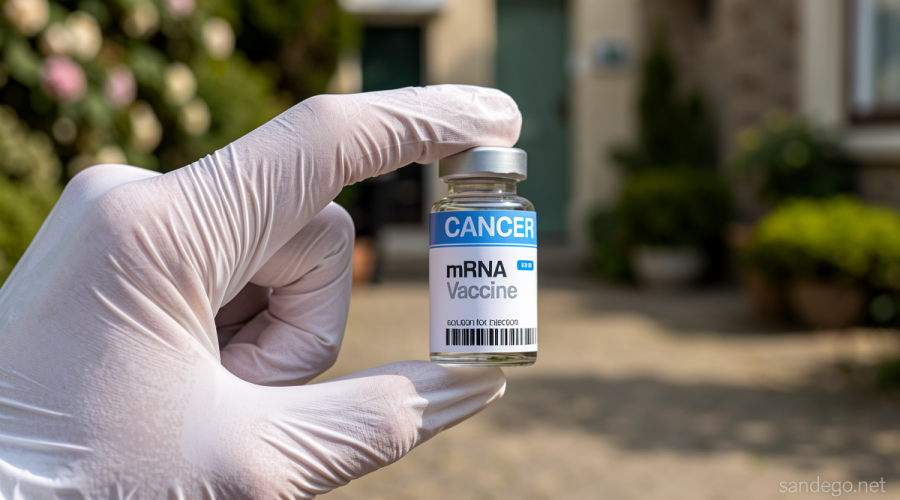
Sandego.net – Cancer vaccines could transform treatment and prevention in ways that were once confined to laboratory speculation. On August 19, 2026, Moderna and Merck announced that their personalized mRNA vaccine, intismeran autogene, met its primary endpoint in a late-stage trial: when paired with the immunotherapy drug Keytruda, it significantly reduced the recurrence of melanoma. It is the first time an mRNA cancer vaccine has cleared a phase-III hurdle, and the result marks a turning point for a field that has quietly accumulated more than 120 clinical trials across melanoma, brain, breast, lung, and prostate cancers since the early 2000s.
A Breakthrough That Deserves Public Trust
The mechanism behind these vaccines is straightforward in principle. An mRNA payload delivers instructions to a patient’s own cells, prompting them to manufacture specific tumor-associated proteins. The immune system then learns to recognize those proteins and directs its attack at tumor cells while sparing healthy tissue. In glioblastoma—an aggressive brain tumor with few effective therapies—personalized mRNA vaccines have already shown the ability to rapidly activate anti-tumor immunity and extend survival.
The body of evidence that mRNA vaccines could transform treatment paradigms is expanding rapidly. Yet even the most promising medical advance delivers no benefit unless patients are willing to accept it.
That willingness is precisely what a persistent wave of misinformation threatens to erode. Since late 2022, social media has been saturated with a narrative dubbed “turbo cancer,” which falsely asserts that COVID-19 mRNA vaccines trigger unusually aggressive malignancies. Mainstream outlets began reporting the claim in late 2022, and by September 2025 a controversial U.K. cardiologist publicly linked the vaccines to recent cancer diagnoses in the British royal family, drawing swift rebuttal from the medical community.
How Misinformation Undermines Progress
As a researcher in health communication who monitors cancer-related conversations online, I have tracked the spread of these claims systematically. A social-listening study conducted by my team observed thousands of “turbo cancer” posts beginning in July 2023 and continuing through early 2026. The posts recycle emotionally charged anecdotes, misread animal-study data, misuse adverse-event reporting systems, and repeat the debunked myth that vaccines alter human DNA.
The pattern mirrors the broader infodemic that accompanied the pandemic: the simultaneous flood of accurate and false health information that made it harder for the public to locate trustworthy guidance. Earlier work by my team tracking HPV-vaccine discussions found that safety fears, institutional mistrust, and conspiracy framing were already widespread before the pandemic amplified them. When those dynamics collide with a genuinely new therapeutic category—cancer vaccines could transform treatment outcomes for millions—the stakes of getting the public conversation right become acute.
Correcting the record does not require dismissing individual anxiety. It does require that journalists, clinicians, and public-health agencies explain, in plain language, what the trial data actually show and what they do not. The science is moving forward; the information environment must keep pace.
Frequently Asked Questions
What is intismeran autogene? It is a personalized mRNA cancer vaccine developed by Moderna and Merck. Each dose is tailored to the individual patient’s tumor profile and is administered alongside the checkpoint-inhibitor Keytruda to reduce melanoma recurrence.
Is “turbo cancer” a recognized medical condition? No. The term is not used in oncology literature. Peer-reviewed studies have not established a causal link between mRNA vaccines and aggressive cancer development.
How many cancer types are being studied with mRNA vaccines? More than 120 clinical trials have tested mRNA approaches across at least five major cancer types—melanoma, brain, breast, lung, and prostate—since the early 2000s.
Can mRNA vaccines change my DNA? No. The mRNA instructions are used temporarily by the cell’s own machinery to produce a protein and are then broken down. They do not integrate into or alter the genome.