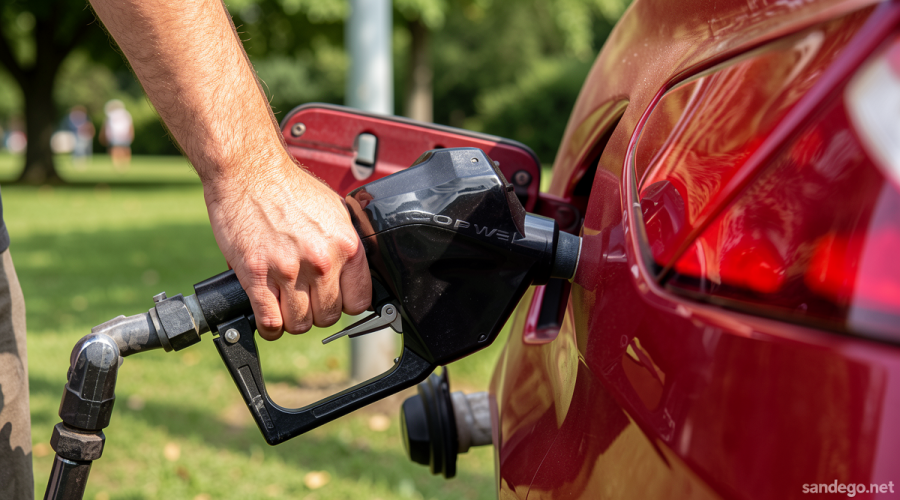
Summer Wallets Under Pressure as Fuel Costs Stay Elevated
Sandego.net – For millions of American households, the summer vacation season has arrived with an unwelcome companion: a fuel pump that keeps climbing. Even as the calendar turns toward July and August road trips, the price at the gas station remains stubbornly above the level it held before the US-Iran conflict erupted in late February. The result is a quiet but widespread reshuffling of household budgets, with families trimming discretionary purchases and rethinking travel itineraries they had already planned.
A Promise That Has Not Materialized
Early in the crisis, officials in the Trump administration publicly assured the public that the spike in pump prices would be temporary and would recede once supply chains stabilized. That reassurance has not translated into relief at the register. Months after the conflict began, consumers continue to pay well above the pre-crisis baseline for every gallon of gasoline and diesel. The gap between the administration’s timeline for normalization and the reality at the pump has left many drivers feeling that the official narrative moved faster than the market.
The persistence of elevated fuel costs carries implications far beyond the commute. Transportation expenses feed into shipping and logistics charges, which in turn lift the retail price of groceries, household goods, and seasonal merchandise. A family that spends an extra fifty dollars a week on fuel effectively loses the equivalent of a weekly dining-out budget or a portion of its utility bill. For households already stretched thin by housing costs and student debt, that incremental drain can tip discretionary spending into the red.
Travel Plans in Limbo
The most visible casualty of sustained high fuel prices this year has been the summer travel itinerary. Airlines, rental-car agencies, and hotel chains have noted a uptick in last-minute cancellations and date changes, particularly among middle-income families who had booked multi-day road trips or short flights to coastal destinations. Rather than abandoning a vacation entirely, many consumers are compressing trips into shorter windows, choosing closer destinations, or swapping a rental car for public transit at the destination.
Some households have taken a harder line. A growing number of readers have written in to say they have scrapped planned getaways altogether, redirecting that money toward filling the tank for work commutes or covering essential household expenses. The decision is rarely dramatic; it is arithmetic. When the fuel line item swells by thirty or forty percent over the prior year, the vacation budget simply stops fitting inside the monthly envelope.
Broader Economic Ripple
Fuel prices function as a multiplier across the economy. Trucking costs, which account for a substantial share of domestic freight, rise in near lockstep with diesel prices. Retailers absorb some of that increase to protect margins, but a meaningful portion passes through to shelf prices. Energy-intensive manufacturing sectors—plastics, chemicals, agriculture—face higher input costs that can slow output or push prices upward in downstream goods.
For the average consumer, the practical effect is a broad-based squeeze on purchasing power that mimics a mild inflation tax, even when headline CPI figures appear moderate. The squeeze is felt most acutely in regions where public transit options are limited and daily commutes depend entirely on personal vehicles. In those areas, there is no easy substitution; the driver either pays the elevated price or reduces mileage, which often means reducing work hours, social activity, or both.
What Consumers Are Doing Now
Survey data and anecdotal reporting from the past several weeks point to a consistent pattern of behavioral adjustment. Drivers are consolidating errands into single trips, carpooling where possible, and shifting some non-essential driving to walking or biking weather permitting. Grocery shoppers are comparing store prices more aggressively and buying in bulk to cut trip frequency. Entertainment spending—concert tickets, streaming subscriptions, takeout meals—is being trimmed or paused.
These micro-level adjustments, taken individually, seem modest. Aggregated across tens of millions of households, however, they represent a meaningful contraction in consumer demand precisely when the economy is trying to sustain growth. Retailers and service providers that depend on discretionary summer spending feel the slowdown within weeks, and some have already begun pulling forward promotional discounts to stimulate foot traffic.
Looking Ahead
The central question for American households entering the second half of the year is whether fuel costs will begin to normalize or remain pinned at current levels. Supply-side factors—refinery throughput, seasonal demand cycles, and the trajectory of the US-Iran situation—will determine the answer. Until that answer arrives, the rational consumer posture is one of flexibility: keeping travel plans reversible, monitoring fuel prices before major purchases, and building a small buffer into the monthly budget to absorb further volatility.
For those already feeling the pinch, the experience is less about a single dramatic cut and more about a thousand small subtractions that compound over weeks. The summer that was supposed to be a season of leisure is, for many, becoming a season of careful arithmetic at the pump.
Are you taking additional steps to curtail your spending as gas prices remain high? Have you had to cancel or modify summer travel plans? Your experience helps paint a fuller picture of how sustained fuel costs are reshaping everyday American life.
Related Reading
Frequently Asked Questions
What is Are you cutting more spending amid?
Are you cutting more spending amid is the main topic of this guide. The article explains the context, practical details, and next steps readers should understand.
Why does Are you cutting more spending amid matter?
Are you cutting more spending amid matters because readers are looking for a useful answer, not just a short summary. Good content should match search intent and help them decide what to do next.