Everyday Disinfectants May Be Quietly Undermining Human Health
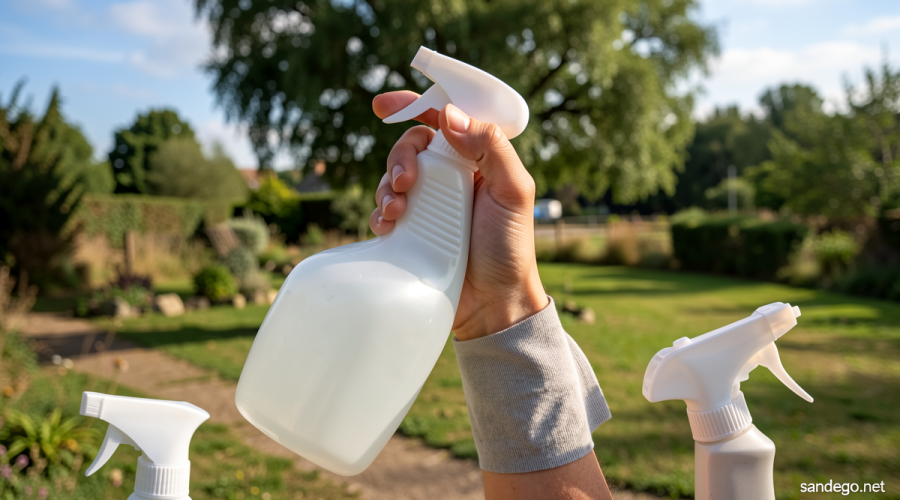
Sandego.net – From the wipe-down of a hospital countertop to the spray bottle on a daycare teacher’s shelf, from the foam in a child’s toothpaste to the mist of an office air freshener, quaternary ammonium compounds have woven themselves into the fabric of daily sanitation. These chemicals, often abbreviated QACs, are classified as pesticides by regulators and serve as the active germ-killing agents in a sprawling category of household and institutional products. Yet a growing body of laboratory and animal research now suggests that the very compounds relied upon to sterilize surfaces may be inflicting subtle but serious damage on human physiology — from reproductive function to neural integrity.
A Lab Mystery That Became a Career-Defining Discovery
The modern alarm about QACs traces back to an unexpected reproductive collapse in a research colony. Patricia Hunt, a regents professor in the School of Molecular Biosciences at Washington State University in Pullman, noticed that mice in her facility were producing fetuses with severe congenital defects — facial malformations, absent hindquarters — or simply failing to conceive at all. The pattern was not new to her. Years earlier, while based at a laboratory in Ohio, she had watched chromosomes in mouse ova and early embryos divide in chaotic, error-prone ways, generating the sort of genetic mis-segregation associated with Down syndrome and related chromosomal disorders. Her team ultimately linked those anomalies to a novel cleaning protocol that was slowly degrading the polycarbonate enclosures housing the animals. As the plastic broke down, it released bisphenol A (BPA), a compound now well established as an endocrine disruptor that mimics estrogen and derails hormonal signaling. That investigation made Hunt the first researcher to demonstrate how BPA exposure could drive chromosomal instability and reproductive failure in mammals, with implications for human infertility, fetal malformation, low birth weight, and neurodevelopmental disorders in infants and children.
Nearly ten years after the BPA episode, Hunt — who describes herself as an “accidental toxicologist” — encountered a second reproductive crisis in her Washington State colony. This time the culprit was not a leaching plastic but a class of antimicrobial agents sprayed onto surfaces: QACs.
Where QACs Hide in Plain Sight
Quaternary ammonium compounds were first synthesized in 1916 and entered widespread commercial use by the 1940s. For decades, much like bisphenols before them, they were treated as benign when applied per label directions. Today they appear in hand sanitizers, hospital-grade disinfectants, baby wipes, laundry additives, eye drops, nasal sprays, shampoos, mouthwashes, toothpastes, and air-freshening products. Their presence in schools, daycare centers, nursing homes, offices, and hospitals means that exposure is not limited to industrial workers; children, the elderly, and pregnant women encounter them routinely.
What the Emerging Science Shows
Over the past decade, controlled laboratory and animal experiments have flagged QACs as contributors to chronic inflammation, immune dysregulation, respiratory impairment, disruption of reproductive hormones, and interference with brain development during critical windows. Pilot biomonitoring studies have already detected measurable QAC residues in human blood serum, breast milk, urine, and fecal samples, confirming that these molecules cross biological barriers and persist in the body.
Respiratory effects appear particularly acute in occupational contexts. Amina Salamova, an assistant professor of environmental health at Emory University’s Rollins School of Public Health in Atlanta, notes that the compounds worsen asthma and chronic lung disease, with the strongest evidence coming from workplace settings where exposure levels are highest and most thoroughly studied.
Beyond the lungs, researchers are investigating whether QACs accumulate in vital organs. Libin Xu, an associate professor of medicinal chemistry at the University of Washington School of Pharmacy in Seattle, explains that human cell-culture and animal data indicate the chemicals “may also accumulate in the heart, kidneys, digestive tract and lungs,” raising questions about long-term organ toxicity at low-dose, chronic exposure levels.
Neural and Mitochondrial Targets
A 2024 study examining human tissue found that QACs can injure oligodendrocytes and Schwann cells — the cells responsible for producing myelin, the insulating sheath that wraps axons in the brain and spinal cord. Myelin functions analogously to the rubber coating on an electrical cable, enabling rapid signal transmission between neurons. Paul Tesar, a professor of genetics and neurosciences at Case Western Reserve University in Cleveland and senior author of that study, explains the downstream consequence:
“Without that protective myelin coating, nerve cells will degenerate and ultimately die. That leads to progressive neurodegeneration in conditions like multiple sclerosis.”
At the cellular energy level, both human and animal investigations have shown that QACs impair mitochondrial function, specifically reducing the organelle’s capacity to synthesize adenosine triphosphate (ATP). Gino Cortopassi, a professor of molecular biosciences at the University of California, Davis, who has spent more than three decades studying mitochondrial biology, underscores the stakes:
“ATP is the chemical energy that all of your body runs on — it’s what makes your brain work and your muscles function when they contract.”
A Public-Health Blind Spot
Despite the accumulating evidence, many scientists and public-health advocates worry that QACs remain largely invisible to mainstream awareness. Rebecca Fuoco, director of science communications for the Green Science Policy Institute, a nonprofit based in Berkeley, California, that investigates hazardous chemicals, frames the concern bluntly:
“Quaternary ammonium compounds are on track to be the next major toxic chemical story, combining elements of PFAS, phthalates and flame retardants.”
She adds that the organization is alarmed by how little the general public understands about these dangers, noting that the compounds are effectively “flying under the radar” of public concern.
Hunt herself draws a sharp distinction between efficacy and safety. In her view, the fact that QACs annihilate virtually every microbe they contact is precisely what makes them biologically aggressive — and therefore potentially hazardous to the organisms sharing the same environment.
“These QACs are fantastic because they kill everything, but that doesn’t make them safe for people to use.”
As biomonitoring programs expand and regulatory agencies weigh whether current exposure limits adequately protect sensitive populations, the question for consumers and policymakers alike is no longer whether QACs work. The question is whether the cumulative, low-level, multi-route exposure that modern sanitation now guarantees can be tolerated without measurable cost to reproductive capacity, neural integrity, and long-term metabolic health.
Related Reading
Frequently Asked Questions
What is Popular cleaning products with germ killing?
Popular cleaning products with germ killing is the main topic of this guide. The article explains the context, practical details, and next steps readers should understand.
Why does Popular cleaning products with germ killing matter?
Popular cleaning products with germ killing matters because readers are looking for a useful answer, not just a short summary. Good content should match search intent and help them decide what to do next.