Former Taliban Commander Receives 42-Year Sentence for Kidnapping and Terrorist Support
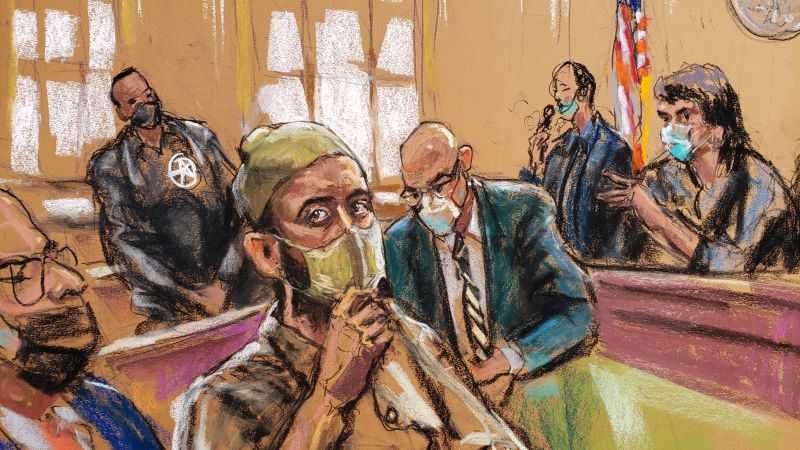
Sandego.net – In a landmark ruling, Haji Najibullah, a former Taliban commander, was handed a 42-year prison sentence on Tuesday for his involvement in the abduction of a Pulitzer Prize-winning journalist and for facilitating the deaths of three American soldiers. The verdict came after a daylong trial in Manhattan’s federal court, where the commander’s actions were scrutinized under the weight of his past roles and the lasting impact of his crimes. This case has drawn significant attention due to its intersection of journalism and warfare, highlighting the dual consequences of his choices on both civilian and military lives.
A Dramatic Testimony and Shifting Blame
David Rohde, the journalist who was kidnapped in 2008, took the stand during the proceedings to recount his harrowing experience. Facing Najibullah directly, he described how the former commander had participated in his capture but now seemed to evade accountability. “He’s refusing to take responsibility as I look at him today,” Rohde said, his voice steady yet tinged with frustration. The courtroom moment was charged with emotion, as Rohde’s testimony revealed the personal toll of being held hostage for over seven months before a daring escape from a Taliban compound in Pakistan’s tribal regions.
“Hostage taking is a cruel and cowardly crime. Family members spend weeks and months thinking they have the power to save their loved one’s life,” Rohde stated, emphasizing the psychological strain on captives and their families. He added that the act of holding someone for ransom creates an “illusion” of control, leaving victims powerless against the Taliban’s demands.
Rohde, who now works as an MS NOW national security reporter and previously served at The New York Times, described how his captors had framed him as a spy during his ordeal. “What happened to me was terrible, and I deeply regret my role in it,” Najibullah said through an interpreter, offering a rare moment of contrition. Despite his apology, the judge noted that the commander’s guilt was clear, as he had pleaded guilty to providing material support for terrorism and conspiring to take hostages in April 2025.
Material Support and the Scope of the Crime
The conviction was built on evidence that Najibullah, then 50 years old, had supplied the Taliban with weapons from 2007 to 2009. His admissions during the trial underscored the extent of his collaboration with the group, including his awareness that these weapons would be used to target US soldiers. The judge highlighted this as a critical factor, stating that the commander’s actions had directly contributed to the deaths of three Americans in a separate attack. “He didn’t need to pull the trigger, to decapitate a body, to be responsible for what happened,” the court noted.
While Najibullah’s guilty plea spared some of the harsher penalties outlined in federal guidelines, the judge still imposed a sentence of 42 years, acknowledging the severity of the crimes but also considering his six-year imprisonment during the pandemic as a mitigating factor. The attorney for Najibullah had argued for an 18-year term, framing the commander as a wartime figure who had acted to protect his homeland. However, the judge rejected most of these arguments, emphasizing the commander’s role in orchestrating both the kidnapping and the attacks.
The Emotional Weight of the Case
Rohde’s testimony was marked by a mix of anger and sorrow, as he recounted the betrayal he felt by Najibullah. “I didn’t know he was behind the killing of American soldiers,” he said, explaining how the setup for his interview had led to an ambush. The journalist described the moment he realized his captors were not merely reporters but armed militants, leaving him vulnerable. “It was the biggest mistake of my life,” he said, reflecting on the decision to meet with the former commander.
“I could not be prouder of being part of this profession,” Rohde declared, his words echoing the resilience of journalism in the face of danger. This statement, delivered with a touch of emotion, underscored his commitment to truth even after being held hostage. The journalist’s experience has since become a symbol of the risks faced by those who seek to bridge the gap between conflict zones and the global media.
The case also shed light on the broader implications of the Taliban’s actions during the 2008 conflict. Najibullah’s admission of guilt revealed a pattern of collaboration between the group and foreign adversaries, raising questions about the extent of his influence within the organization. His apology, though heartfelt, did little to erase the memories of the soldiers killed in the attacks he orchestrated. The judge, however, recognized the commander’s remorse and his six-year stint in prison as evidence of his willingness to accept consequences.
A Statement of Justice and Accountability
Acting Attorney General Todd Blanche hailed the sentence as a testament to the justice system’s ability to pursue accountability for acts of terrorism, regardless of the time it takes. “This case proves that those who harm Americans will be brought to justice,” he said, emphasizing the importance of the verdict in deterring future attacks. The judge, Judge Katherine Polk Failla, praised Rohde and his wife for their advocacy on behalf of other kidnapped families, noting their efforts as a driving force in the trial.
Rohde’s ordeal, which began in 2008, had far-reaching consequences. The three Americans killed in the separate operation were remembered as a central part of his testimony, with Rohde naming them repeatedly during the trial. He spoke of their loss with palpable grief, describing how their families endured the anguish of uncertainty while his own experiences paled in comparison. The journalist’s story, now a chapter in the broader narrative of US-Taliban relations, has inspired ongoing discussions about the role of media in conflict zones and the moral responsibilities of those in power.
As the sentencing concluded, the courtroom stood as a microcosm of the larger struggle between accountability and leniency. While Najibullah’s actions were deemed severe, his guilty plea and past imprisonment influenced the judge’s decision. The 42-year sentence, however, reflects the gravity of his crimes and the enduring impact of the kidnapping and attacks on the victims and their families. For Rohde, the case has not only been a personal reckoning but also a reminder of the sacrifices made in the pursuit of understanding war’s complexities through the lens of journalism.