
Virginia representative distances herself after agreeing with radio show host’s offensive comment about Jeffries
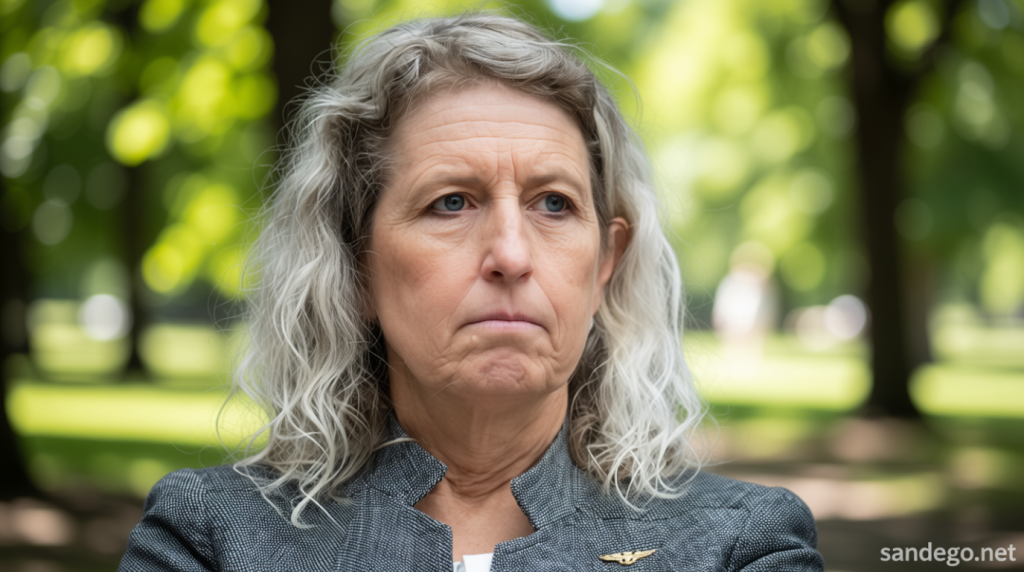
Virginia Representative Faces Pressure After Endorsing Racially Charged Remark About Jeffries
Virginia representative distances herself after agreeing – A Virginia Republican congresswoman has found herself at the center of a political storm after aligning with a radio host’s racially charged comment about House Democratic Leader Hakeem Jeffries. The incident, which occurred during a segment on “Richmond’s Morning News,” has sparked renewed debate over her stance on racial equity and the broader implications of the state’s redistricting battle. While the event itself was brief, the remarks have ignited a firestorm of criticism from Democrats, who accuse her of perpetuating harmful stereotypes.
The Offense in Question
During the interview, radio host Rich Herrera remarked that Jeffries, a Black congressman, should “get your cotton-picking hands off of Virginia.” The phrase, which references the labor of enslaved Black people in cotton fields, was met with Kiggans’ immediate agreement. “That’s right,” she responded, adding a “Ditto” to reinforce her endorsement. The exchange, though short, has been amplified by social media, drawing sharp rebukes from critics who view the language as deeply offensive.
Merriam-Webster highlights that the term “cotton-picking hands” is “widely considered offensive,” as it evokes the brutal realities of slavery. The phrase implies a racial hierarchy, suggesting that Black individuals are disproportionately tied to agricultural labor. While Herrera’s remark was aimed at Jeffries, Kiggans’ support has been interpreted as a tacit approval of the slur, raising questions about her commitment to racial inclusivity.
Political Reactions and Defenses
Kiggans later clarified her position on X, stating she does not “condone” Herrera’s language but emphasized that the backlash was a “lie and distortion” from Democrats. “This reflects the Democrats’ repeated tendency to twist narratives to shield their own shortcomings,” she wrote, arguing that the comment was meant to highlight the Democratic Party’s efforts to manipulate electoral outcomes. She further claimed that her agreement with Herrera was clear to any listener, as it supported the idea that Jeffries should remain out of Virginia’s politics.
Jeffries’ spokesperson, Christie Stephenson, called Kiggans’ response a “stunning failure of judgment and leadership.” In a statement, Stephenson criticized the congresswoman for doubling down on “vile, racist, and dehumanizing comments” from Herrera. “As a representative of a large, vibrant African American community, her actions undermine the trust voters place in her,” Stephenson said. The spokesperson also noted that Kiggans’ support for the phrase could be seen as an endorsement of the slur, even if she later disavowed it.
The Redistricting Context
The controversy unfolded against the backdrop of Virginia’s ongoing redistricting fight, which has been a focal point of partisan tension. Earlier in the week, the state’s Supreme Court had ruled to void a congressional map that voters approved in a referendum, a decision that could have granted Democrats up to four additional House seats in the upcoming midterm elections. Democrats have since appealed to the U.S. Supreme Court to reinstate the map, framing the issue as a battle for fair representation.
Kiggans’ comments have been interpreted as part of a larger strategy to undermine Democratic efforts in the redistricting process. Her defense of Herrera’s remark aligns with the broader narrative that the map was an attempt to rig the election in favor of the Democratic Party. However, critics argue that her endorsement of the term “cotton-picking hands” overshadows the legitimate concerns about gerrymandering, turning the focus onto racial slurs rather than electoral fairness.
Leadership and Public Outcry
The backlash against Kiggans has been swift and vocal. Rep. Katherine Clark, the second-ranking Democrat in the House, called for her to “immediately apologize and resign,” accusing her of failing to uphold the values of the party she represents. Jeffries himself echoed this sentiment, reposting Clark’s message and adding his own condemnation. “This racist rhetoric is absolutely disqualifying for a Member of Congress,” he said, emphasizing that Kiggans’ actions reflect a lack of accountability.
Similarly, Rep. Pete Aguilar, a fellow Democratic leader, stated, “This racist rhetoric is absolutely disqualifying from a Member of Congress. Rep. Kiggans must apologize then get the hell out of the House.” His comments underscore the intensity of the criticism within the Democratic Party, which views Kiggans’ alignment with Herrera as a betrayal of their shared principles. Meanwhile, Rep. Yvette Clarke, chair of the Congressional Black Caucus, directly addressed Kiggans’ post, asserting that her support for the remark was undeniable. “No matter what you say now, the fact is that you did not say a thing then — and that is precisely what’s wrong with Republicans!” she remarked, accusing the GOP of deflecting responsibility for the offensive language.
The incident has also drawn attention to the broader role of redistricting in shaping electoral outcomes. Virginia’s Supreme Court had previously invalidated the map, which Democrats had argued would dilute their majority by creating districts favorable to their candidates. However, the court’s decision to overturn it has been seen as a victory for Republicans, who now face calls to protect their gains in the House. Kiggans’ comments, while seemingly minor, have been leveraged to reinforce the idea that Democrats are using racial rhetoric to secure political advantage.
Support From Congressional Leadership
Speaker Mike Johnson has defended Kiggans, stating that her character should not be judged “based on some comment that supposedly she said.” In a Tuesday press briefing, he told reporters, “I don’t know what she said there, but she is an extraordinary member of Congress.” Johnson’s comments aim to downplay the significance of the incident, emphasizing that Kiggans’ actions in the interview were isolated and should not define her overall record.
Despite this support, the Democratic Party remains united in its criticism of Kiggans. The emphasis on her endorsement of the slur highlights a growing divide over how to address racial bias in politics. For many Democrats, the comment is a symbol of the broader patterns of discrimination that have fueled the redistricting battle. Meanwhile, Republicans argue that the term was used in a hyperbolic manner to underscore the Democrats’ electoral strategies.
The situation underscores the delicate balance between political strategy and racial sensitivity in today’s polarized climate. While Kiggans’ defense of Herrera’s remark may be seen as a strategic move to bolster her party’s position, it has also exposed her to accusations of racism. The term “cotton-picking hands” has become a flashpoint in the ongoing discussion about how language shapes public perception and influences electoral politics.
A Broader Political Landscape
As the redistricting fight continues, the incident with Kiggans and Herrera serves as a reminder of the high-stakes nature of the debate. The state’s Supreme Court remains a key player in the conflict, with its recent decision to void the map signaling a shift in power dynamics. Democrats, however, remain undeterred, vowing to challenge the ruling and restore the electoral map they believe favors their candidates.
The controversy also reflects the growing importance of racial rhetoric in political discourse. Jeffries, who became the first Black leader of a major congressional party in 2023, has been a prominent target of such language. His spokesperson highlighted the significance of the term, noting that Kiggans’ defense could be seen as a step backward for racial progress in Virginia. Meanwhile, the broader electorate watches closely, as the outcome of the redistricting battle could shape the trajectory of the midterm elections.
This story has been updated with additional information. CNN’s Piper Hudspeth Blackburn, Aileen Graef, and Morgan Rimmer Sarah Ferris contributed to this report.
