Trump’s Capitol visit devolves into shouting match with GOP senator he helped oust in primary fight
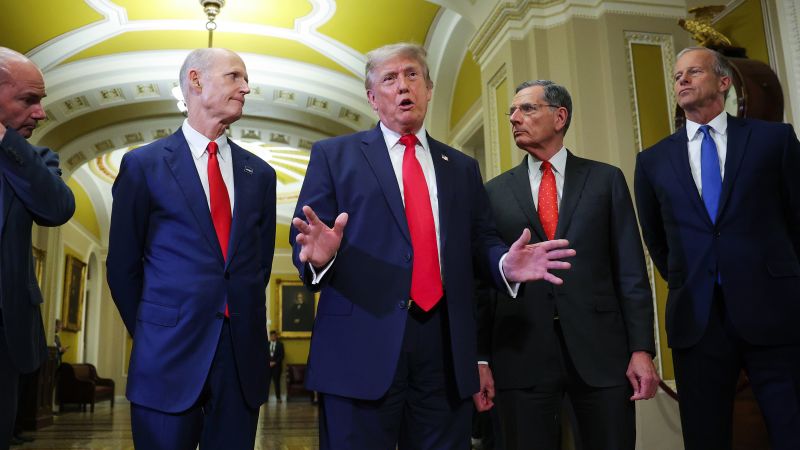
Sandego.net – Two weeks after President Donald Trump’s decisive role in ending Sen. Bill Cassidy’s congressional career, the Louisiana Republican found himself in a heated confrontation with the former president during a Wednesday meeting at the U.S. Capitol. The clash, which erupted in front of dozens of Senate GOP colleagues, highlighted the growing rift within the Republican Party as Trump’s leadership style clashes with the ambitions of his former allies.
A Month of Growing Dissent
Since Trump’s influence led to Cassidy’s defeat in a primary battle, the senator has increasingly positioned himself as a critic of the president’s policies. This shift became evident during a pivotal Senate vote the day prior, where Cassidy joined four other Republicans in opposing Trump’s military authority in Iran. The move drew sharp criticism from the president, who accused his former allies of undermining his agenda. Now, as the two met in the Capitol, the tension between them reached a boiling point.
“I stood and said, ‘You have not told the American people what’s going on,'” Cassidy recalled after the meeting, describing the conversation that took place behind closed doors. “It was supposed to last four weeks, it’s lasted four months. Our original objectives have not been achieved, and I want to know what’s going on.”
The confrontation began with Trump pressing Cassidy on the recent vote, which the president called a “disaster” for his administration. Cassidy, known for his pragmatic approach to governance, defended his decision, arguing that the resolution was necessary to address concerns about Iran. As the exchange intensified, Trump’s frustration grew, and he began raising his voice, accusing Cassidy of being “unhinged” and “unreliable.”
The Outbreak of Tensions
According to multiple sources present during the meeting, the atmosphere quickly turned volatile. Trump, who has often used public displays of anger to rally his base, seemed unyielding in his criticism. Cassidy, however, matched his intensity, shouting back in a similar tone and volume. The interaction escalated to the point where Trump ordered Cassidy to sit down, but the Louisiana senator refused, leading to a direct exchange of words.
“At one point, Trump told me, ‘You’re a lunatic,’ and I responded by calling him my ‘brother,’ ” Cassidy recounted, emphasizing the personal nature of the conflict. “He insisted he wasn’t my brother, and the tension only deepened.”
The incident was not merely a verbal exchange but a symbolic moment of discord. Despite the shouting, Cassidy eventually relented and sat down, acknowledging the need to de-escalate the situation. However, the fallout from the meeting lingered, with some senior Republicans expressing exasperation at Trump’s erratic behavior.
Shifting Loyalties and Strategic Dilemmas
Hours after the confrontation, Cassidy’s actions took an unexpected turn. He voted against advancing the Iran war powers resolution, effectively signaling a compromise with Trump. This shift came after Cassidy received a detailed briefing from Vice President JD Vance and special envoy Steve Witkoff, who outlined the administration’s stance on the issue. “I appreciate the quick invitation to the White House to address many of my concerns,” Cassidy wrote on X, reflecting on the meeting.
While Cassidy’s vote aligned with Trump’s position, it left some Senate Republicans questioning the wisdom of their actions. The president, known for his combative tactics, had dominated the discussion during the closed-door luncheon, leaving little time for senators to voice their own concerns. “He didn’t give us a chance to speak or ask questions,” one Republican aide said, criticizing the president’s approach as “overbearing.”
Broader Implications for the GOP
Inside the Capitol, the fallout from the meeting underscored the challenges facing Senate Republicans as they navigate Trump’s leadership. A growing faction within the party, including Cassidy, has grown weary of Trump’s tendency to bypass congressional processes and push personal priorities. From implementing sweeping policy changes to altering the budget, Trump has consistently prioritized his own agenda over consensus-driven governance.
House and Senate GOP leaders are now under pressure to realign with a more moderate approach, focusing on cost-of-living issues that resonate with voters in key states. However, Trump’s unpredictable nature complicates these efforts, as his public outbursts and private accusations threaten to derail the party’s carefully planned midterm strategy. “They’re pretty exasperated by it all,” said a Republican source who has spoken with vulnerable lawmakers, noting that many are “increasingly dismayed” by Trump’s declining approval ratings.
The clash between Trump and Cassidy also revealed deeper divisions within the party. While some Republicans remain loyal to the president, others are seeking a path to balance his influence with the needs of the broader coalition. This internal conflict has become more pronounced as the Senate prepares for critical votes on major issues, including an elections overhaul bill that has struggled to gain traction.
Rising Tensions and Unresolved Questions
Despite Cassidy’s efforts to de-escalate the situation, the meeting left lingering questions about the future of GOP unity. Trump’s focus on personal attacks and his refusal to engage in dialogue have fueled frustration among lawmakers, who feel sidelined in the decision-making process. “They see the same data everyone else sees, but they also don’t want to get into a sniping match with the president,” the Republican source added, highlighting the delicate balance between loyalty and dissent.
For Cassidy, the confrontation with Trump was a defining moment in his political journey. Having been ousted in a primary battle, he now finds himself in a position where he must navigate the complexities of party loyalty while advocating for his own legislative priorities. “The friction during Wednesday’s lunch was so intense that my staff told me to sit down, and I did,” Cassidy admitted, acknowledging the emotional toll of the exchange.
White House officials, meanwhile, expressed mixed reactions to the meeting. One official described Cassidy as “totally embarrassed himself” during the interaction, suggesting that his public defiance of Trump had undermined his credibility. However, the same official noted that the president’s arguments about Iran’s military actions were “compelling,” indicating that the disagreement was not entirely one-sided.
The incident also shed light on Trump’s broader strategy of using personal attacks to maintain control. By targeting Cassidy and other senators who have questioned his policies, the president aims to keep his base engaged and suppress dissent. Yet, this approach risks alienating moderate Republicans who are essential for passing major legislation. “He seems to care little about the party’s efforts at a carefully coordinated midterm strategy,” said a GOP aide, describing the president’s behavior as “disruptive.”
As the Senate moves forward, the dynamics between Trump and his former allies will likely shape the outcome of key votes. While Cassidy’s vote change signals a temporary alignment with the president, the underlying tensions suggest that the conflict is far from over. The meeting at the Capitol serves as a reminder of the challenges facing the Republican Party as it seeks to reconcile Trump’s influence with the demands of a divided coalition. For now, the shouting match remains a pivotal moment in the ongoing struggle for power and perspective within the GOP.