Judge Blocks DOJ Subpoenas Targeting Minnesota Officials as Unconstitutional
Sandego.net – On Monday, a federal judge issued a ruling that halted the Justice Department’s attempt to compel Minnesota officials, including Governor Tim Walz, to surrender records related to their resistance against the Trump administration’s immigration enforcement measures. The decision, delivered by Judge Patrick Schiltz, deemed the initiative as a retaliatory strategy aimed at “harass political opponents” through the use of subpoenas. This marks another significant setback for the Department of Justice, which has faced mounting criticism over its broad use of legal tools to investigate figures aligned with President Donald Trump.
Background of the Immigration Crackdown
Earlier this year, the Trump administration intensified its immigration enforcement efforts in the Twin Cities, deploying thousands of agents to target undocumented immigrants. This surge sparked widespread protests, with state and local officials expressing concern over the aggressive tactics. The crackdown also resulted in the fatal shootings of two U.S. citizens during demonstrations. According to the Department of Homeland Security, over 4,000 undocumented individuals were arrested in Minnesota during the operation. While the administration framed these actions as necessary to secure the border, critics argued they disrupted communities and fueled public dissent.
Minnesota officials, including Governor Tim Walz, Attorney General Keith Ellison, Minneapolis Mayor Jacob Frey, St. Paul Mayor Kaohly Her, and county officials in Ramsey and Hennepin, publicly opposed the federal campaign. They criticized the deployment of agents as excessive and questioned the effectiveness of the measures. Trump, in turn, accused these officials of inciting chaos and undermining federal authority. The DOJ then issued subpoenas, seeking records that would demonstrate whether Democratic leaders had obstructed immigration enforcement through their public resistance.
Details of the Subpoena Ruling
Judge Schiltz, an appointee of former President George W. Bush, reviewed the legal grounds for the subpoenas in a 30-page ruling. He concluded that the Justice Department’s actions constituted an unconstitutional effort to coerce state officials into supporting federal immigration policies and to retaliate against them for their refusal to comply. “The Department is not conducting a criminal investigation, but is instead using the grand jury process for other (unlawful) purposes,” the judge wrote. The ruling emphasized that the subpoenas were motivated by political retaliation rather than a legitimate investigative need.
Schiltz highlighted the lack of a clear justification for the subpoenas, stating that senior DOJ officials had failed to identify a single plausible reason for targeting the officials. The judge argued that the department’s focus was not on uncovering criminal conduct but on pressuring Minnesota to align with federal priorities. “The Constitution expressly allows Minnesota to decide not to devote its resources to enforcing federal immigration law,” he noted. This principle, Schiltz claimed, was central to the court’s decision, as it affirmed the state’s autonomy in matters of governance.
The ruling also drew attention to the broader pattern of the Justice Department’s approach to political adversaries. Over the past year, federal judges have repeatedly criticized the agency for using subpoenas and other legal instruments to probe individuals and groups perceived as opposing Trump’s policies. Schiltz’s decision aligns with these critiques, framing the DOJ’s actions as an overreach that undermines the separation of powers. “There is overwhelming evidence the subpoenas were issued solely to pressure the state officials,” the judge stated, underscoring the political dimension of the case.
Political Reactions and Legal Implications
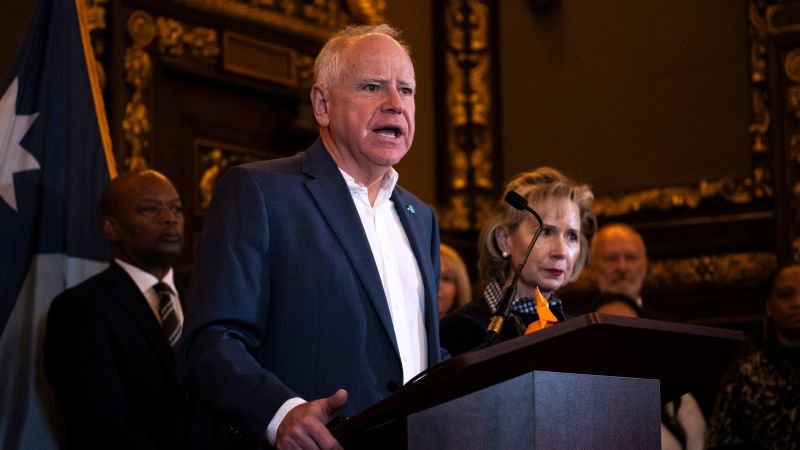
Following the ruling, Governor Walz praised the decision in a statement on X, calling the investigation into him “politically motivated, unconstitutional, and meritless.” He accused the Trump administration of wielding the legal system to suppress dissent, arguing that the DOJ’s actions reflect a pattern of lawlessness. “This case was just one example of that, but we are seeing daily reminders of this administration’s disregard for the rule of law,” Walz said.
“Subpoenaing political opponents because they spoke on behalf of their constituents violates the core tenets of our democracy and human decency,” added Minneapolis Mayor Jacob Frey, who also supported the ruling. The mayors and officials cited the importance of protecting free speech and ensuring that legal actions are not weaponized against those who challenge federal policies.
Meanwhile, the Justice Department maintained its stance, stating in a Monday statement that it would continue to review the claims of “obstruction” in its investigations. The agency described its efforts as necessary to uphold federal law enforcement operations, asserting that it is “acting in full compliance with the law.” However, critics argue that the DOJ’s methods have become increasingly partisan, with subpoenas used to intimidate rather than to gather evidence.
Context of the Legal Battle
The case is part of a larger controversy surrounding the Trump administration’s use of legal tools to target individuals and organizations critical of its policies. Schiltz’s ruling provides a framework for evaluating whether such actions cross the line into political persecution. The judge’s emphasis on the constitutionality of state autonomy suggests a potential shift in how federal courts interpret the scope of presidential power and the role of state governments in immigration enforcement.
Legal experts have pointed to the ruling as a pivotal moment in the ongoing debate about the balance between federal authority and state rights. The decision highlights the tension between enforcing immigration laws and protecting officials from political backlash. By voiding the subpoenas, Schiltz reinforced the idea that the DOJ’s investigations should be grounded in concrete evidence, not ideological motives. This could have long-term implications for how future administrations use legal mechanisms to address opposition.
The ruling also raises questions about the effectiveness of the DOJ’s strategy in securing cooperation from state officials. While the agency had previously threatened to penalize states with “sanctuary policies,” it failed to present a compelling case that Minnesota’s resistance was obstructive. Schiltz’s emphasis on the lack of a plausible justification underscores the need for the DOJ to demonstrate that its actions are not merely symbolic or retaliatory.
As the legal battle continues, the case serves as a reminder of the importance of judicial oversight in ensuring that the executive branch does not overreach its constitutional authority. The bipartisan support for the ruling, as well as the broader public sentiment, suggests that the judiciary is playing a crucial role in safeguarding democratic principles against perceived encroachments. For Minnesota officials, the decision is a victory in the fight to maintain independence from federal overreach, while for the DOJ, it is a challenge to refine its approach to political investigations.
This story has been updated with additional details to reflect the evolving legal landscape and the impact of the ruling on state-federal relations. The case remains a focal point in discussions about the limits of executive power and the role of the judiciary in preserving the rule of law. As the administration moves forward, the outcome of this case could influence similar investigations across the country, setting a precedent for how political dissent is treated in the legal system.