WWII ‘Hell Ship’ Hōfuku Maru Wreck Found After 80 Years
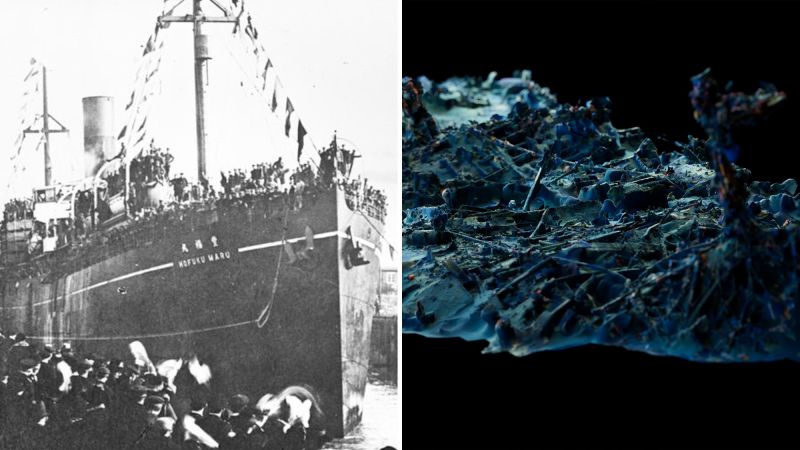
Sandego.net – The sunken wreck of the WWII hell ship Hōfuku Maru, once a brutal transport vessel for Allied prisoners of war, has been located after more than eight decades. This Japanese cargo ship, part of a fleet that carried over 62,000 captured soldiers, was struck by US warplanes on September 21, 1944, in the South China Sea. The attack, which mistakenly targeted the ship as a military vessel, killed most of the 1,200 British and Dutch POWs aboard, leaving only around 200 survivors. Now, the wreckage rests near Zambales province in the Philippines, finally emerging from the ocean’s depths after a decades-long search led by historians and researchers.
A Dark Chapter of War
Known as one of Japan’s infamous “hell ships,” the Hōfuku Maru was a grim symbol of wartime suffering. Its journey through the South China Sea was fraught with danger, as it ferried POWs under dire conditions. The ship’s sinking on that fateful day was the result of four torpedoes, one of which pierced its hull and caused catastrophic damage. Within minutes, the vessel disappeared beneath the waves, claiming hundreds of lives and leaving behind a haunting legacy. For years, the wreck’s exact location was a mystery, obscured by the sea and historical records.
Unearthing the Past
The breakthrough came through a blend of archival research and modern technology. Japanese documents, including a handwritten account from officers aboard the convoy’s lead ship, provided vital clues about the Hōfuku Maru’s position. Cross-referencing these with a US aircraft action report from the USS Bunker Hill confirmed the ship’s placement in the formation and its proximity to the attack site. Local fishermen had long hinted at a massive wreck in the area, but precise coordinates eluded researchers until Tim Beckensall, a WWII historian, uncovered the key evidence. His discovery paved the way for the final identification of the sunken wreck.
Following Beckensall’s findings, the British Embassy collaborated with Dutch and Philippine military attachés to validate the location. This partnership marked the beginning of a renewed effort to preserve the memory of the ship’s victims. The search team, which included maritime archaeologist Calvin Mires and imaging expert Evan Kovacs, conducted a sonar survey in early 2026. Despite the wreck’s depth of about 164 feet (50 meters), divers confirmed its presence, bringing closure to a historical mystery that had endured for generations.
Historical Significance
The Hōfuku Maru’s discovery is a critical moment in understanding Japan’s use of “hell ships” during the war. These vessels, designed to carry POWs in overcrowded and unsanitary conditions, were responsible for countless deaths. The ship’s sinking on September 21, 1944, exemplifies the inhumanity of the Japanese military’s treatment of captives. “This find adds a tangible piece to the story of the hell ships,” said Josh Gates, host of *Expedition Unknown*. “It’s a powerful reminder of the sacrifices made by those who endured this ordeal.” The search is featured in the premiere of a two-part season, highlighting its importance to global history.
Yet, the wreck now faces new challenges. Volcanic ash from the 1991 Mount Pinatubo eruption has begun to settle on its remains, threatening to obscure its features. Beckensall noted that the accumulation of sediment makes identifying the ship’s original structure increasingly difficult. Despite this, the site remains a poignant landmark, allowing historians to piece together the tragic events of that day. The recovery of the Hōfuku Maru not only honors its victims but also sheds light on the broader suffering of POWs during World War II.