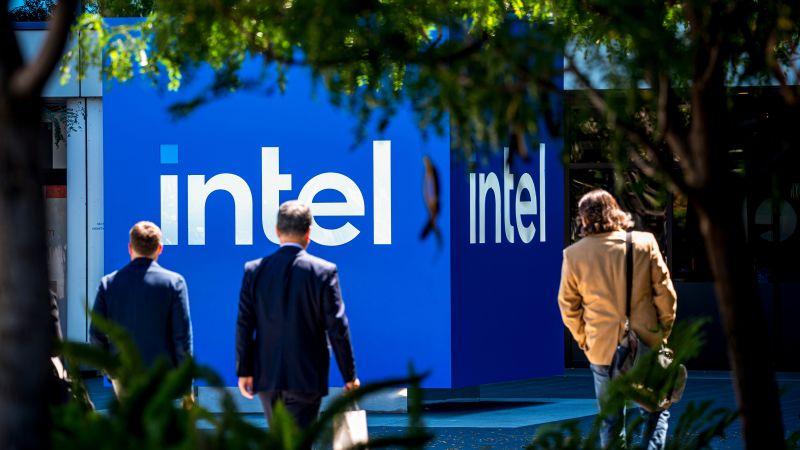
Intel and Apple Collaborate on U.S. Chip Manufacturing, as Trump Highlights National Security Benefits
Sandego.net – On June 18, 2026, President Donald Trump announced that Intel and Apple have reached an agreement to manufacture computer chips within the United States. The decision, which he emphasized as a strategic move, aims to strengthen America’s semiconductor industry. “I decided to help Intel because we need to design and build our Chips right here in America,” Trump wrote in a post on Truth Social. This announcement came as a significant boost to Intel’s stock, which rose more than 9% in premarket trading. Despite the positive reaction, the company remained silent on the specifics of the partnership, declining to provide further details.
Apple’s Cost Challenges and the AI-Driven Chip Market
Apple’s Chief Executive Officer, Tim Cook, recently expressed concerns about rising production costs, attributing them to the surge in demand for memory and storage chips driven by the AI industry. In a recent interview with the Wall Street Journal, Cook stated that price increases for Apple products are “unavoidable” amid this trend. “We’re doing our best to mitigate the huge increases that are being passed to us, and we’ve been trying to shield our customers from the increases, but the situation has become unsustainable,” he explained. The company’s reliance on overseas suppliers, particularly Taiwan Semiconductor Manufacturing Company (TSMC), for its processors has made it vulnerable to global supply chain fluctuations.
While the AI boom has intensified competition for advanced chips, Trump’s new partnership with Intel offers a potential solution. The agreement is part of a broader initiative to reduce dependency on foreign manufacturing and position the United States as a leader in semiconductor production. This move aligns with Trump’s goal of bringing critical technology infrastructure back to American soil, a priority he has consistently advocated for during his presidency.
Government Support for Intel: A Strategic Investment
Trump’s administration has previously supported Intel through a landmark $8.9 billion investment in the company’s stock, made in August 2026. This financial injection gave the government a roughly 10% stake in Intel, aimed at bolstering its efforts to expand research and manufacturing facilities domestically. The rationale was twofold: to enhance the U.S. advanced-chip supply chain and to safeguard national security interests by reducing reliance on foreign semiconductor production.
Intel’s recent collaboration with Apple builds on this foundation. The company’s expansion plans in the U.S. have been a focal point of the Trump administration’s industrial policy, with the goal of creating jobs and fostering innovation. By securing a deal with Apple, Intel could gain access to a substantial customer base, potentially accelerating its production capacity. This partnership also underscores the growing importance of domestic manufacturing in a global market increasingly shaped by technological competition.
Trump’s Reflection on the Government’s Stake in Intel
In his Truth Social post, Trump not only celebrated the new agreement but also highlighted the value of the government’s existing investment in Intel. He noted that the company’s stock value had skyrocketed from around $100 billion to over $600 billion since the initial stake was acquired. “Nine months, and they’ve increased in value over HALF A TRILLION DOLLARS. America’s stake is now over 60 Billion Dollars,” he remarked. This statement reflects Trump’s belief that his economic policies have paid off, as the investment has significantly appreciated in value.
However, the president’s remarks also reveal a sense of curiosity about the returns on his financial commitment. By emphasizing the dramatic growth in Intel’s valuation, Trump seems to suggest that his support has been instrumental in the company’s success. This perspective frames the partnership as a win-win scenario for both Apple and the U.S. economy, with Trump positioning himself as a key player in the country’s technological resurgence.
The Broader Implications for U.S. Semiconductor Manufacturing
The agreement between Apple and Intel is part of a larger strategy to revitalize the U.S. semiconductor industry. For decades, companies like Intel and TSMC have dominated global chip production, with a significant portion of their manufacturing taking place in Asia. Trump has long argued that this reliance on foreign supply chains poses a risk to national security, particularly in light of geopolitical tensions. By encouraging domestic chip production, his administration seeks to create a self-sufficient ecosystem that can withstand external disruptions.
Analysts believe this deal could have far-reaching effects. Apple’s commitment to producing chips in the U.S. may signal a shift in the tech industry’s approach to manufacturing, prompting other companies to follow suit. The success of such partnerships could lead to increased investment in U.S. fabrication plants, creating thousands of high-tech jobs and stimulating innovation. This is particularly crucial as the global demand for semiconductors continues to grow, driven by advancements in artificial intelligence, 5G technology, and quantum computing.
Additionally, the partnership addresses a key challenge for Apple: the rising costs of memory and storage chips. As AI applications become more prevalent, the demand for high-performance chips has surged, leading to higher prices for suppliers. By securing a domestic production agreement, Apple can potentially reduce its exposure to these price hikes, ensuring more stable costs for its products. This strategy also allows the company to better control its supply chain, a critical advantage in an increasingly competitive market.
Industry Reactions and the Path Forward
While the announcement has been met with enthusiasm, some industry experts remain cautious. They argue that establishing a robust domestic chip manufacturing sector will require sustained investment and time. “This is a positive step, but it’s just the beginning,” said one analyst. “Intel needs to scale its operations, and Apple will need to commit to long-term production goals.” The success of the partnership will depend on factors such as labor costs, infrastructure development, and the ability to compete with established overseas manufacturers.
Despite these challenges, the deal represents a significant milestone. For Apple, it offers a way to diversify its manufacturing base, reducing the risk of supply chain disruptions. For Intel, it provides an opportunity to regain its foothold in the global market and strengthen its position as a leader in chip design. Trump’s vision of a self-reliant U.S. semiconductor industry now seems closer to reality, with the support of major tech companies like Apple.
As the agreement takes shape, the broader implications for the tech sector and national security will become clearer. The collaboration between Apple and Intel could serve as a blueprint for future partnerships, demonstrating the viability of domestic manufacturing in the face of global competition. With the U.S. aiming to solidify its role as a semiconductor powerhouse, this development is expected to have lasting effects on both the economy and the global tech landscape.