Ukraine’s Drone Assault on Moscow Targets Key Energy Infrastructure
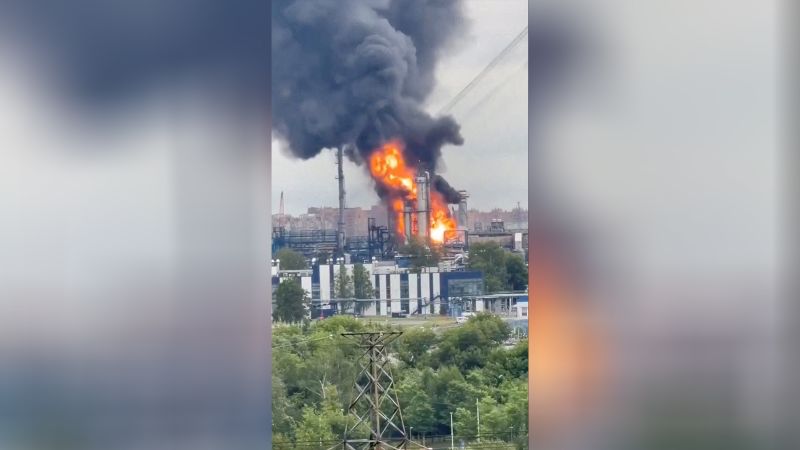
Sandego.net – On the night of June 18, Ukraine executed one of its most significant drone strikes on the Russian capital, targeting a major oil refinery that lies just 15 kilometers from the Kremlin. The attack, which left at least 17 people injured, marked a new phase in the conflict as Kyiv intensified its focus on damaging Moscow’s energy infrastructure. According to Moscow Mayor Sergei Sobyanin, air defenses intercepted 194 drones overnight into Thursday, a number far exceeding the typical double-digit figures seen in recent attacks. This surge in drone capabilities reflects a major shift in Ukraine’s military strategy since Russia’s full-scale invasion began over four years ago.
Escalating Strikes and Strategic Messaging
The assault was part of a broader Ukrainian offensive targeting multiple locations across Russia, with the Ministry of Defense reporting nearly 1,000 drones intercepted in total. Among the sites hit were facilities in the Sea of Azov region, underscoring Kyiv’s intent to strike at both symbolic and practical vulnerabilities within Russia’s war machine. Ukrainian President Volodymyr Zelensky framed the attacks as a necessary countermeasure, citing the destruction of a historic monastery complex in Kyiv earlier that week as justification for the retaliation.
“We do not want this war and never have – everyone knows this, and our partners know this,” Zelensky told reporters. “But if Ukraine is engulfed in flames, so will your Moscow be. That is why we emphasize once again that it is time to end the aggression; it is time to end this war.”
The Moscow Oil Refinery, located in the southeastern district of Kapotnya, emerged as a central target. The facility, which had already been damaged in an earlier strike on Tuesday, was again hit by Ukraine’s coordinated assault. Video footage geolocated by CNN revealed the attack’s method: a ground-launched projectile fired from a road as drones approached the refinery, followed by a massive explosion that sent a fuel tank’s roof soaring into the air. Thick black smoke rose above the site, obscuring the skyline and creating a scene of chaos.
Residents’ Accounts of the Impact
In the nearby district of Maryino, residents awoke to the sounds of explosions and the acrid scent of burning fuel. Natalya Klimova, a 25-year-old living with her mother, described the aftermath as “terribly frightening.” She recounted hearing at least 10 loud explosions and fleeing to the bathroom for safety, only to find the building trembling and the mirror shaking. “The smell is terrible,” she said. “We closed the windows, but it’s still hard to breathe inside the apartment.” Her mother’s blood pressure spiked, yet Klimova hesitated to go outside, fearing further damage.
Another Maryino resident, Maria, a 44-year-old woman, shared similar experiences. She said she left the area for her mother’s dacha in the Moscow suburbs after the explosions, convinced the refinery would soon catch fire. “I was sure the plant would burn sooner or later,” she explained. “I packed my things and went to my mom’s dacha.” Maria also noted that this was not the first time the refinery had been targeted, adding a layer of familiarity to the current crisis. “I think I burned out back when I saw the photos and videos from Ukraine,” she said. “Now it’s so close to me, but I seem to be numb to it.”
Oil Rain and the Psychological Toll
The attack’s aftermath included an unusual phenomenon: black, sooty raindrops that fell on cars and windowsills, leaving a visible trail of oil residue. Social media posts from residents captured the surreal sight, sparking debate over whether the oil-saturated rain was a direct consequence of the explosion or a result of lingering smoke. Russian authorities dismissed the “oil rain” as an exaggeration, though they urged citizens to minimize outdoor exposure to avoid inhaling soot particles.
The strikes have not only disrupted infrastructure but also amplified tensions among Russian civilians. For many, the attack marked the first time they felt the war’s effects in their own neighborhoods. “It’s like the battle is moving closer,” said one resident, emphasizing the emotional weight of the event. This sentiment aligns with Zelensky’s strategy of making the conflict feel more personal to those living under Russian occupation.
Retaliation and the War’s New Front
In response to Ukraine’s assault, Russia launched a counteroffensive, firing seven missiles and 239 drones at Ukrainian targets. The strikes targeted private homes, energy facilities, and oil depots in both Kyiv and Poltava, aiming to disrupt Ukraine’s ability to sustain its operations. The Ukrainian Air Force confirmed the retaliation, highlighting the escalating pace of the aerial battle.
The attack on the Moscow refinery also underscores the growing importance of energy infrastructure in the war’s narrative. By targeting these sites, Ukraine seeks to weaken Russia’s economic and logistical capabilities, forcing the Kremlin to divert resources from its military campaigns. Analysts suggest that such strikes are part of a broader effort to undermine Russia’s resolve, leveraging the psychological impact of close-range attacks on the capital.
A Tactical Shift in the Conflict
Recent months have seen Ukraine refine its long-range drone operations, focusing on precision strikes that maximize damage while minimizing civilian casualties. This evolution is attributed to advancements in technology and training, allowing Kyiv to strike with greater accuracy and scale. The attack on Moscow, which damaged a key refinery and sparked fires, serves as a vivid example of this progress.
The incident has reignited discussions about the war’s trajectory. While Russia continues to emphasize its dominance in air superiority, Ukraine’s ability to penetrate Moscow’s defenses signals a turning point. Zelensky’s decision to target the refinery, coupled with the emotional resonance of the attack, has intensified pressure on Moscow to negotiate. “This is not just about destroying equipment,” said an unnamed defense official. “It’s about making the war feel real to the people who are funding it.”
As the conflict enters its fifth year, the balance of power appears to be shifting. Ukraine’s strikes, once seen as symbolic, now carry tangible consequences for Russia’s war efforts. The damage to the oil refinery, combined with the fear it instilled in Moscow’s suburbs, highlights the evolving tactics of both sides. With each attack, the war moves closer to home, blurring the lines between battlefield and civilian life. The question remains: will these strikes force Moscow to the negotiating table, or will the conflict continue to escalate?
Meanwhile, the psychological impact on Russian citizens grows. For families like Klimova’s, the attack is a reminder that the war is no longer confined to Ukraine’s borders. “It’s like we’re living in the middle of a battlefield,” said one Maryino resident. “Every explosion feels like a personal blow.” This growing unrest may pressure the Russian government to adjust its approach, whether through diplomacy or increased domestic repression. As the war continues, the Moscow refinery’s destruction serves as a stark symbol of the conflict’s reach—and its potential to reshape the course of the war.