Why is there fighting in Lebanon? A Crisis That Threatens the Iran Deal
Sandego.net – The ongoing clashes between Israeli military forces and Hezbollah in southern Lebanon have cast doubt on the fragile agreement between the United States and Iran to end their long-standing conflict. This 14-point memorandum of understanding, signed to stabilize the region, includes a key provision: a ceasefire in Lebanon that would shield Iran’s key ally, Hezbollah, from Israeli attacks, provided the group refrains from targeting Israel. However, recent escalations in hostilities have forced the postponement of critical US-Iran negotiations and raised concerns about the closure of the vital Strait of Hormuz by Iran’s military leaders. With tensions mounting, the question remains: how did we get to this point?
The Origins of the Conflict
Hezbollah, a Shiite Islamist group backed by Iran, has been at war with Israel for over two decades. Since its establishment in the 1980s, the group has grown into a formidable paramilitary force, leveraging Iranian support to amass a sophisticated arsenal of rockets, missiles, and drones. Its primary objective has always been the destruction of Israel, a goal it has pursued through repeated cross-border attacks. Israel, in turn, has launched several military campaigns against Hezbollah, with the most significant occurring in 2006. That year, a Hezbollah raid into Israel and the capture of two soldiers led to a month-long air and ground operation, which Israeli officials later described as a “serious missed opportunity.”
The 2006 war ended without Israel achieving a decisive military victory, according to an independent inquiry. Despite the heavy toll on Lebanon, Hezbollah emerged stronger, consolidating its influence in the region. The group’s resurgence continued into 2023, when it began launching rockets into northern Israel following Israel’s bombardment of Gaza in response to a Hamas attack. This sparked a year of intense combat, during which Israel killed Hezbollah’s leader, Hassan Nasrallah, in a major blow to the group’s leadership. Yet, the conflict persisted, with both sides accusing each other of violating ceasefires and escalating the violence.
Recent Escalations and the US-Iran Agreement
In November 2024, Israel approved a ceasefire deal with Lebanon, requiring its forces to withdraw from the southern region. However, Israeli troops remained in positions beyond the agreed-upon deadline, conducting near-daily strikes against Hezbollah targets. These actions, which the Israeli government claims were justified by Hezbollah’s alleged breaches of the ceasefire, have reignited hostilities. The situation took a dramatic turn in late February when Israel and the United States carried out an airstrike that killed Iran’s supreme leader, Ayatollah Ali Khamenei. This attack triggered a new cycle of violence, as Hezbollah responded with rocket fire targeting northern Israel.
“With all due respect to the Americans, Israel must make it clear to the entire world that the blood of our sons and the security of our citizens are not up for sacrifice,” said Israel’s National Security Minister, Itamar Ben Gvir, in a recent statement. His remarks underscore the deepening rift between Israel and its allies, as the country struggles to balance its strategic interests with the demands of the US-Iran agreement. The Israeli government has maintained that its military actions are necessary to secure its northern border, a stance reinforced by Prime Minister Benjamin Netanyahu, who declared, “We will restore security to the north (of Israel),” following the release of the US-Iran deal’s text.
The Impact of the Conflict
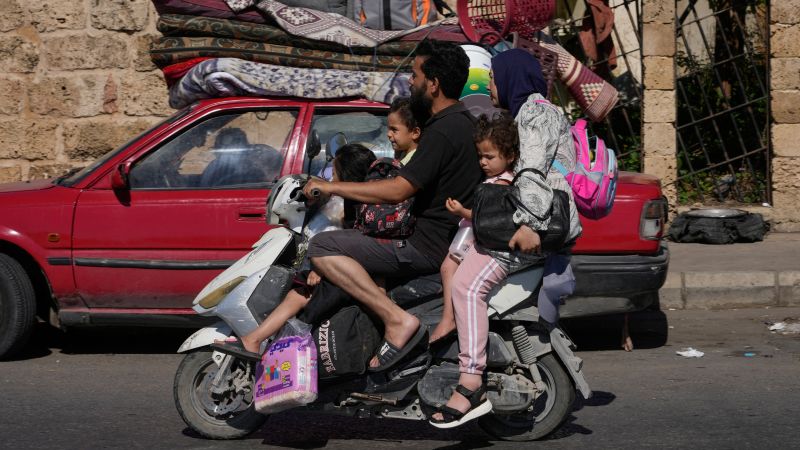
The war in Lebanon has had devastating consequences for civilians. Since March 2, over 4,057 people have been killed, according to Lebanon’s health ministry. The Israeli military has emptied much of southern Lebanon of its residents, demolishing thousands of homes in villages targeted during its offensive. This humanitarian crisis has intensified as the fighting continues, with both sides blaming the other for escalating the violence. The closure of the Strait of Hormuz by Iran’s military brass further complicates the situation, as it threatens global oil supplies and highlights the broader stakes of the conflict.
The US-Iran agreement, which aims to resolve long-term issues like Tehran’s nuclear program and sanctions, hinges on a ceasefire in Lebanon. The memorandum of understanding explicitly states that “the end of hostilities in Lebanon is paramount” to the deal, with the US, Iran, and their allies committing to “declare the immediate and permanent termination of military operations on all fronts, including in Lebanon.” President Donald Trump emphasized this point on social media, asserting that the agreement requires “a complete Ceasefire on all fronts, including Lebanon, Hezbollah, and Israel.” Yet, with Israeli forces still active in southern Lebanon and Hezbollah continuing its attacks, the ceasefire remains under pressure.
For Iran, the preservation of Hezbollah as a regional power is non-negotiable. The group’s survival has been a central demand in the arduous negotiations to end the three-month-old conflict. A diplomat with knowledge of the talks revealed that Iran sought guarantees that hostilities in Lebanon would conclude before resuming discussions with the US. This indicates that the group’s military operations are not just a tactical move but a strategic bargaining chip in the broader geopolitical struggle. The recent assassination of Khamenei, however, has complicated these efforts, as Hezbollah’s response has been swift and aggressive.
The Path Forward
As the conflict rages on, the future of the US-Iran agreement hangs in the balance. The deal’s success depends on the parties’ ability to enforce the ceasefire, yet Israel’s insistence on maintaining a security zone in southern Lebanon has created friction. Netanyahu’s refusal to withdraw from the region signals a commitment to counter Hezbollah’s growing threat, even if it means delaying the ceasefire. Meanwhile, Iran’s military actions in the Strait of Hormuz suggest it is prepared to take unilateral steps if the agreement fails to meet its demands.
Analysts warn that the current cycle of violence could undermine the fragile US-Iran deal, which was designed to prevent further escalation. The memorandum of understanding, while ambitious, requires mutual trust and cooperation—elements that are now being tested. The conflict in Lebanon has not only displaced thousands of civilians but also exposed the limitations of the ceasefire as a tool for lasting peace. As the situation continues to evolve, the stakes for both Israel and Iran have never been higher, with the potential to reshape the Middle East’s future.
With the Israeli campaign in Lebanon showing no signs of slowing, the agreement’s viability is under scrutiny. The US, which has long been a key mediator in the conflict, faces the challenge of reconciling Israel’s security needs with Iran’s demands. The road to resolution is fraught with uncertainty, but the continued fighting in Lebanon underscores the importance of this agreement in preventing further regional instability. Whether the ceasefire will hold or if the conflict will spiral into a new phase remains to be seen.
“With all due respect to the Americans, Israel must make it clear to the entire world that the blood of our sons and the security of our citizens are not up for sacrifice,” said Israel’s National Security Minister Itamar Ben Gvir, highlighting the country’s resolve to protect its northern border at all costs.
As the conflict continues, the international community watches closely. The US-Iran agreement represents a critical opportunity to de-escalate tensions, but its effectiveness depends on the willingness of both sides to uphold their commitments. For Lebanon, the struggle between Israel and Hezbollah has already caused widespread suffering, and the country’s residents now face an uncertain future. The question is not just whether the ceasefire will be honored, but whether it can be sustained in the face of ongoing hostilities and shifting political dynamics.
The historical backdrop of the conflict adds complexity to the current situation. From the 2006 war to the recent cycles of violence, Hezbollah and Israel have demonstrated a pattern of retaliation and escalation. The assassination of Khamenei has further inflamed tensions, with Hezbollah interpreting the strike as a direct threat to its survival. This has led to increased cross-border attacks, prompting Israeli military retaliation and deepening the humanitarian crisis.
Despite these challenges, the US-Iran agreement remains a cornerstone of diplomatic efforts. Its success or failure will determine the trajectory of Middle