Venezuela’s Earthquake Memorial: A Growing Cemetery for Unidentified Victims
Sandego.net – In the rugged mountains of Venezuela’s La Guaira state, a somber task has taken center stage as workers at La Esperanza cemetery continue to expand burial space for the victims of a devastating earthquake that struck nearly two weeks ago. The twin tremors, which registered significant magnitudes, have left a trail of destruction, prompting urgent efforts to recover and inter the deceased. Despite these efforts, many of the bodies laid to rest remain unidentified, adding an emotional layer to the ongoing operation.
Emergency Burials and Unidentified Graves
As CNN observed the scene on Monday, heavy machinery roared through the grounds of the cemetery, while staff in blue protective gear meticulously prepared new plots for the victims. According to a local worker, the site has seen the creation of approximately 500 fresh graves, with an additional 150 reserved specifically for those whose identities have not yet been determined. These graves are marked with coded labels, enabling families to locate their loved ones once identification efforts progress.
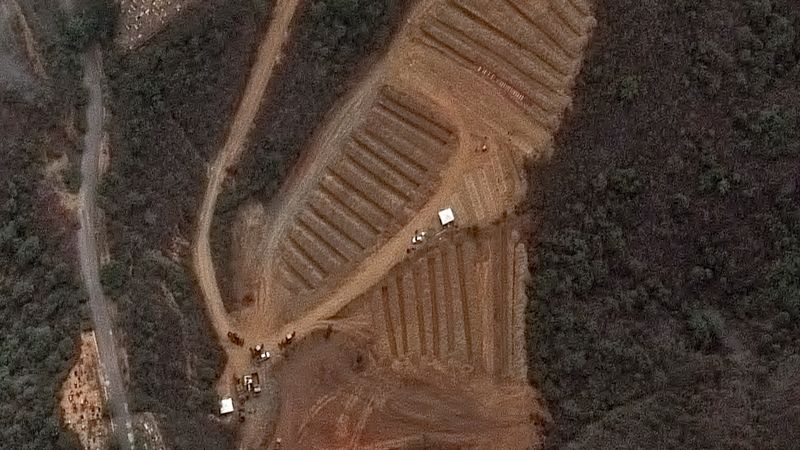
Satellite imagery from Vantor, a spatial intelligence firm, reveals more than 20 rows of newly dug trenches, each capable of holding multiple caskets. The scale of these graves underscores the catastrophic impact of the June earthquakes, which have claimed over 3,685 lives, injured 16,740 individuals, and displaced 17,907 people, according to the latest government data. While search teams work tirelessly to uncover the missing, the cemetery now stands as a testament to the immediate response required to manage the crisis.
A Structured Approach to Grieving
Residents and officials emphasize the thoughtful design of the burial site. The area for unidentified victims is segmented into individual plots, each separated by markers and arranged on terraces labeled with letters. These terraces, including sections A, B, C, D, F, and G, have been in use for just a week, yet they already reflect a systematic approach to honoring the dead. “The arrangement allows families to visit their loved ones with ease,” explained Elis Zabala, a community leader, in a statement to Reuters. “We can see the organization and the dignity given to each deceased person.”
Local authorities highlighted the importance of this setup, noting that the designated area ensures survivors can eventually reunite with their relatives. “By burying the unidentified in a specific zone, we create clarity for families who may return later to claim their loved ones,” said Nicolás Rivas, a member of the Chaparral Los Pinos community council, as quoted by Reuters. The plan includes future steps where concrete will be poured over the graves, preserving the site while making it accessible for those seeking closure.
Logistics and Community Efforts
Throughout Monday, the cemetery became a hub of activity, with several trucks arriving to transport coffins from the affected regions. The worker estimated that at least 80 bodies were moved to the site during the day, though the exact number remains uncertain. The process of interment has been steady, with each grave requiring careful documentation to track the remains of those lost.
Police officers were stationed at the cemetery entrance, ensuring security as the operation unfolded. Additional agents arrived throughout the day, underscoring the gravity of the situation. The presence of law enforcement, combined with the efforts of local workers and volunteers, highlights the collaborative response to the disaster. “The community is working together to provide a space where the dead can rest and the living can find peace,” said a local official in a statement.
Unresolved Questions for Families
While the cemetery serves as a temporary refuge for the deceased, many families still grapple with unanswered questions. The latest update from Tuesday’s tally did not specify the number of people still missing, leaving a sense of urgency for further recovery work. Despite the progress made in burying the victims, the emotional toll on families persists, with some waiting anxiously for news about their relatives.
Reuters images capture the quiet dignity of the burial sites, where small stones outline the graves of those whose identities remain unknown. CNN’s analysis of these visuals suggests the potential for hundreds of additional interments, depending on the number of bodies recovered. The sight of dozens of coffins lined up in the cemetery on Monday was a poignant reminder of the human cost of the disaster.
A Glimpse into the Aftermath
As the days pass, the cemetery continues to evolve, reflecting both the scale of the tragedy and the resilience of the community. The combined efforts of government agencies, local leaders, and volunteers have enabled the rapid expansion of burial space, though challenges remain in fully identifying all victims. The sight of families visiting the site, tracing the coded plots, and placing flowers on the graves illustrates the deep connection between the people and their loved ones.
Video footage from Monday shows the orderly procession of coffins, each a symbol of lives lost. The workers’ determination to provide a respectful resting place for the victims, even in the face of uncertainty, is a crucial aspect of the recovery process. For those who remain unidentified, the cemetery serves as a temporary memorial, a place where the community can come together to mourn and remember.
The La Esperanza cemetery, once a quiet place of remembrance, now bears the weight of a national tragedy. Its expansion into a makeshift disaster site highlights the immediate needs of a community reeling from the twin earthquakes. As the search for survivors and the identification of bodies continue, the cemetery remains a focal point of grief and hope, symbolizing the ongoing efforts to restore normalcy in a region forever changed by the disaster.
Broader Implications of the Crisis
Experts and officials acknowledge that the earthquake’s impact extends beyond the immediate loss of life. The logistical challenges of managing the burial process, combined with the emotional burden on families, underscore the complexity of disaster response. While the government has provided figures on the death toll and displacement, the personal stories of those affected are still being pieced together.
For the families of the missing, the cemetery offers a tangible link to their loved ones. The coded plots and labeled terraces are designed to facilitate future identification, though the process is slow and meticulous. As the community adapts to this new reality, the La Esperanza cemetery stands as a reminder of both the devastation and the collective will to rebuild.
The twin earthquakes, which struck the northern part of the country, have left an indelible mark on Venezuela’s landscape and its people. The cemetery, with its rows of graves and organized terraces, is a microcosm of the broader recovery effort. While the numbers are staggering, the dedication of workers and volunteers ensures that the victims are not forgotten, even as their identities are slowly uncovered.