US Ends Its Military Mission in Iraq After More Than Two Decades
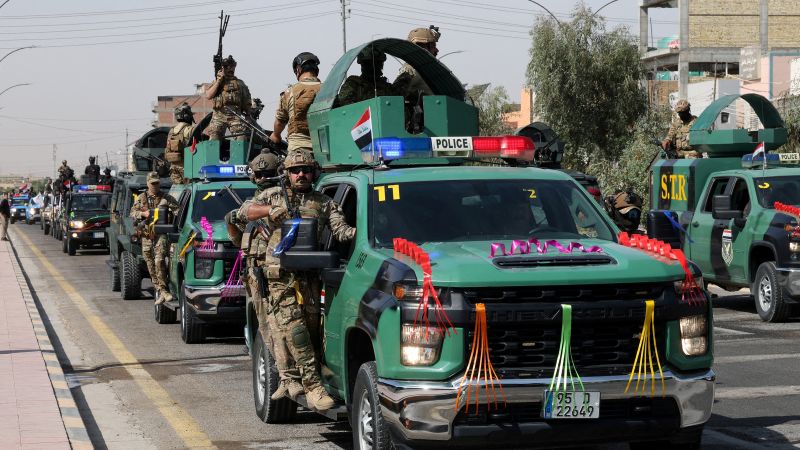
Sandego.net – The United States has completed its military withdrawal from Iraq, closing a chapter that began with the 2003 invasion and later shifted into a lengthy campaign against ISIS. The final departure was completed Wednesday after American personnel left their remaining facilities in Erbil, in northern Iraq.
The move had been planned for years, but it takes place during a particularly tense period for the region. Washington remains engaged in a war with neighboring Iran, while Iraqi leaders face renewed pressure to prove that the country’s security institutions can operate independently and contain powerful armed groups aligned with Tehran.
For Iraq’s government and the Pentagon, the withdrawal marks the end of a coalition-era mission and the beginning of a different security relationship. Iran-backed factions, however, portrayed the departure as a strategic victory achieved through years of political and military pressure on the United States.
A transition from coalition operations
Pentagon spokesperson Sean Parnell said the conclusion of the deployment followed a long campaign that substantially changed the security situation in Iraq and the wider region.
This milestone reflects the success of a 12-year campaign that defeated ISIS as an organized military threat in Iraq and across the region.
Parnell said the end of the mission represented a shift away from wartime coalition operations toward an Iraqi-led approach supported through a more conventional bilateral partnership.
It also marks a transition from a wartime coalition mission to an Iraqi-led security effort supported by a more normal bilateral security relationship.
At the peak of the US occupation, roughly 170,000 American troops were stationed in Iraq. The Obama administration withdrew forces in 2011, but the advance of ISIS brought US troops back in 2014 after Iraq requested assistance. Around 5,000 personnel returned as Iraq struggled to confront the extremist group, which had seized large areas in Iraq and Syria during the middle of the 2010s.
Since December 2021, the American deployment had been much smaller, at about 2,500 troops. Their stated role centered on advising and assisting Iraqi forces, including military training intended to help prevent an ISIS resurgence.
Iraq declares a new phase
Iraqi Prime Minister Ali al-Zaidi led the handover ceremony and presented the withdrawal as an opportunity for Baghdad to strengthen national sovereignty and consolidate state authority.
A new phase, one defined by Iraq’s sovereignty, the strength of its institutions, the readiness of its forces, the unity of its decision-making, and balanced partnerships with its friends.
The current departure follows a 2024 agreement between Iraq’s government and the Biden administration to remove US forces in stages. The Trump administration maintained that plan, allowing the process to reach its conclusion despite the changing political and military environment across the Middle East.
For Iraqi officials, the next test will be whether the country can turn a formal military exit into a durable assertion of authority. Iraq has endured years of sectarian conflict, foreign intervention and competing armed centers of power. Its government must now address continued threats from ISIS while also managing Iran-aligned militias with substantial political, financial and military reach.
Parnell said Baghdad now carries the central responsibility for confronting Iraq’s remaining security concerns, including ISIS and militia groups linked to Iran.
Iran-aligned factions claim victory
Groups supported by Iran quickly celebrated the American departure. As’hab Al-Kahf issued a message congratulating Iraqis on what it called the departure of an occupying force, crediting attacks by resistance drones and missiles for helping drive the United States out.
On the humiliating withdrawal of the American occupier under the strikes of the Resistance’s drones and missiles.
Lahib Higel, deputy program director for the Middle East and North Africa at International Crisis Group, said Iran-backed groups had viewed the US deployment through the lens of Iraq’s earlier occupation and suspected Washington of monitoring militia activity.
The Iran-backed groups viewed the US presence an extension of the occupation of Iraq.
These groups believe that the US were in Iraq to monitor the activities of the Iran-allied militias.
Those perceptions became more consequential as regional fighting expanded from Gaza to Yemen and Iran-aligned forces increasingly targeted American positions in Iraq. Attacks on US bases and troops rose further this year after President Donald Trump began a war with Iran that killed Supreme Leader Ayatollah Ali Khamenei, whom Iranian loyalist militias regarded as the leader of the armed resistance.
The challenge of bringing weapons under state control
The US exit arrives as governments across the region pursue efforts to curb Iran-backed militias that have built influence inside Arab states. Tehran’s regional position has weakened in several areas during the past three years. Hezbollah in Lebanon was seriously damaged during an Israeli invasion of southern Lebanese villages, while the collapse of Iran’s Syrian ally Bashar al-Assad cost Iranian groups important strategic territory.
Iraq has become especially important for Iran’s remaining regional network, which includes allied politicians, armed factions and media organizations. The American withdrawal may strengthen the confidence of those groups at a moment when Tehran has lost ground elsewhere.
Al-Zaidi has nevertheless promised that Iraq will not accept independent armed power outside official authority.
No weapon outside the umbrella of the law, and no force outside the state’s institutions.
Whether that commitment can be enforced remains uncertain. Iraq’s government must balance relations with Iran, maintain ties with the United States and other partners, prevent ISIS from rebuilding its capabilities, and address the influence of militias embedded in political life. The completion of the US withdrawal does not end those pressures; it transfers more of the responsibility for managing them directly to Baghdad.
Related Reading
Frequently Asked Questions
What is US troops complete Iraq exit as Iran?
US troops complete Iraq exit as Iran is the main topic of this guide. The article explains the context, practical details, and next steps readers should understand.
Why does US troops complete Iraq exit as Iran matter?
US troops complete Iraq exit as Iran matters because readers are looking for a useful answer, not just a short summary. Good content should match search intent and help them decide what to do next.