UN Evacuation Plan in Hormuz Suspended Following Gulf of Oman Vessel Strike
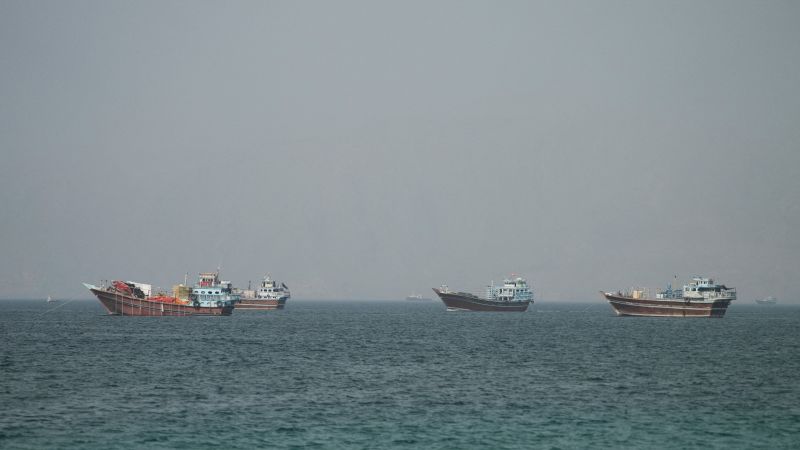
Sandego.net – The International Maritime Organization (IMO), a key UN body responsible for global shipping standards, announced on Thursday that it has temporarily halted its evacuation efforts in the Strait of Hormuz and surrounding waters. The decision followed reports of a vessel being attacked in the Gulf of Oman, an incident linked to Iran by a U.S. intelligence official. While the specifics of the attack remain under investigation, the official emphasized that the strike was attributed to an Iranian drone, though details have yet to be fully disclosed. Iran has not yet confirmed its involvement, leaving the situation open to speculation.
The pause in the evacuation plan comes after the IMO had previously announced a breakthrough agreement with the United States to assist over 11,000 seafarers stranded in the Persian Gulf. This collaboration had been hailed as a critical step in ensuring safe passage for ships navigating one of the world’s most vital straits. However, the latest attack has raised concerns about the security of the region, prompting the IMO to reassess its operations. Secretary-General Arsenio Dominguez stated in a statement that the pause was necessary to “reconfirm the safety guarantees” for vessels involved in the evacuation and those operating in the area.
“Following the launch of the IMO’s evacuation plan, through which several vessels have already been successfully evacuated, I have decided to temporarily pause its implementation to ensure the necessary safety measures are in place,” Dominguez said. “The safety of seafarers remains my top priority, and this step is essential to maintain a coordinated and secure approach.”
Dominguez also highlighted the symbolic timing of the decision, noting that Thursday marks the Day of the Seafarer—a global observance aimed at recognizing the challenges faced by maritime workers. He stressed that the evacuation efforts must not inadvertently place seafarers at risk of becoming “collateral victims” in the ongoing tensions between major world powers. The attack, though not part of the formal IMO evacuation framework, has underscored the fragility of the region’s stability.
In a separate statement, Iran’s Persian Gulf Seaways Management Organization warned that ships deviating from designated routes would face heightened risks. The organization emphasized that such vessels would no longer be protected under its insurance policies or liability agreements. “The consequences of traveling on unauthorized routes will be the responsibility of the owner, operator, and commander of the vessel,” the agency noted in a post on X, reinforcing its stance on controlling maritime traffic in the region.
The incident also drew attention from the United Kingdom’s Maritime Trade Operations, which reported that a cargo ship had sustained damage to its starboard side from an unknown projectile. The ship’s captain confirmed no casualties or environmental harm, but the damage has prompted increased vigilance among maritime authorities. “Vessels are now advised to transit with caution and report any suspicious activity,” the UK’s notice stated, as investigations into the attack continue.
Meanwhile, U.S. Secretary of State Marco Rubio is in the Persian Gulf region, seeking to secure support for the Iran deal among countries that have shown skepticism. His efforts come as the U.S. and Iran finalize a 14-point memorandum of understanding, which outlines steps to reopen the Strait of Hormuz, ease financial restrictions on Iran, and set the stage for future nuclear program discussions. Despite the recent setback, the agreement remains a cornerstone of U.S. strategy to stabilize the region and protect global oil supply routes.
The vessel attack has had immediate economic repercussions, with U.S. oil prices dropping to their lowest level since the onset of the Iran conflict. This decline follows a previous surge in prices due to the strait’s temporary closure, which disrupted critical shipping lanes. Analysts suggest the attack may have prompted a reassessment of regional risks, though the long-term impact on energy markets remains to be seen. CNN has contacted the White House for additional insights on the incident and its implications for international relations.
Experts are now analyzing whether the attack represents a strategic move by Iran to test the resilience of the newly negotiated agreement. The strait, a crucial chokepoint for global oil exports, has been a focal point of geopolitical rivalry for years. The IMO’s temporary halt to operations has added uncertainty to the already delicate balance of maritime security, with both sides vying for control over the region’s strategic significance.
Historically, the Strait of Hormuz has been a hotspot for naval confrontations, with Iran and the U.S. frequently clashing over control of shipping lanes. The current pause in the evacuation plan highlights the challenges of maintaining order in such a volatile environment. While the IMO’s coordination has been vital in rescuing stranded crews, the incident underscores the need for continued diplomatic engagement to prevent further disruptions.
As the situation unfolds, the IMO and its international partners are working to restore confidence in the region’s safety. Dominguez expressed hope that the pause would be short-lived, emphasizing the importance of keeping seafarers secure amid escalating geopolitical tensions. “We are committed to ensuring that every step taken in the evacuation process is measured and effective,” he said, adding that the agency will monitor developments closely.
Back in Washington, the White House is expected to weigh the implications of the attack on the Iran deal. While the agreement has faced criticism for its perceived limitations, proponents argue it provides a framework for reducing hostilities and ensuring the flow of global trade. The incident may serve as a test of this framework, with its success or failure potentially influencing the U.S.’s ability to rally international support.
The broader geopolitical landscape is shifting as the U.S. and Iran navigate their renewed partnership. The attack in the Gulf of Oman has reignited debates about the effectiveness of diplomatic measures in preventing conflicts. For the IMO, the challenge lies in balancing operational efficiency with the imperative to safeguard lives. As the agency works to resume its evacuation efforts, the world watches closely to see how this event will shape the future of maritime security and international cooperation.
With the Day of the Seafarer serving as a reminder of the dangers faced by maritime workers, the incident has also sparked renewed calls for global solidarity in protecting those who keep the world’s economy afloat. Whether the pause in evacuations will lead to long-term adjustments or a swift resumption of operations remains to be seen, but the event has undoubtedly intensified the stakes for all parties involved.