High-Speed Rail Service Halted After Train Collision in Central Spain
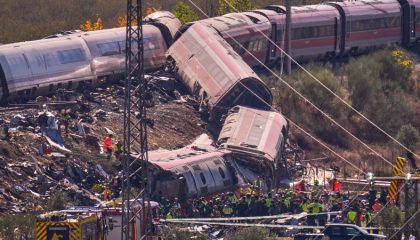
Sandego.net – A collision involving two high-speed trains in central Spain brought a key rail connection to a standstill on Wednesday morning, prompting an emergency response and raising immediate concerns about passengers and potential injuries.
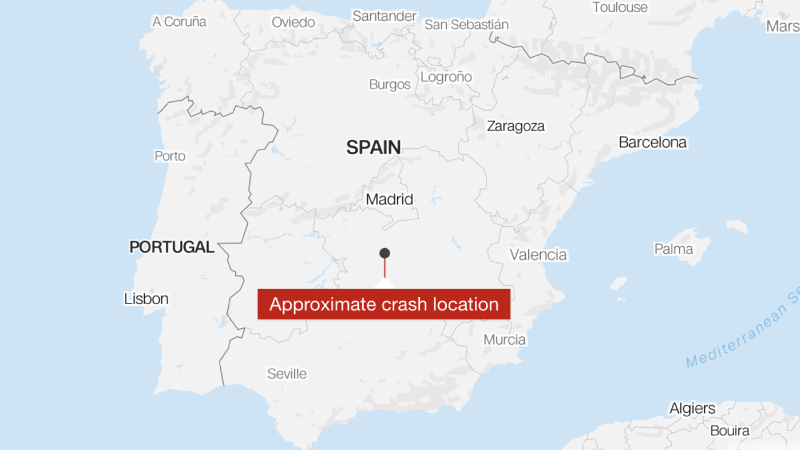
The crash occurred in the province of Toledo, in the area between Mora, Orgaz and Urda. The trains were operating on the route between Madrid and Seville, a major link connecting the Spanish capital with Andalusia in the south of the country.
One of the trains involved was run by Renfe, Spain’s state-owned rail company. The other was operated by Iryo. ADIF, the railway infrastructure manager, confirmed that the two high-speed services collided on the line.
Rail traffic on the high-speed route between the Madrid region and Andalusia was suspended after the incident. The interruption affects a corridor used by travelers moving between the capital and cities across southern Spain, while authorities assess the scene and determine when service can safely resume.
Emergency teams respond in Toledo province
Information about the full extent of the damage was not immediately available. Authorities had also not released confirmed details about whether anyone had been injured.
Prime Minister Pedro Sánchez described the collision as a serious incident and said emergency personnel had been deployed to help those affected.
“Shocked by the serious train incident” in Toledo.
In his message on X, Sánchez expressed support for people caught up in the crash and for their relatives.
“My affection, solidarity, and support to all the victims and their families.”
Local authorities began preparing for the possibility that injured passengers or crew members could need assistance. Manuel Galán, the mayor of Urda, said a facility was being readied following a request from the Civil Protection agency.
The preparations underline the uncertainty that followed the collision, as emergency teams worked to establish the immediate needs at the location and local communities prepared to assist if necessary.
Mayors say information remains limited
Officials in nearby municipalities said early details were scarce. Jesús Pérez Martín, mayor of Los Yébenes, said he had received little information but had been told the crash was serious.
“We have very little information; I’ve been told it’s a serious accident.”
The lack of confirmed information in the initial hours meant that key questions remained unanswered, including the number of people on board each train, the circumstances that led to the collision, and the scale of any disruption expected beyond the immediate suspension of the route.
Investigators and rail authorities will need to examine the condition of the trains, the track and operational circumstances before a fuller account can be established. Such reviews are important not only for understanding what happened, but also for determining what work may be needed before normal high-speed service can return.
A Major Connection Between Madrid and Andalusia
The Madrid-Seville route is one of Spain’s most significant high-speed rail corridors. It connects the country’s largest metropolitan area with Andalusia, a region that includes major population centers and is an important destination for business and leisure travel.
A suspension on this line can affect far more than the trains directly involved. Travelers may face altered plans, delays or the need to use other forms of transport while rail operators and infrastructure managers handle the aftermath. The disruption may also have consequences for connecting journeys that rely on arrivals and departures from Madrid or southern Spanish stations.
Spain has developed an extensive high-speed rail network over several decades, with services operated by both the state-owned Renfe and private competitors. The presence of multiple operators on important routes has expanded travel options, but the infrastructure itself remains central to the safe coordination of train movements.
For passengers, the immediate priority following a rail accident is clear information about safety, assistance and alternative travel arrangements. Officials had not yet provided a timetable for reopening the affected section of the Madrid-Andalusia line, and the duration of the closure was not known.
Questions still to be answered
Authorities had not confirmed the cause of the collision by Wednesday morning. It was also unclear whether the trains were carrying passengers at the time, how many people may have been affected, or whether emergency services had treated anyone at the scene.
As the response continues, attention will focus on the condition of those involved, the investigation into the crash and the restoration of service on one of Spain’s most important high-speed links.
Further official updates are expected as emergency teams, rail operators and local authorities gather more information from the site in Toledo province.
Related Reading
Frequently Asked Questions
What is Two high speed trains collide in Spain?
Two high speed trains collide in Spain is the main topic of this guide. The article explains the context, practical details, and next steps readers should understand.
Why does Two high speed trains collide in Spain matter?
Two high speed trains collide in Spain matters because readers are looking for a useful answer, not just a short summary. Good content should match search intent and help them decide what to do next.