Helicopter Collision with Geese Led to Hudson River Tragedy, Federal Investigators Confirm
Eyewitnesses Recall Chaotic Moments Before Crash
Sandego.net – Residents and passersby in the vicinity of the Hudson River shared their perspectives on what transpired on April 11, 2025, when a sightseeing aircraft met its fate in the waters below. One individual residing in a nearby apartment building described watching the helicopter descend rapidly, comparing its motion to a stone dropping straight down into the river. This observer noted seeing numerous avian creatures in the airspace but could not specify their altitude at the time.
Another account came from a pedestrian jogging along the waterfront who witnessed approximately twenty large birds suddenly take flight directly ahead of her position, heading toward the water. Roughly two minutes following this sighting, she heard a loud explosion overhead. Despite the commotion, she did not observe any birds in close proximity to the aircraft as it disintegrated while airborne.
“Bird remains were identified using whole/fragmentary feather comparisons with preserved bird specimens, microscopic examinations of diagnostic characters, and DNA analyses,” according to a report by the feather lab and included in the docket.
Smithsonian Laboratory Identifies Avian Victims
The Smithsonian Institution’s specialized feather identification facility played a crucial role in determining what struck the aircraft. Their analysis revealed that a mixed group of Brant and Canada Geese collided with both the rotor blades and the rear portion of the helicopter. Additionally, the laboratory discovered that a Great Blackbacked Gull had been struck by debris ejected from the tail section with sufficient force to severely damage the bird and cause its wing to detach, eventually landing on a rooftop alongside other helicopter fragments.
The Smithsonian, widely recognized for its Washington-based public museums, regularly supports aviation investigators by cataloging bird remains—colloquially termed “snarge”—following aircraft collisions. Their comprehensive examination utilized multiple scientific methods to confirm the species involved in the incident.
Investigation Progress and Expected Timeline
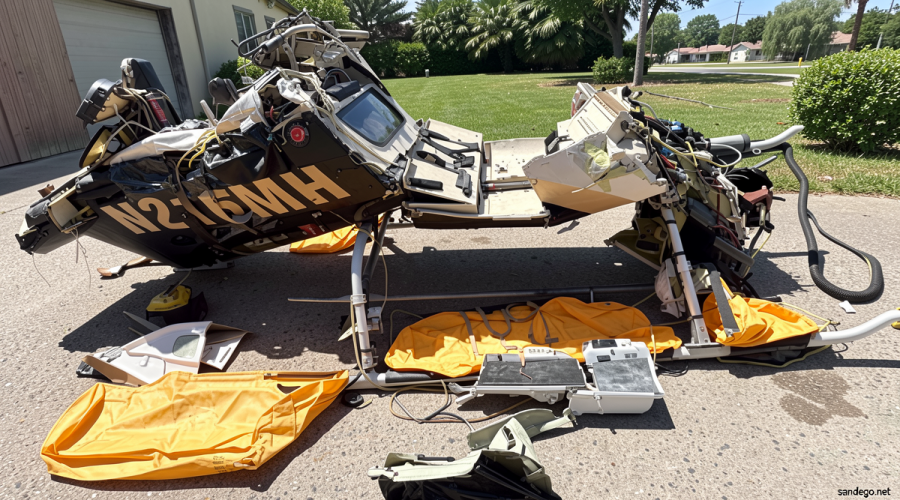
According to the National Transportation Safety Board, the Bell 206L-4 helicopter operated by New York Helicopters departed from lower Manhattan on the morning of the accident. The aircraft conducted a tour around the Statue of Liberty before proceeding northward along the Hudson River. Upon reversing direction, the helicopter was positioned near the New Jersey coast when it suddenly broke apart, flipping and spiraling downward into the water.
The NTSB has compiled over two thousand pages of investigative documentation regarding this incident. While a definitive probable cause has not yet been established, officials indicated that the final report is anticipated to be completed by the conclusion of 2026. The helicopter’s most recent comprehensive inspection occurred on March 1, and records show it had already completed seven tour flights on the day of the tragedy.
Broader Context of Wildlife Strikes
Avian collisions with aircraft represent a significant concern in aviation safety. The Federal Aviation Administration’s wildlife strike database recorded more than twenty-four thousand such incidents during the previous calendar year. Over one thousand of these occurrences took place within New York or New Jersey boundaries.
“A mixed-species flock of Brant and Canada Geese impacted the rotor blades” and the rear of the aircraft, the Smithsonian Institution’s feather identification lab determined.
The Hudson River holds historical significance in this regard, having hosted the celebrated “Miracle on the Hudson” event. In 2009, Captain Chesley “Sully” Sullenberger successfully guided US Airways flight 1549 into the river after Canadian Geese disabled both engines of his Airbus A320 shortly after departure from LaGuardia Airport.
Aviation authorities attribute the rising number of bird strikes to several factors, including expanding wildlife populations, increased flight frequency, advancements in aircraft speed and noise reduction, and improved reporting mechanisms. Mitigation strategies currently being implemented encompass habitat management, wildlife detection and prediction systems, and measures designed to deter animals from flight paths.
The victims of this particular crash included three children alongside their parents, both of whom were employed by Siemens, the German multinational technology corporation. The helicopter’s pilot also perished in the accident, bringing the total fatality count to six individuals.