A Week of Tragedy in US Aviation
Sandego.net – Over the past four days, the United States has witnessed a series of devastating aviation incidents, with four major plane crashes occurring in quick succession. Despite the alarming frequency, experts suggest the events may be unrelated. The crashes involved diverse aircraft and operations, raising questions about whether a common cause or coincidence is at play.
Marine Corps Jet Crash in Washington
A Marine Corps F/A-18 Hornet fighter jet crashed on Saturday in Yakima County, Washington, producing a massive fireball over a mountain. The incident, described as a “non-fatal aviation mishap,” occurred during a routine training flight. The pilot managed to eject safely and was later rescued by local law enforcement. According to the sheriff’s office, the pilot sustained minor injuries and was taken to the hospital. The crash also triggered a wildfire, prompting the Naches Fire Department to evacuate campers near Rimrock Lake.
“Our mountain pass deputy made contact with the pilot, who sustained minor injuries and was transported to the hospital,” stated the sheriff’s office in a post.
Skydiving Plane Disasters in Missouri
Two days later, in Butler, Missouri, a skydiving plane crashed shortly after takeoff, claiming 12 lives. The aircraft, a Pacific Aerospace P750, struck the ground beside a highway, with witnesses reporting it barely cleared the treetops before stalling. Officials confirmed that the victims ranged in age from 23 to 69, with nine being seasoned skydivers and two preparing for tandem jumps. This marked the deadliest skydiving plane crash since the 2019 incident involving a twin-engine Beechcraft BE65 in Hawaii.
“It never reached an altitude of 100-200 feet. It was barely over the trees,” noted Dennis Jacobs, acting manager of Butler Memorial Airport.
B-52 Bomber Crash in California
On Monday, a B-52 Stratofortress bomber crashed at Edwards Air Force Base, northeast of Los Angeles, during a test mission for radar modernization. The eight-engine aircraft struck the ground almost immediately after liftoff, leaving a black plume of smoke and a scar on the desert runway. The crash resulted in the deaths of eight crew members, including military personnel, civilians, and contractors. This was the deadliest B-52 incident since 1982, when nine crew members perished during a training exercise at Mather Air Force Base.
Private Jet Incident in Texas
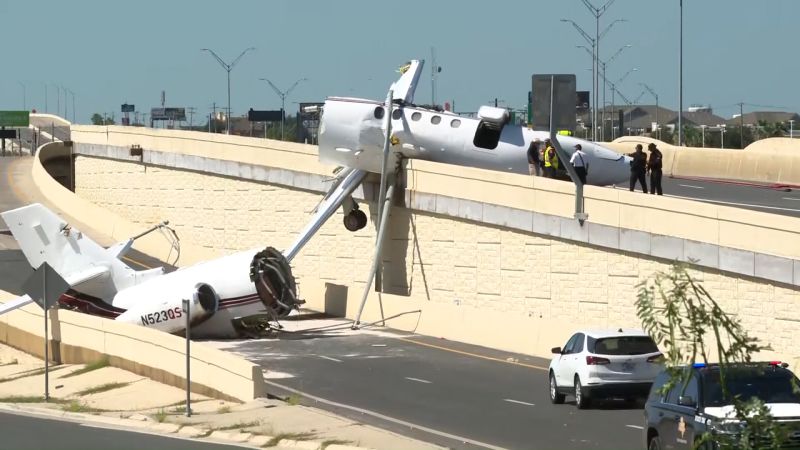
The fourth crash occurred on Tuesday night in Laredo, Texas, when a private jet crashed onto a highway. The aircraft, carrying six individuals, exploded in flames, killing one passenger. However, bystanders and police swiftly rescued the others from the wreckage. The Federal Aviation Administration (FAA) regulates these planes, but they face fewer operational constraints compared to major commercial airlines.
Investigations and Safety Concerns
Authorities are currently investigating each incident to determine its cause. The Flight Safety Foundation’s Hassan Shahidi emphasized that the crashes are distinct in nature and operation, with no evidence of a shared factor. “These are unrelated to each other, and each is unique in terms of its operation or type of aircraft,” he explained. “We will need to wait for the findings of these investigations to understand exactly what might have happened.”
Regulatory Frameworks and Operational Differences
While the FAA oversees all aircraft, the rules vary depending on the type of flight. Skydiving planes fall under Part 91 regulations, which apply to non-commercial operations. These regulations focus more on equipment management than flight procedures, allowing for less stringent oversight. In contrast, commercial airlines must comply with comprehensive safety protocols under Part 121, which includes rigorous maintenance checks, crew training, and air traffic coordination.
Military aircraft, such as the B-52 and F/A-18, operate under separate guidelines. Their missions often prioritize mission success over passenger safety, and they may have fewer constraints on fuel efficiency or route planning. For example, the B-52’s crash on Monday was part of a routine test flight, underscoring the risks inherent in military operations.
Impact on Communities and Families
The crashes have left a profound impact on local communities and the families of the victims. In Missouri, relatives of the 12 individuals who died watched the skydiving plane descend into the ground from the airport. In Texas, the highway crash disrupted traffic and drew crowds of onlookers to assist in the rescue efforts. The rapid sequence of incidents has prompted calls for increased scrutiny of safety measures across different aviation sectors.
Looking Ahead: Lessons and Preparedness
Although the causes of these crashes remain under investigation, the events highlight the importance of vigilance in aviation safety. The FAA and military authorities are reviewing protocols to identify potential gaps. For instance, the skydiving plane’s failure to gain altitude could indicate issues with pilot training or equipment, while the B-52 crash may point to mechanical or environmental factors.
Experts stress that while the crashes are alarming, their independence suggests no single cause is responsible. “Each incident is a unique case, and we must analyze them individually,” said Shahidi. “However, this streak of accidents will likely lead to broader discussions about risk management and oversight.”
Historical Context and Future Implications
The recent sequence of crashes has drawn comparisons to past aviation disasters. The 2019 Hawaii skydiving incident, which killed six people, and the 1982 B-52 crash in California, which claimed nine lives, both underscore the vulnerability of non-commercial flights. Meanwhile, the Texas crash, though less severe, demonstrated the effectiveness of community response in emergency situations.
As investigations continue, the FAA and other agencies may revisit safety standards for skydiving and military operations. The focus will likely shift toward balancing efficiency with risk mitigation, particularly in sectors where regulations are less stringent. For now, the aviation community remains on high alert, awaiting clarity on whether these incidents are isolated or signal a larger trend.