Teen Charged with Murder at Texas Track Meet Was ‘Distraught’ After Fatal Stabbing, Witness Testifies
Key Testimony Highlights Emotional State of Defendant in High School Incident
Sandego.net – During a high school track meet in Texas, a 19-year-old teenager named Karmelo Anthony was charged with murder after fatally stabbing his competitor, 17-year-old Austin Metcalf, during a heated confrontation. The incident, which occurred in April 2025 at a school stadium in Frisco—a suburb of Dallas—has drawn significant public attention, particularly due to its racial undertones. On Monday, one of the final witnesses to testify in the trial described Anthony’s emotional state following the attack, stating that the defendant was visibly upset and had warned Metcalf not to touch him. This testimony came as the trial neared its conclusion, with both sides preparing to deliver closing arguments.
“I was hearing him say, ‘I told him not to touch me.'”
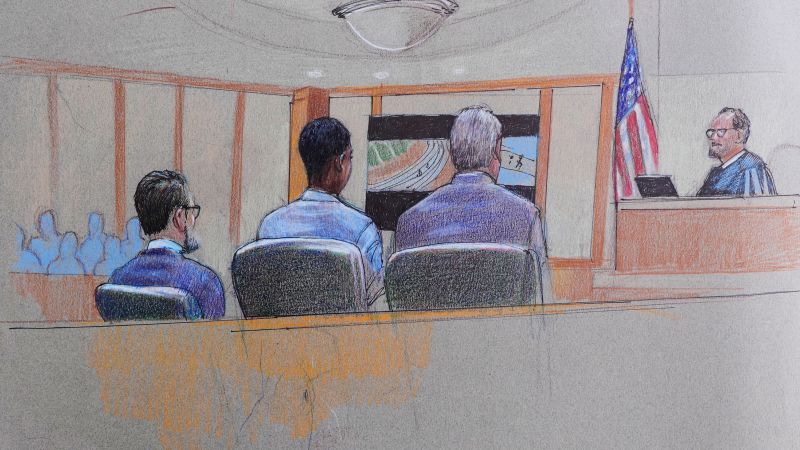
The witness, who spoke on behalf of the defense, emphasized Anthony’s distress after the fatal act, suggesting the teenager acted in a moment of panic rather than premeditation. This claim contrasts with the prosecution’s assertion that the stabbing was an intentional attack fueled by a dispute over team tents during a rain-soaked track meet. The trial, now entering its fourth day, saw a three-hour midday break before the attorneys announced they had no further evidence to present. The courtroom, filled with spectators, including the families of both victims and the defendant, remained tense as the jury prepared for the final stage of the proceedings.
Racial Dynamics Amplify Public Interest in the Case
The case has become a focal point for discussions about race in American schools, largely due to social media posts that highlighted the racial differences between the accused and the victim. Anthony, a Black student from Frisco Centennial High School, was involved in a competition with Metcalf, a white student from Frisco Memorial High School. Prosecutors argue that the conflict over whether Anthony could remain under Metcalf’s team tent during the rain led to the fatal confrontation. In contrast, defense attorneys claim Anthony felt threatened by Metcalf’s actions and believed he had to defend himself when physical contact occurred.
Before the break, the prosecution had presented a case centered on the dispute during the track meet, while the defense focused on Anthony’s perception of danger. The jury, which has been sequestered in a hotel to avoid external influences, will reconvene Tuesday to hear closing arguments. Judge John Roach Jr., who has instructed the jury to avoid discussing the case with others or engaging with social media, emphasized the importance of maintaining impartiality. The decision to sequester jurors underscores the intense scrutiny the case has faced, particularly as the trial has unfolded in the public eye.
Testimony from Anthony’s Teammate Adds Emotional Layer
Anthony’s teammate, who took the stand on Monday, described the moment of the stabbing with vivid detail. “He was shaking, and his voice was trembling,” the witness said. “It felt like everything happened so fast, and he just lost control.” This account, provided in support of the defense, painted Anthony as a victim of circumstances rather than a deliberate aggressor. The witness also recounted hearing Anthony repeatedly express his warning to Metcalf before the attack, reinforcing the idea that the teenager was reacting to perceived provocation.
Meanwhile, the prosecution’s case relied on accounts from other witnesses, including students who testified that Anthony had been asked to leave the team tent and that he initiated the confrontation. These statements, presented earlier in the trial, framed Anthony as the aggressor. The defense, however, has worked to challenge this narrative, arguing that the situation was misunderstood and that Anthony’s actions were a response to Metcalf’s physical contact. The testimonies from both sides have created a narrative divergence, with the jury now tasked to determine the truth based on conflicting accounts.
Final Arguments Set for Tuesday as Trial Concludes
With the trial reaching its final days, both the prosecution and defense have outlined their key points for closing arguments. Prosecutors plan to stress the lack of justification for Anthony’s attack, highlighting the tension over the tent and the opportunity for the teenager to retreat from the situation. Defense attorneys, on the other hand, will emphasize Anthony’s fear and the immediate provocation he faced. The courtroom, which has seen a steady stream of witnesses and spectators, now holds its breath as the attorneys prepare to summarize their cases.
Anthony did not take the stand during his own defense, a decision that has drawn mixed reactions from the jury and the public. Some believe this omission leaves the defendant’s version of events unverified, while others argue it was a strategic choice to avoid further emotional distress. The trial’s progression has also been marked by the judge’s efforts to manage the case’s public perception, including instructing jurors not to engage with social media and ensuring young witnesses remain anonymous. These measures aim to prevent external pressures from influencing the jury’s decision, especially as the case has been amplified by viral social media content.
Community and Family Watch Closely as Verdict Looms
As the trial nears its end, the community of Frisco has remained deeply engaged. Parents of both Anthony and Metcalf, as well as younger students, have attended daily sessions, showing support for their children and following the trial’s developments. The emotional weight of the case has been felt beyond the courtroom, with local discussions focusing on race, competition, and the role of youth in shaping public narratives. The fact that the incident occurred during a high school event has further intensified the focus on how such conflicts can escalate in a short time.
The trial has also highlighted the significance of context in criminal cases. While Anthony’s actions are under scrutiny, the circumstances of the track meet—its fast-paced nature, the rain-induced overcrowding, and the shared space of the team tents—have been presented as critical factors. Prosecutors argue that the environment was conducive to misunderstanding, while the defense maintains that Anthony’s fear was justified. The jury, now isolated from public discourse, will weigh these arguments as they deliberate. The judge’s final instructions to the jurors to remain neutral and avoid external influences reflect the high stakes of the case.
As the verdict approaches, the trial has become a microcosm of broader societal tensions. The racial divide between Anthony and Metcalf has been a recurring theme in media coverage, with some suggesting the incident symbolizes deeper conflicts. However, the defense has insisted that the case is about a specific moment of conflict, not a larger racial issue. The prosecution, meanwhile, has framed the attack as a clear example of injustice, emphasizing the need for accountability. With the jury’s decision pending, the trial remains a pivotal moment in the lives of all involved, and the public watches with anticipation for the outcome.
Verdict Timeline and Next Steps
If the jury does not reach a verdict by Tuesday, they will be sequestered in a hotel to continue deliberations. The courtroom is expected to resume on Wednesday, where the final decision will be announced. The judge has reiterated his instructions to the jurors, urging them to remain focused on the evidence and avoid any external distractions. This approach aims to ensure the verdict is based solely on the facts presented during the trial, regardless of the case’s media-driven attention.
The trial’s conclusion will not only determine Anthony’s fate but also serve as a reflection of how communities respond to high-profile cases. The mix of personal accounts, legal arguments, and social media influence has created a complex narrative that challenges the jury to navigate emotional and factual evidence. As the final arguments begin, the case remains a testament to the power of context in shaping perceptions of guilt and innocence.