Taiwan Tests Leadership Survival in Mock Decapitation Drill
Sandego.net – Taiwan’s military conducted a high-stakes simulation this week designed to test whether the island’s top leadership could survive a sudden, targeted attack meant to eliminate its command structure. President Lai Ching-te personally participated in the exercise, riding in an armored personnel carrier through the streets of Taipei as part of a broader effort to strengthen emergency protocols.
Leadership Evacuation Underway
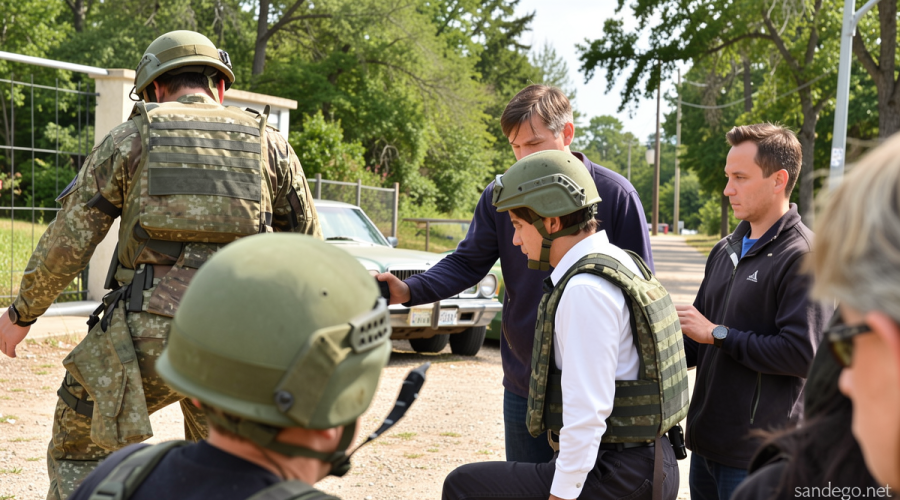
The drill, known as “Wan Chun,” began late Wednesday when an armored vehicle transported Lai and key staff members from their offices in the capital to a fortified command center located near the Defense Ministry. The president was observed wearing a flak jacket throughout the exercise, receiving briefings and issuing orders as the scenario unfolded.
The drill was intended to review the command structure, inter-agency coordination, and emergency-response mechanisms, so as to ensure that the government can continue operating effectively and safeguarding national security during any possible action against the island.
These words came from Karen Kuo, the presidential spokesperson, who issued a statement on Thursday explaining the purpose behind the exercise. A government video released alongside the announcement captured the armored vehicle navigating Taipei’s roads at speed, heading toward its secure destination.
Historical Roots and Modern Relevance
The Wan Chun exercise traces its origins back to the Cold War period, when then-leader Chiang Kai-shek grew increasingly concerned about potential attempts on his life by the Chinese Communist Party. Beijing has long claimed Taiwan as part of its sovereign territory, even though it has never actually governed the island. Chinese President Xi Jinping has repeatedly stated that he would not rule out military force to achieve reunification.
While this marks the first time Lai has joined the drill, former presidents Tsai Ing-wen and Ma Ying-jeou both participated in previous iterations. The exercise is embedded within the larger “Han Kuang” military exercises, which span ten days and represent Taiwan’s most significant annual training program.
Global Events Add Urgency
Recent international developments have heightened the importance of Taiwan’s preparations. In early January, the United States captured Venezuelan leader Nicolás Maduro. Shortly thereafter, American and Israeli forces carried out targeted strikes against Iran’s leadership at the outset of hostilities. These events underscored the need for careful planning.
Taiwan needs to ready itself for the scenario now unfolding in Iran – and fast.
Charles Lyons-Jones, a research fellow at Australia’s Lowy Institute’s Foreign Policy and Public Opinion Program, made this observation in March. A senior Taiwan defense official echoed similar sentiments ahead of the drills, noting that the exercises are no longer merely theoretical simulations conducted in isolation.
Defending Critical Infrastructure
As the Han Kuang exercises progressed into their second day, Taiwanese forces focused on protecting the Danjiang Bridge, a vital chokepoint that could provide Chinese troops with a rapid route to Taipei. The nearly one-kilometer-long bridge, which opened earlier this year, spans the Tamsui River and offers potential adversaries direct access to the city center.
The location holds strategic importance due to its closeness to the Taipei port and nearby beaches, which could serve as staging areas for Chinese military operations. Soldiers set up multiple layers of barriers and unrolled barbed wire to impede enemy advances across the bridge.
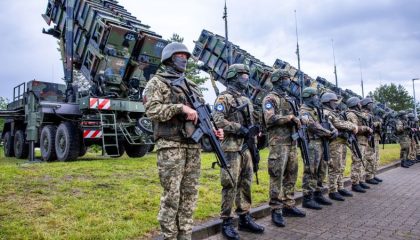
During the opening two days of the exercises, approximately 20,000 reservists were called up to defend essential infrastructure including ports, power facilities, and bridges. Air defense systems, including Patriots and Tien-Kung missiles, were positioned on downtown Taipei streets for public visibility.
Testing Communication Resilience
Looking ahead, Taiwan will implement a new measure next week that has never been attempted before. The island plans to deliberately reduce its mobile internet speed to evaluate how citizens would maintain communication if bandwidth becomes limited during emergencies ranging from natural disasters to potential Chinese invasion.
Meanwhile, Beijing continues applying steady pressure through a combination of military exercises and gray-zone activities—tactics that utilize non-military assets such as law enforcement and administrative units in waters surrounding the island. China has also constructed a detailed mockup of Taipei’s presidential office and government buildings in its desert regions, where troops regularly practice assault scenarios.
Related Reading
Frequently Asked Questions
What is Taiwan s leader boards armored vehicle?
Taiwan s leader boards armored vehicle is the main topic of this guide. The article explains the context, practical details, and next steps readers should understand.
Why does Taiwan s leader boards armored vehicle matter?
Taiwan s leader boards armored vehicle matters because readers are looking for a useful answer, not just a short summary. Good content should match search intent and help them decide what to do next.