Putin and Trump Held 90-Minute July 4 Call, Moscow Says
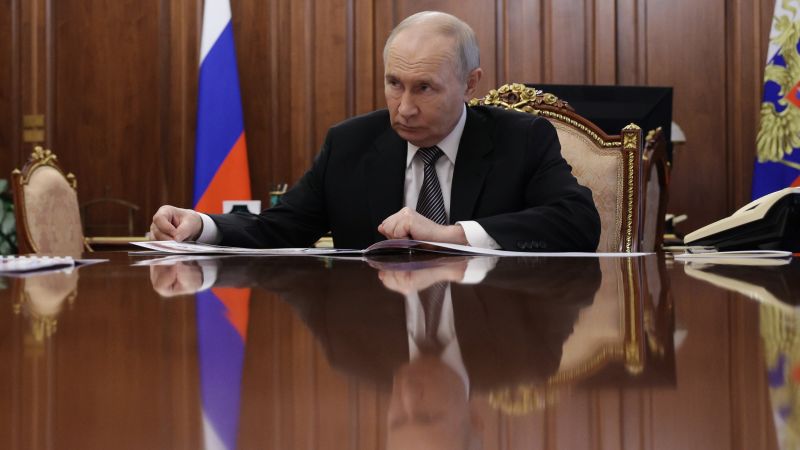
Sandego.net – Russian President Vladimir Putin engaged in a nearly two-hour conversation with U.S. President Donald Trump on July 4, during which the American leader once again pledged support to conclude the conflict in Ukraine, as reported by Russia’s foreign ministry. This dialogue marks their fourth exchange of the year, underscoring the ongoing diplomatic engagement between the two leaders amid escalating tensions in Eastern Europe.
NATO Summit Context
The call occurred as preparations for a pivotal NATO summit in Turkey intensified, set to commence on Tuesday. Trump’s attendance at the event is expected to shape discussions on collective defense and regional security. Simultaneously, Russian forces have increased their operations in Ukraine’s eastern Donetsk region, a strategic area central to Moscow’s war aims. The foreign ministry highlighted this as a critical phase in the conflict, emphasizing the importance of territorial gains.
Ukrainian military actions have also escalated, with continued efforts to strike Russian energy infrastructure. This includes targeting facilities crucial for sustaining Russia’s war efforts. The Russian government has framed these attacks as evidence of Kyiv’s reliance on European allies to prolong the war, according to their statements. In contrast, Ukrainian President Volodymyr Zelensky described the call with Trump as a productive exchange, expressing confidence in America’s commitment to resolving the crisis.
“There is a real prospect to put an end to this war, and America’s resolve is decisive,” Zelensky stated, reflecting optimism about the potential for a breakthrough.
The conversation, characterized as “highly constructive” by Moscow, saw Trump reaffirm his willingness to assist in achieving a swift end to hostilities. The foreign ministry noted that the Russian side emphasized the necessity of a political resolution, while criticizing Kyiv for seeking to extend the conflict. This sentiment aligns with broader Russian narratives that frame the war as a fight for Ukraine’s sovereignty and territorial integrity.
Strategic Tensions in Eastern Ukraine
Recent developments in the Donetsk region have raised questions about the pace of Russian military progress. The Kremlin claimed to have captured the town of Kostyantynivka, calling it a significant milestone in their campaign. However, Ukrainian military sources disputed this, asserting that small Russian groups had infiltrated the town but were met with countermeasures. A unit stationed in Kostyantynivka shared video footage, suggesting the Russian claim was part of a disinformation strategy.
“It is just another Russian lie, an attempt to generate some kind of a news story,” Zelensky remarked, highlighting the perception of Moscow’s efforts to manipulate public perception. This mirrors earlier criticisms from the Institute for the Study of War (ISW), which noted that exaggerated reports of Russian battlefield success often serve to downplay Ukrainian resilience. Despite recent gains in the south, where Ukrainian forces have reclaimed parts of the territory, the war’s trajectory remains uncertain.
Energy Infrastructure Strikes
In recent weeks, Ukraine has escalated its attacks on Russian energy infrastructure, aiming to disrupt supply lines and weaken Moscow’s war economy. This includes strikes on oil refineries, ports, and military production facilities. Notably, Ukrainian drones targeted an oil terminal in St. Petersburg, which Zelensky described as a vital source of revenue for Russia’s military operations.
The Ukrainian military confirmed that eight Russian oil refineries have been struck in the past month, with over 60 storage tanks either destroyed or severely damaged. These strikes have targeted critical nodes in Russia’s energy network, significantly impacting their ability to sustain the conflict. Additionally, drones have been deployed against fuel and power installations in Crimea, the region annexed by Russia in 2014. Satellite imagery analyzed by ISW reveals a marked reduction in nighttime electric lighting in Crimea compared to previous years, indicating possible damage to infrastructure.
Trump’s July 4 call with Putin follows the U.S. announcement last month to “rightsize its contributions to the NATO force model,” signaling a shift in American strategy. This decision has sparked debate about the alliance’s reliance on U.S. military resources, with NATO leaders now tasked with balancing support for Ukraine with broader defense commitments. The summit in Turkey will be a critical opportunity to address these issues, as well as the future of the war in Ukraine.
Russian officials have consistently maintained that the conflict will only conclude when they secure control of the Donbas region, a key objective in their long-term strategy. The capture of Kostyantynivka, they argue, represents a step closer to this goal. However, Ukrainian forces have demonstrated adaptability, reclaiming areas in the south and countering Russian advances with precision strikes.
As the war enters its second year, both sides continue to maneuver diplomatically and militarily. Putin’s repeated emphasis on the Donbas as a linchpin of victory has been met with Ukrainian efforts to maintain momentum on the frontlines. The July 4 conversation with Trump underscores the importance of securing international backing, even as the battlefield situation remains complex and volatile.