Ötzi the Iceman’s Microbial Secrets Outlive His 5,300-Year-Old Corpse
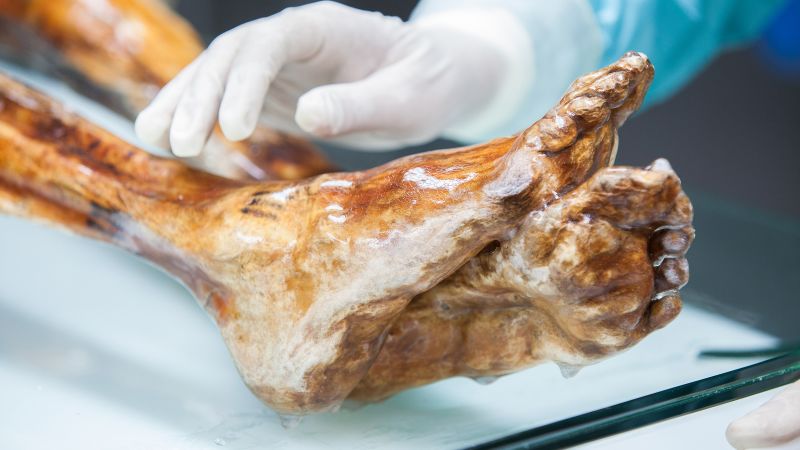
Sandego.net – Ötzi the Iceman, the remarkably preserved mummy of a man who died over five millennia ago, continues to surprise scientists with its hidden vitality. A recent study reveals that his body is not just a static relic of the past but a living repository of microbes, some of which have remained active for thousands of years. Researchers from multiple institutions, including the University of East Anglia and Eurac Research, have uncovered that these ancient organisms, including fungi and bacteria, are not only surviving in Ötzi’s remains but may also be slowly multiplying in the microscopic pockets of moisture within his mummified tissues.
A Living Ecosystem Beneath the Ice
The study, published in the journal Microbiome, analyzed both the microbes inside and on Ötzi’s body, creating a comprehensive map of his microbial ecosystem. Scientists discovered that certain species of fungi, which had colonized his corpse after death, were still viable despite being frozen for millennia. These fungi, which possess natural cold resistance, entered a dormant state but retained the ability to revive, challenging previous assumptions about the permanence of microbial death in ancient remains.
Researchers also found that bacteria within Ötzi’s remains showed signs of ongoing activity, suggesting that the mummy’s environment—though preserved by glacial ice—has allowed for some microbial resilience. This finding implies that the preservation of organic materials in cold climates may not completely halt microbial processes. Instead, it creates a dynamic interplay between the ancient host and the surrounding ecosystem, with microbes adapting to survive in extreme conditions.
Revealing the Copper Age Microbiome
The research team delved into Ötzi’s microbiome, comparing it to modern human gut bacteria. Their analysis revealed the presence of microbial species that are exceedingly rare in today’s industrialized societies but still found in populations with traditional lifestyles. These microbes offer a rare window into the gut microbiota of the Copper Age, a period marked by significant changes in human diets and environments due to the rise of agriculture and metallurgy.
“These microbes give us a unique and precious snapshot of what the human gut looked like in the Copper Age,” explained Frank Maixner, a senior study author and head of the Institute for Mummy Studies at Eurac Research. Maixner emphasized that Ötzi’s microbiome is not only a relic of his time but a potential key to understanding the health and dietary habits of pre-industrial humans. The findings suggest that the gut flora of ancient populations may have been more diverse and distinct than previously believed, with implications for modern health research.
The Microbial Contamination Conundrum
While Ötzi’s microbes provide valuable insights, they also pose challenges for researchers. The study highlights how the mummy’s preservation in a cold, humid environment has protected it from degradation, but it has also allowed microbes to persist and even thrive. After hikers discovered Ötzi in 1991 on the Austrian-Italian border, his remains were stored in a refrigerated chamber at approximately 21 degrees Fahrenheit (minus 6 degrees Celsius) with 99% relative humidity—conditions mirroring those of the glacier where he was found.
However, scientists are now questioning whether these storage conditions have actually suppressed microbial activity. Some microbes, particularly fungi, are known to survive and multiply in cold environments, raising concerns about contamination. “In many DNA studies of ancient human remains, microbial DNA is often overlooked,” noted Anders Bergström, an evolutionary genomics researcher at the University of East Anglia, in an email to CNN. “It’s not always clear whether the microbial DNA recovered is as old as the human body itself or has been introduced through modern handling.” Bergström, who was not part of the current research, underscored the need for more rigorous methods to distinguish ancient microbes from those that might have infiltrated the remains during storage or analysis.
The study’s methodology involved swabbing Ötzi’s exterior, extracting samples from his internal tissues, and examining soil from the site of his discovery. Airborne microbes from the museum’s storage chamber and handling room were also collected and cultured to assess potential contamination. By comparing DNA damage levels across viable and nonviable specimens, the researchers could determine which microbes were native to Ötzi’s body and which had been introduced later. This process revealed a complex mix of ancient and modern species, complicating efforts to fully reconstruct Ötzi’s original microbial profile.
Uncovering New Dimensions in Ötzi’s Legacy
Ötzi’s microbes may also shed light on his lifestyle and environment. For instance, the study found that fungi associated with the frigid mountain climate where he lived had colonized his corpse, suggesting they played a role in the preservation process. These organisms, which are typically active in warm conditions, were trapped in the ice and remained dormant until recently reactivated in the laboratory. Their survival demonstrates the resilience of certain microbial species and their ability to adapt to extreme conditions, even after millennia.
Moreover, the research team identified microbes that could indicate Ötzi’s interactions with his surroundings. Some species, they hypothesize, may have originated from the glacier’s environment, while others could have been transferred through his diet or activities. This discovery adds another layer to the understanding of Ötzi’s life, revealing that his body was not just a vessel for human remains but a microcosm of the ecological systems he inhabited.
Rediscovering Ötzi’s Tattoos: A Microbial Perspective
While the study focused on microbial life, it also rekindled interest in another enigma: Ötzi’s 61 tattoos. Initially thought to be decorative, these markings have sparked new hypotheses about their purpose. Researchers propose that the tattoos may have served a functional role, such as treating ailments or signaling social status. This theory is supported by the presence of microbes in the surrounding areas, which could have contributed to the creation or maintenance of these patterns.
The tattoos, now studied through the lens of microbial ecology, may have been applied using tools contaminated with ancient bacteria or fungi. These microbes, which have survived alongside the mummy, could have played a role in the process, either as part of the technique or as evidence of Ötzi’s exposure to the natural environment. The findings suggest that the intersection of human activity and microbial life is more intricate than previously imagined, with microbes potentially influencing cultural practices in ways yet to be fully understood.
A New Era in Ancient Microbial Research
Ötzi’s microbes are not just a scientific curiosity—they are a testament to the enduring complexity of life even in the most extreme conditions. The study’s implications extend beyond Ötzi, offering a framework for analyzing other ancient remains. Scientists now recognize that microbial activity in preserved human tissues may be more significant than previously thought, requiring careful consideration in the study and conservation of such specimens.
As researchers continue to explore Ötzi’s microbial world, the mummy’s legacy grows more profound. His body, once thought to be a frozen tomb, is now a dynamic archive of life from the Copper Age. This realization underscores the importance of integrating microbial studies into broader archaeological research, ensuring that the past is not only preserved but also interpreted with the full spectrum of biological processes that shaped it.
“This study of Ötzi now provides some fascinating insights into the microbial world of ancient humans,” said Frank Maixner. “It’s a reminder that even in the most extreme environments, life can persist in unexpected ways.”
Ötzi’s story is far from over. His microbes, still active and multiplying, continue to unlock secrets about the human body, the environment, and the intricate web of life that has spanned thousands of years. As scientists refine their methods for studying these ancient organisms, they may uncover new dimensions of human history—ones that were hidden in the ice all along.