Oldest known evidence of plague reveals the disease’s deadly impact 5,500 years ago
Sandego.net – Researchers analyzing ancient remains in the southern regions of Siberia have uncovered previously unknown strains of plague that devastated communities in the distant past. The discovery, detailed in a study published Wednesday in the journal *Nature*, challenges existing assumptions about when and how the deadly bacterium *Yersinia pestis* first began affecting humans. This revelation comes from DNA extracted from cemeteries near Lake Baikal, where evidence suggests the disease caused widespread mortality among a group of people who lived over five millennia ago.
Revising the Timeline of Plague’s Origin
Plague, a disease that has shaped human history through catastrophic outbreaks, is now traced back to an earlier era than previously believed. The newly identified strain, found in the remains of hunter-gatherers, dates to around 5,500 years ago—over a millennium before the earliest known evidence of *Y. pestis* associated with bubonic plague. Prior to this study, scientists had estimated the oldest known strains of the bacterium to be approximately 3,800 years old, leading to the belief that early plagues lacked the genetic tools to spread rapidly.
The findings suggest that the bacterium may have evolved more quickly than previously thought, adapting to infect humans before the domestication of livestock. This shifts the timeline for understanding how *Yersinia pestis* transitioned from animals to humans, a critical step in its development into the pathogen responsible for devastating pandemics. The study’s lead author, Ruairidh Macleod, a research fellow at the University of Oxford, emphasized the significance of the discovery during a news conference, stating,
“Hunter-gatherers are constantly moving around the landscape. The theory is that infectious disease can’t really take hold and devastate entire communities in this way. Typically, if somebody gets ill, they’ll move somewhere else. The fact that we’re finding this happening in an isolated group of prehistoric hunter-gatherers challenges that epidemiological theory.”
Uncovering a Mysterious Mass Mortality Event
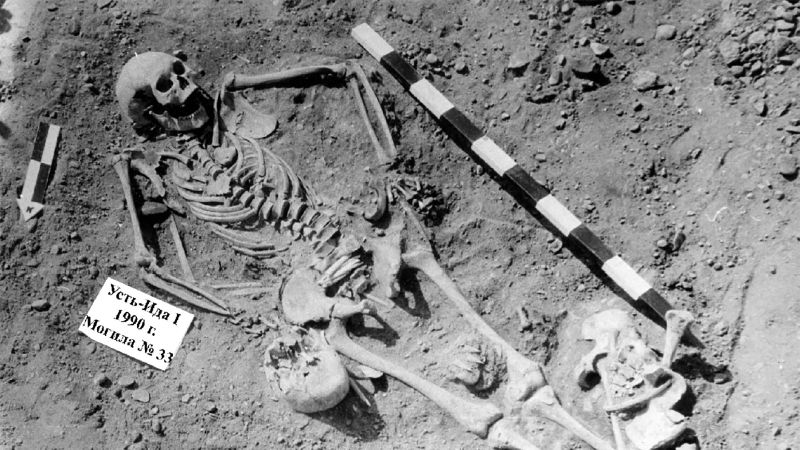
The research began as an effort to solve a different puzzle: the sudden disappearance of a population in the Lake Baikal region. Archaeologists have studied the four ancient cemeteries there for decades, uncovering remains that indicate the people buried in these sites lived in small, mobile communities. What initially seemed like an enigma was the presence of an unusually high number of children and adolescents, whose skeletal remains showed no signs of injury or trauma. This led scientists to question how such a large group could have died so quickly.
Through advanced DNA sequencing, in-depth archaeological analysis, and radiocarbon dating, the team identified *Yersinia pestis* in 18 out of 46 individuals from the cemeteries. This genetic evidence not only confirmed the presence of the bacterium but also revealed a genetic factor linked to increased severity of the disease. The results suggest that the plague may have spread through close contact within families, as many of the deceased were buried near one another, indicating shared living spaces and social interactions.
The study’s authors argue that the high rate of infection—39% across the cemeteries—points to a highly contagious pathogen that could have caused rapid outbreaks. This is a stark contrast to earlier theories that assumed early strains of the disease were less virulent. “The authors are able to detect probably *Y. pestis* infections at a rate of 39% across the cemeteries investigated—this is astoundingly high and certainly has the potential to rewrite how we understand early infections of the pathogen,” said Ian Light-Maka, a postdoctoral associate at the Max Planck Institute for Infection Biology in Berlin.
The Role of Mobility in Disease Spread
Traditionally, it was thought that mobile populations, such as hunter-gatherers, were less susceptible to epidemics due to their lack of permanent settlements. However, this study reveals that such communities were not immune to large-scale outbreaks. The analysis of the cemeteries indicates that the plague struck multiple times, with two distinct waves of mortality separated by several centuries. The timing of these events, supported by radiocarbon evidence, suggests the disease spread rapidly within the population, challenging the notion that constant movement hindered its transmission.
Genetic research also provided insights into the relationships between the individuals buried in the cemeteries. The study found that children and adults often shared close genetic ties, reinforcing the idea that the disease spread within families. This is significant because it implies that caregiving practices, such as sharing food or living in close quarters, may have facilitated the spread of the pathogen. “Sometimes, siblings, parents, and children were buried together, suggesting the disease passed from one family member to another as they cared for one another,” noted Eske Willerslev, an evolutionary geneticist at the University of Copenhagen and the University of Cambridge.
Further analysis of other graves revealed that some relatives were buried separately, likely due to dying during different outbreaks. This pattern highlights the recurring nature of the plague in the region, with the disease persisting for centuries before becoming more widespread. The combination of DNA sequencing and archaeological findings provides a clearer picture of how the bacterium might have evolved to affect humans, offering new perspectives on the origins of one of history’s most lethal pathogens.
Implications for Understanding Ancient Pandemics
The discovery has sparked debate among historians and scientists about the broader implications of the disease’s early history. The Black Death, which killed an estimated 25 million people in Europe during the 14th century, is one of the most well-known outbreaks of *Yersinia pestis*. However, the findings from the Lake Baikal cemeteries suggest that the bacterium’s impact on human populations began much earlier. “Ancient DNA reveals possible cause of mysterious population collapse 5,000 years ago,” the study’s authors wrote, emphasizing the role of the disease in shaping ancient societies.
By linking the genetic data to archaeological records, researchers have created a more detailed narrative of how the plague influenced human behavior and survival strategies. The study also highlights the importance of interdisciplinary approaches in uncovering historical health crises. “There was very clear radiocarbon evidence that this mass mortality event took place over a very, very short period of time,” Macleod explained. “So all of these deaths are occurring contemporaneously with each other.”
These findings underscore the adaptability of *Yersinia pestis* and its ability to thrive in diverse environments. While the disease is now associated with plague outbreaks in densely populated areas, the evidence from the Lake Baikal cemeteries shows that it could also devastate isolated, nomadic groups. This challenges existing models of disease spread and suggests that the pathogen’s evolution may have been more complex than previously understood. As scientists continue to study these ancient remains, they hope to uncover more about how the plague shaped human history and its potential to reemerge in new forms.